Want to be in the loop?
subscribe to
our notification
Business News
HIGH-QUALITY OUTLOOK FOR DEVELOPMENT PLAN
As a key part of its Socioeconomic Development Plan for 2022 and Economic Restructuring Plan for the 2021-2025 period, Vietnam is set to foster a digital economy in the hope of achieving higher quality in economic growth.
Just over two weeks ago, the National Assembly’s (NA) Chairman Vuong Dinh Hue signed and enacted a resolution on Vietnam’s Socioeconomic Development Plan for 2022, which was adopted by the legislature on November 12 in Hanoi. Under the resolution, GDP will increase 6-6.5 per cent, with per capita GDP of $3,900. The ratio of the manufacturing and processing sector in GDP will be 25.5-25.8 per cent, while the average labour productivity is set to climb 5.5 per cent.
To this end, the NA said, one of the key solutions will be “increasing productivity, quality, effectiveness, and competitiveness; creating a firm foundation for a digital economy and a digital society; and improving the quality of education and training, and developing human resources (HR).”
Also, under Vietnam’s Socioeconomic Restructuring Plan for 2021-2025 when a relatively high economic growth rate of 6.5-7 per cent has been set, the NA said that digital transformation “will be drastically deployed, with the construction of a digital economy, government, and society.”
This plan targeted that during 2021-2025, the nation’s average labour productivity will annually expand 6.5 per cent, with that of the manufacturing and processing industry will annually climb 6-7 per cent. Labour productivity is projected to increase over 6.5 per cent annually. The contribution of the total-factor productivity to GDP will be 45 per cent last year.
Last year, the government approved a national programme on digital transformation until 2025, with a vision to 2030. Along with the Politburo’s hallmark Resolution No.52-NQ/TW released in September 2019 on a number of guidelines and policies to actively participate in the Fourth Industrial Revolution, the programme is a big addition to Vietnam showing its strong determination to become a digital economy.
Shimizu Akira, chief representative of the Japan International Cooperation Agency, told VIR that the development of high-quality HR for national industrialisation and modernisation needs to be given special attention.
“The pandemic is also posing great challenges to HR development in Vietnam. Many experts believe that it has increased the gap in skills required to implement the flexible business strategy of enterprises in the future. Therefore, improving the quality of HR is an urgent issue, requiring the efforts and cooperation of both governments, enterprises, and individuals,” Arika said.
Currently in Vietnam, about 1.6 million new people join the domestic labour market annually, which is a big burden for the government to provide sufficient employment for its citizens. This burden is expected to expand further under Industry 4.0 pressure. The situation has become worse now when the pandemic has seriously driven 12.8 million people of 15 years old upward into unemployment (4.4 per cent), lay-offs (31.8 per cent), and reduction of income (63.8 per cent), according to the Ministry of Labour, Invalids, and Social Affairs.
The International Labour Organization suggested 70 per cent of jobs in Vietnam are at risk of automation. Sectors with a high proportion of jobs at risk include agro-forestry-fisheries (83.3 per cent at risk); manufacturing (74.4 per cent); food and beverages (68 per cent); garments (85 per cent); electronics (75 per cent); wholesale, and retail (70 per cent).
Dr. Jaeseung Lee, Mekong Sub-regional representative and Vietnam country representative of the Global Green Growth Institute told VIR, “Given the rapid alteration in global perspective, Vietnam needs to act now not to fall behind. The changes are so fast that any hesitations would damage Vietnam’s economic miracle: establishing itself as a manufacturing hub in the world.”
Indeed, quick adjustment is a challenge for a manufacturing powerhouse like Vietnam, Lee added. “Still, opportunities exist to leapfrog its status from an emerging economy to a market leader in the new world, especially soft power areas like the digital economy, entrepreneurship, and international finance. With proper government orientation, those emerging sectors can considerably accelerate Vietnam’s green growth aspirations.”
Although not apparent at first glance, digital transformation can bring significant benefits to the environment and climate. If digital technologies are applied appropriately, reduced greenhouse gas emissions, increased energy efficiency, more sustainable resource management, and better environmental, social, and governance monitoring will lead to bolstered sustainability, climate change mitigation, and long-term sustainable growth.
“Digital transformation strategies and policies focus more on economic growth while their tremendous potential for sustainability and climate change is frequently overlooked,” Lee said.
Source: VIR
Related News

BANKING / FINANCE / INSURANCE / TAX
REMITTANCES TO HCM CITY RISE NEARLY 40% IN Q3
Remittances to HCM City reached more than US$2.83 billion in the third quarter of this year, up 39.5 per cent from the previous quarter and 3.6 per cent year-on-year. This was the first quarter showing positive annual growth this year, helping narrow the decline in remittance inflows over the first nine months. According to the State Bank of Vietnam (SBV)’s Regional Branch 2, remittances transferred to HCM City through credit institutions and economic organisations totalled $2.835 billion in Q3, an increase of more than $802 million from the previous quarter.
TECHNOLOGY
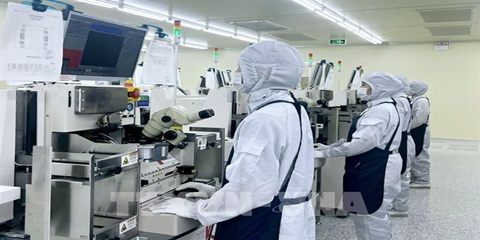
TECH SECTOR GROWTH OPENS UP OPPORTUNITIES FOR VIỆT NAM TO GO GLOBAL
The growth of the electronics, semiconductor and high-tech sectors worldwide is opening up a variety of opportunities for Vietnamese enterprises to integrate more deeply into the global supply chain. However, to become suppliers for these corporations, domestic enterprises must meet rigorous standards regarding quality, technology, productivity and order fulfilment capabilities.
VIETNAM ECONOMY INVESTMENT
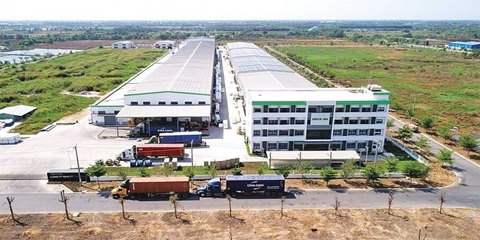
FOREIGN INVESTORS SEEKING A SYNCHRONISED MANUFACTURING ECOSYSTEM
Instead of focusing only on land costs and incentives as usual, foreign investors are seeking a synchronised manufacturing ecosystem, from stable power supply and logistics to shared infrastructure and the convenience of completing residence procedures for experts to serve their long-term investment in the country.

MEMBER CORNER / PROMOTIONS
SENTRYSAFE FHW40200 – PROTECT YOUR VALUABLES, ENJOY PEACE OF MIND!
Looking for a reliable solution to protect your important documents, cash, and valuables from fire and water damage? Genuine SENTRYSAFE - Reliable protection for your valuables and peace of mind! Contact Sen Wai Vietnam for more information and personalized product recommendations.
PROPERTY / INDUSTRIAL ZONE
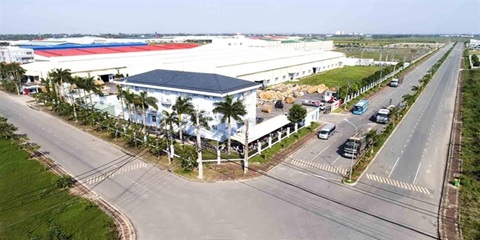
HCM CITY ATTRACTS US$5.7 BILLION INTO EXPORT PROCESSING AND INDUSTRIAL ZONES
HCM City attracted US$5.7 billion in domestic and foreign investment into its export processing and industrial zones during the first nine months of 2026. The figure exceeded the city's full-year target by 31 per cent, highlighting strong momentum in high-quality industrial investment under Resolution No.10-NQ/TW. Total investment reached 131 per cent of the 2026 target of $4.25 billion and represented a 29 per cent increase compared with the same period in 2025, according to the city's Export Processing and Industrial Zones Authority (HEPZA).
INFRASTRUCTURE / CONSTRUCTION / LOGISTIC / PORT
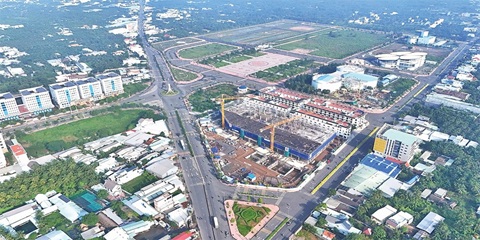
DONG THAP PROVINCE STEPS UP INDUSTRIAL EXPANSION AND INFRASTRUCTURE CONNECTIVITY
Accelerating public investment, strengthening inter-regional connectivity, and expanding industrial land are helping Dong Thap efficiently bolster competitiveness and drive economic growth. Following the 2025 merger of the former Dong Thap and Tien Giang provinces, the expanded Dong Thap province in the Mekong Delta faces mounting pressure to accelerate infrastructure development and strengthen connectivity among local economic zones, urban areas, industrial parks (IPs), and production centres.
Events Sponsors






















