Want to be in the loop?
subscribe to
our notification
Business News
HIGH GROWTH AND MACROECONOMIC STABILITY KEY TARGETS IN 2026
Stronger domestic demand may push up imports, while export growth could face difficulties due to slower global economic growth, adding pressure to the exchange rate and consumer prices.

Shoppers at a supermarket in HCM City. — VNA/VNS Photo Hồng Đạt
HÀ NỘI — Pursuing high economic growth is an urgent task in the coming period, but experts have warned that Việt Nam must manage policies carefully to avoid sacrificing macroeconomic stability for growth targets, particularly as inflation risks rise alongside continued credit expansion.
In 2025, Việt Nam recorded GDP growth of 8.03 per cent while inflation was kept at 3.3 per cent. Looking ahead to 2026, inflationary pressure is expected to increase, mainly due to the delayed effects of credit growth, according to Nguyễn Đức Độ PhD, deputy director of the Institute of Economics and Finance.
He said credit growth in 2025 was not unusually high compared with the past decade, so its direct impact on inflation might be limited, especially as a significant share flowed into asset markets. However, the GDP growth target of 10 per cent in 2026 would still put pressure on prices, as strong growth would require a sharp rise in both investment and consumption.
The exchange rate was also expected to affect inflation in 2026. Stronger domestic demand might push up imports, while export growth could face difficulties due to slower global economic growth, adding pressure to the exchange rate and consumer prices.
Độ noted that inflation pressure from global commodity prices was likely to remain modest. With the world economy forecast to grow slowly, commodity prices are unlikely to rise sharply in 2026, although room for further declines is limited after a sharp fall in 2025, according to Độ. Interest rates rose slightly in 2025 as credit growth outpaced deposit growth. This trend may continue in 2026 and could help curb inflation.
Policy management
Lê Quốc Phương, PhD, former deputy director of the Ministry of Industry and Trade’s Industry and Trade Information Centre, said the factors supporting price stability in 2026 would be similar to those in 2025.
However, he warned that expansionary fiscal and monetary policies aimed at driving GDP growth of 10 per cent or more during 2026–2030 would create strong inflationary pressure.
He stressed that promoting high growth through rapid increases in investment must be closely controlled. Past experience showed that high growth combined with loose policies could lead to soaring inflation, followed by sharp policy tightening, economic slowdown, rising bad debts and business failures.
To achieve high growth while keeping inflation under control, Phương recommended avoiding aggressive easing of both fiscal and monetary policies at the same time. Fiscal policy should be expanded in a controlled manner, while monetary policy should remain cautious.
In the current context, he said credit growth limits should not yet be removed. Instead, the credit ceiling could be temporarily raised to a maximum of 20 per cent, along with measures to ensure credit flows into production and business activities that create real output and productivity, rather than into high-risk areas such as real estate, securities, gold or speculative activities.
Sharing a similar view, Độ said that although inflation pressure in 2026 might remain manageable, caution would still be needed, as monetary risks could build up if high credit growth continues for a long period. To achieve high GDP growth while keeping inflation below the 4–4.5 per cent target, he stressed the importance of close coordination between fiscal and monetary policies.
With the credit-to-GDP ratio already high, monetary policy should focus on maintaining macroeconomic stability, including controlling inflation, stabilising interest rates and exchange rates, containing bad debts and ensuring banking system safety.
Fiscal policy still has room to support growth, but faster disbursement of public investment is essential. In the long run, experts advised, high growth cannot rely on expanding money supply and credit, but must be driven by productivity gains based on technology and innovation. — VNS
Source: VNS
Related News

BANKING / FINANCE / INSURANCE / TAX
REMITTANCES TO HCM CITY RISE NEARLY 40% IN Q3
Remittances to HCM City reached more than US$2.83 billion in the third quarter of this year, up 39.5 per cent from the previous quarter and 3.6 per cent year-on-year. This was the first quarter showing positive annual growth this year, helping narrow the decline in remittance inflows over the first nine months. According to the State Bank of Vietnam (SBV)’s Regional Branch 2, remittances transferred to HCM City through credit institutions and economic organisations totalled $2.835 billion in Q3, an increase of more than $802 million from the previous quarter.

TECHNOLOGY
TECH SECTOR GROWTH OPENS UP OPPORTUNITIES FOR VIỆT NAM TO GO GLOBAL
The growth of the electronics, semiconductor and high-tech sectors worldwide is opening up a variety of opportunities for Vietnamese enterprises to integrate more deeply into the global supply chain. However, to become suppliers for these corporations, domestic enterprises must meet rigorous standards regarding quality, technology, productivity and order fulfilment capabilities.
VIETNAM ECONOMY INVESTMENT
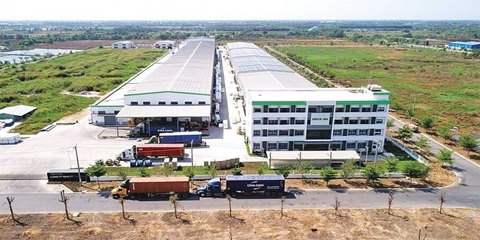
FOREIGN INVESTORS SEEKING A SYNCHRONISED MANUFACTURING ECOSYSTEM
Instead of focusing only on land costs and incentives as usual, foreign investors are seeking a synchronised manufacturing ecosystem, from stable power supply and logistics to shared infrastructure and the convenience of completing residence procedures for experts to serve their long-term investment in the country.
MEMBER CORNER / PROMOTIONS
SENTRYSAFE FHW40200 – PROTECT YOUR VALUABLES, ENJOY PEACE OF MIND!
Looking for a reliable solution to protect your important documents, cash, and valuables from fire and water damage? Genuine SENTRYSAFE - Reliable protection for your valuables and peace of mind! Contact Sen Wai Vietnam for more information and personalized product recommendations.
PROPERTY / INDUSTRIAL ZONE
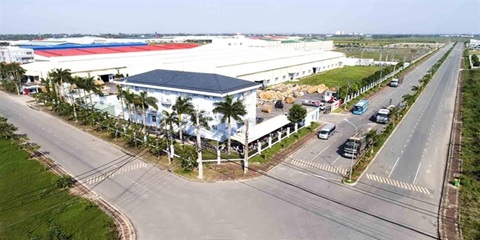
HCM CITY ATTRACTS US$5.7 BILLION INTO EXPORT PROCESSING AND INDUSTRIAL ZONES
HCM City attracted US$5.7 billion in domestic and foreign investment into its export processing and industrial zones during the first nine months of 2026. The figure exceeded the city's full-year target by 31 per cent, highlighting strong momentum in high-quality industrial investment under Resolution No.10-NQ/TW. Total investment reached 131 per cent of the 2026 target of $4.25 billion and represented a 29 per cent increase compared with the same period in 2025, according to the city's Export Processing and Industrial Zones Authority (HEPZA).
INFRASTRUCTURE / CONSTRUCTION / LOGISTIC / PORT
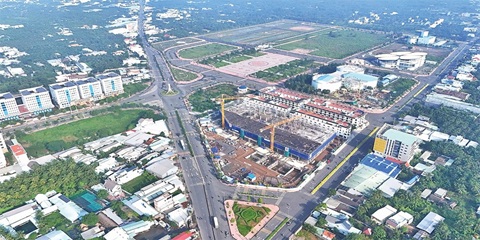
DONG THAP PROVINCE STEPS UP INDUSTRIAL EXPANSION AND INFRASTRUCTURE CONNECTIVITY
Accelerating public investment, strengthening inter-regional connectivity, and expanding industrial land are helping Dong Thap efficiently bolster competitiveness and drive economic growth. Following the 2025 merger of the former Dong Thap and Tien Giang provinces, the expanded Dong Thap province in the Mekong Delta faces mounting pressure to accelerate infrastructure development and strengthen connectivity among local economic zones, urban areas, industrial parks (IPs), and production centres.
Events Sponsors






















