Want to be in the loop?
subscribe to
our notification
Business News
HCMC STEPS UP PUBLIC INVESTMENT DISBURSEMENT
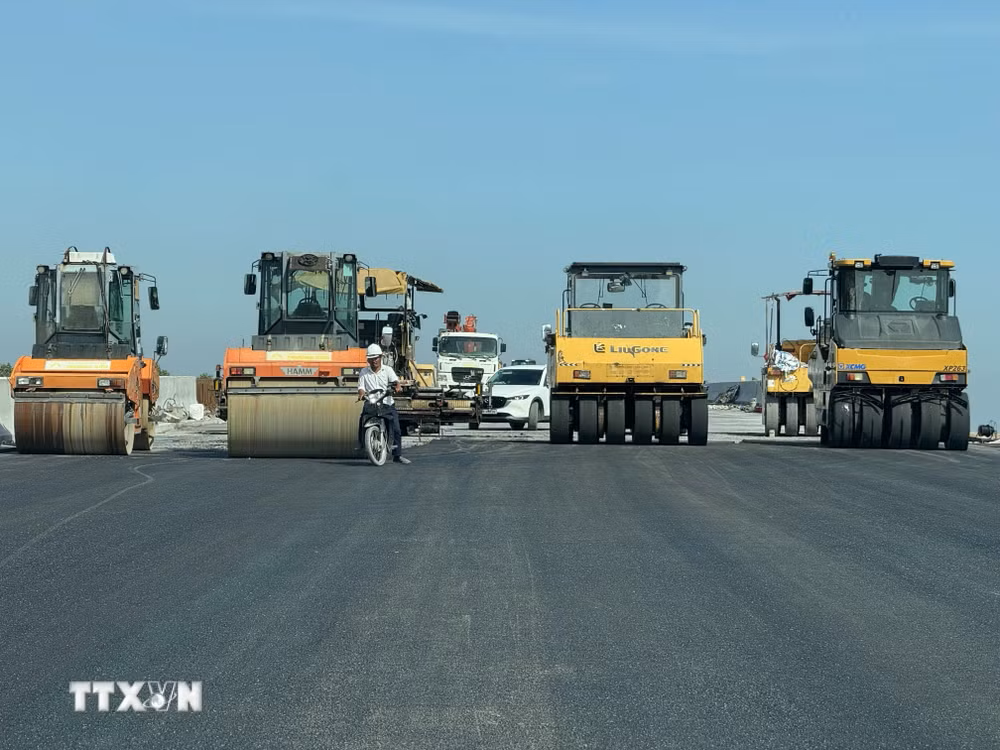
Fresh asphalt pavement is laid on a section of the Beltway No. 3 project in HCMC - PHOTO: VNA
HCMC – HCMC has ordered agencies and local authorities to accelerate public investment disbursement, which reached a mere 10.5% of the full-year target in the first four months of the year.
The city aims to fully disburse its record VND147.6 trillion public investment plan this year by removing bottlenecks related to land clearance, administrative procedures and construction, reported the Vietnam News Agency.
According to the HCMC Department of Finance, the city disbursed VND15.6 trillion in January-April, below the national average.
The southern metropolis was assigned the country’s largest public investment allocation for 2026, up 22.6% from last year and accounting for around 14.6% of Vietnam’s total public investment budget.
Hoang Vu Thanh, director of the Department of Finance, attributed the slow progress partly to the recent restructuring of the public investment management system.
The city reassigned responsibilities among project investors and management boards and established new commune-level project management units, slowing the transfer of documents and administrative work.
At a socioeconomic conference on May 8, Hoang Nguyen Dinh, vice chairman of the city’s People’s Committee, instructed agencies to treat full disbursement as a mandatory target rather than a goal to “strive” for.
Authorities warned that agencies and project investors missing disbursement targets could face accountability reviews in year-end performance evaluations.
The Department of Finance set a target for second-quarter disbursement at 30% to 35% of the full-year plan and maintained the goal of reaching 100% by year-end.
The city also ordered agencies to apply a “six clear principles” approach covering personnel, tasks, responsibilities, authority, timelines and outcomes. Officials will increase field inspections and focus on issues related to planning, design, bidding, contractor selection and land clearance.
Land clearance remains one of the main obstacles affecting key infrastructure projects.
According to the Department of Agriculture and Environment, the city allocated VND33.7 trillion for compensation and site clearance across 165 projects this year. About VND8.6 trillion, or 25% of that amount, has been disbursed so far.
The department attributed delays to land recovery procedures, site measurement and legal verification requirements under the 2024 Land Law.
Authorities in 168 communes, wards and special zones were instructed to review and resolve land clearance issues to avoid delays caused by paperwork moving between agencies.
Rising construction material costs have also affected several major projects.
The HCMC’s Beltway Road No. 3 project is expected to be delayed by about six months from the original schedule, according to the HCMC Management Board for Investment and Construction of Transportation Projects.
The authority reported that overall construction progress reached about 76%, with packages in the former Thu Duc City area at 83% completion and works in Cu Chi, Hoc Mon and Binh Chanh at around 68%.
It attributed the pressure partly to rising fuel prices linked to tensions in the Middle East, which increased the costs of transporting materials and operating equipment. Shortages of imported asphalt and asphalt concrete also affected construction schedules.
Project owners and contractors are working with quarry operators to increase material supply while authorities proposed updating official construction material price lists to better reflect market conditions.
Source: The Saigon Times
Related News

BANKING / FINANCE / INSURANCE / TAX
REMITTANCES TO HCM CITY RISE NEARLY 40% IN Q3
Remittances to HCM City reached more than US$2.83 billion in the third quarter of this year, up 39.5 per cent from the previous quarter and 3.6 per cent year-on-year. This was the first quarter showing positive annual growth this year, helping narrow the decline in remittance inflows over the first nine months. According to the State Bank of Vietnam (SBV)’s Regional Branch 2, remittances transferred to HCM City through credit institutions and economic organisations totalled $2.835 billion in Q3, an increase of more than $802 million from the previous quarter.
TECHNOLOGY
TECH SECTOR GROWTH OPENS UP OPPORTUNITIES FOR VIỆT NAM TO GO GLOBAL
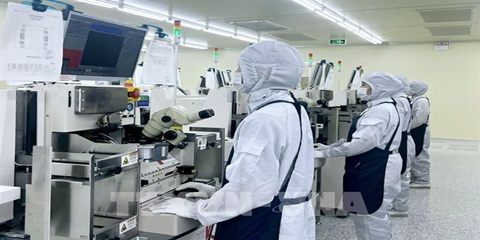
The growth of the electronics, semiconductor and high-tech sectors worldwide is opening up a variety of opportunities for Vietnamese enterprises to integrate more deeply into the global supply chain. However, to become suppliers for these corporations, domestic enterprises must meet rigorous standards regarding quality, technology, productivity and order fulfilment capabilities.
VIETNAM ECONOMY INVESTMENT
FOREIGN INVESTORS SEEKING A SYNCHRONISED MANUFACTURING ECOSYSTEM
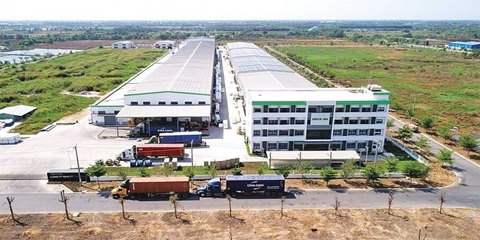
Instead of focusing only on land costs and incentives as usual, foreign investors are seeking a synchronised manufacturing ecosystem, from stable power supply and logistics to shared infrastructure and the convenience of completing residence procedures for experts to serve their long-term investment in the country.
MEMBER CORNER / PROMOTIONS
SENTRYSAFE FHW40200 – PROTECT YOUR VALUABLES, ENJOY PEACE OF MIND!
Looking for a reliable solution to protect your important documents, cash, and valuables from fire and water damage? Genuine SENTRYSAFE - Reliable protection for your valuables and peace of mind! Contact Sen Wai Vietnam for more information and personalized product recommendations.
PROPERTY / INDUSTRIAL ZONE
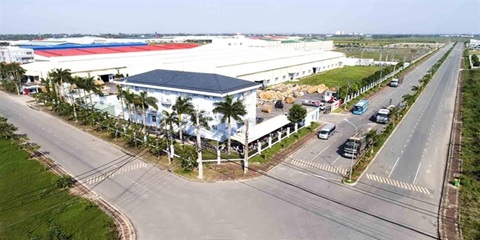
HCM CITY ATTRACTS US$5.7 BILLION INTO EXPORT PROCESSING AND INDUSTRIAL ZONES
HCM City attracted US$5.7 billion in domestic and foreign investment into its export processing and industrial zones during the first nine months of 2026. The figure exceeded the city's full-year target by 31 per cent, highlighting strong momentum in high-quality industrial investment under Resolution No.10-NQ/TW. Total investment reached 131 per cent of the 2026 target of $4.25 billion and represented a 29 per cent increase compared with the same period in 2025, according to the city's Export Processing and Industrial Zones Authority (HEPZA).
INFRASTRUCTURE / CONSTRUCTION / LOGISTIC / PORT
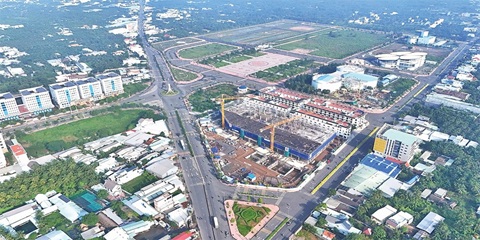
DONG THAP PROVINCE STEPS UP INDUSTRIAL EXPANSION AND INFRASTRUCTURE CONNECTIVITY
Accelerating public investment, strengthening inter-regional connectivity, and expanding industrial land are helping Dong Thap efficiently bolster competitiveness and drive economic growth. Following the 2025 merger of the former Dong Thap and Tien Giang provinces, the expanded Dong Thap province in the Mekong Delta faces mounting pressure to accelerate infrastructure development and strengthen connectivity among local economic zones, urban areas, industrial parks (IPs), and production centres.
Events Sponsors






















