Want to be in the loop?
subscribe to
our notification
Business News
HCM CITY RAMPS UP EFFORTS TO ATTRACT LARGE FOREIGN INVESTMENTS
Following its merger with Bình Dương and Bà Rịa-Vũng Tàu provinces, the new HCM City is targeting US$10.44 billion in foreign direct investment this year.
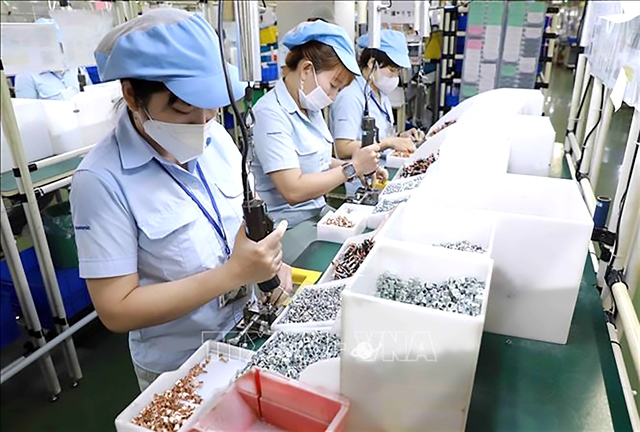
Workers at a foreign factory in HCM City. The new city is aiming to attract US$10.44 billion in foreign direct investment in 2025. — VNA/VNS Photo
HCM CITY — Following its merger with Bình Dương and Bà Rịa-Vũng Tàu provinces early this month, the new HCM City is targeting US$10.44 billion in foreign direct investment this year.
To achieve this goal, it is implementing a range of measures to foster a more transparent and streamlined investment environment for both domestic and foreign investors.
According to its Department of Finance, in the first half of 2025, the city licensed 945 new FDI projects worth $4.72 billion, a year-on-year increase of 32 per cent.
Of the $10.44 billion targeted for the full year, the former HCM City is expected to contribute $7 billion, Bình Dương $1.8 billion, and Bà Rịa–Vũng Tàu $1.64 billion.
The city is finalising a portfolio of priority projects to attract investment in strategic sectors such as international transshipment ports, innovation hubs, R&D centres, new materials technology, clean energy, semiconductors, design and manufacturing of integrated circuits, flexible electronics, chips, and advanced battery technologies.
One of the standout projects is the Cần Giờ International Transshipment Port.
Lâm Đình Thắng, director of the Department of Science and Technology, said that many investors are currently looking for land to develop large- and mega-scale data centres.
The city plans to convert five existing export processing zones (EPZs) and industrial parks (IPs) — Tân Thuận, Tân Bình, Hiệp Phước, Cát Lái, and Bình Chiểu — into high-tech and innovation-oriented zones, with the proposal expected to be submitted to the administration in July, he added.
Following the merger, HCM City now has 64 operational EPZs and IPs.
The total industrial land zoned across the new city has reached 45,000 hectares, a major step toward addressing the city’s persistent challenge of limited industrial land.
According to Lê Văn Thinh, head of the HCM City Export Processing and Industrial Zones Authority, the EPZs and IPs aim to attract $3.73 billion worth of investment in 2025.
Bình Dương, which accounts for nearly half of the EPZs and IPs in the newly expanded city, has recently launched two more major ones, Cây Trường IP and Bàu Bàng Phase 2, at a cost of VNĐ5.5 trillion ($210.8 million). These are next-generation industrial parks developed to international standards, integrating digital technologies, smart monitoring systems and automated management.
Cây Trường IP spans 700 hectares and prioritises eco-friendly and high-tech industries, while the Bàu Bàng expansion adds 380 hectares of clean, ready-for-development land for large-scale manufacturing projects.
The Tam Lập 2 industrial cluster developed by Gia Định Group in northern Bình Dương focuses on investors with clean technologies and energy efficient and low-emission processes.
The company has promised to offer competitive land rentals.
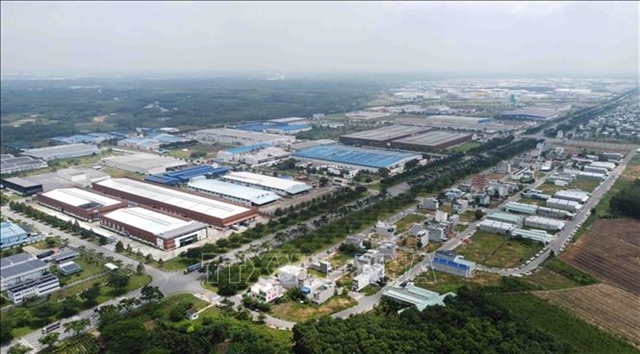
A view of Việt Nam-Singapore Industrial Park in the new HCM City. Following the merger, the city now has 64 export processing zones and industrial parks in operation. — VNA/VNS Photo
Creating more open investment climate
In addition to infrastructure development, HCM City is also placing strong emphasis on administrative reform to ease investment procedures.
According to Nguyễn Công Vinh, director of the Department of Finance, five out of 22 investment-related administrative procedures under his department’s authority are now processed 30 per cent faster.
This year, over 3,300 applications, or 93.4 per cent of the total number received, have benefited from this faster timeline, he said.
Soon, key procedures such as amendments to investment registration certificates and project adjustments will be completed within a single working day, he said.
Others such as reissuance, data correction and setting up representative offices will also see a 30 per cent reduction in processing time.
Related appraisal agencies would be required to complete their reviews within seven working days.
The city is also updating its list of key investment projects with detailed information on land availability, planning, and investment forms, making it easier for both domestic and international investors to access opportunities.
To further attract high-quality investment, Thinh stressed the importance of a coordinated approach by the city’s EPZs and IPs to help businesses complete administrative formalities, design targeted incentives for high-tech firms, and strengthen connections between businesses and financial institutions to enhance access to funding.
Strengthening relationships with international business associations and chambers of commerce such as JETRO, EuroCham, and AmCham is key to engaging potential foreign investors, he said.
Moreover, the city must improve its ability to anticipate developments that could impact businesses to come up with timely solutions, he added. — VNS
Source: VNS
Related News

BANKING / FINANCE / INSURANCE / TAX
REMITTANCES TO HCM CITY RISE NEARLY 40% IN Q3
Remittances to HCM City reached more than US$2.83 billion in the third quarter of this year, up 39.5 per cent from the previous quarter and 3.6 per cent year-on-year. This was the first quarter showing positive annual growth this year, helping narrow the decline in remittance inflows over the first nine months. According to the State Bank of Vietnam (SBV)’s Regional Branch 2, remittances transferred to HCM City through credit institutions and economic organisations totalled $2.835 billion in Q3, an increase of more than $802 million from the previous quarter.
TECHNOLOGY
TECH SECTOR GROWTH OPENS UP OPPORTUNITIES FOR VIỆT NAM TO GO GLOBAL
The growth of the electronics, semiconductor and high-tech sectors worldwide is opening up a variety of opportunities for Vietnamese enterprises to integrate more deeply into the global supply chain. However, to become suppliers for these corporations, domestic enterprises must meet rigorous standards regarding quality, technology, productivity and order fulfilment capabilities.
VIETNAM ECONOMY INVESTMENT
FOREIGN INVESTORS SEEKING A SYNCHRONISED MANUFACTURING ECOSYSTEM
Instead of focusing only on land costs and incentives as usual, foreign investors are seeking a synchronised manufacturing ecosystem, from stable power supply and logistics to shared infrastructure and the convenience of completing residence procedures for experts to serve their long-term investment in the country.
MEMBER CORNER / PROMOTIONS
SENTRYSAFE FHW40200 – PROTECT YOUR VALUABLES, ENJOY PEACE OF MIND!
Looking for a reliable solution to protect your important documents, cash, and valuables from fire and water damage? Genuine SENTRYSAFE - Reliable protection for your valuables and peace of mind! Contact Sen Wai Vietnam for more information and personalized product recommendations.
PROPERTY / INDUSTRIAL ZONE
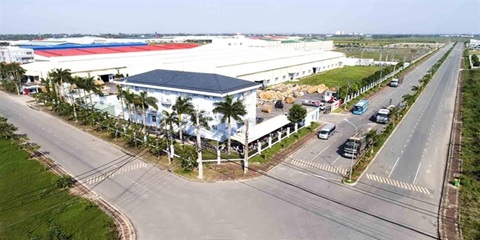
HCM CITY ATTRACTS US$5.7 BILLION INTO EXPORT PROCESSING AND INDUSTRIAL ZONES
HCM City attracted US$5.7 billion in domestic and foreign investment into its export processing and industrial zones during the first nine months of 2026. The figure exceeded the city's full-year target by 31 per cent, highlighting strong momentum in high-quality industrial investment under Resolution No.10-NQ/TW. Total investment reached 131 per cent of the 2026 target of $4.25 billion and represented a 29 per cent increase compared with the same period in 2025, according to the city's Export Processing and Industrial Zones Authority (HEPZA).
INFRASTRUCTURE / CONSTRUCTION / LOGISTIC / PORT
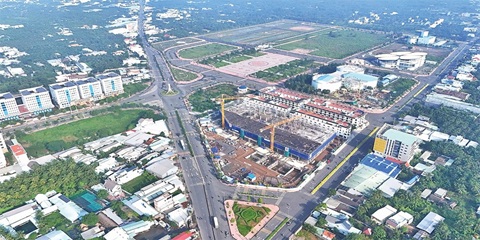
DONG THAP PROVINCE STEPS UP INDUSTRIAL EXPANSION AND INFRASTRUCTURE CONNECTIVITY
Accelerating public investment, strengthening inter-regional connectivity, and expanding industrial land are helping Dong Thap efficiently bolster competitiveness and drive economic growth. Following the 2025 merger of the former Dong Thap and Tien Giang provinces, the expanded Dong Thap province in the Mekong Delta faces mounting pressure to accelerate infrastructure development and strengthen connectivity among local economic zones, urban areas, industrial parks (IPs), and production centres.
Events Sponsors






















