Want to be in the loop?
subscribe to
our notification
Business News
HCM CITY LEADS ECONOMIC RESTRUCTURING IN SOUTHEAST REGION
Administrative restructuring is creating new opportunities to reorganise the Southeast region’s economic and social development space, experts said at a national conference on September 24.
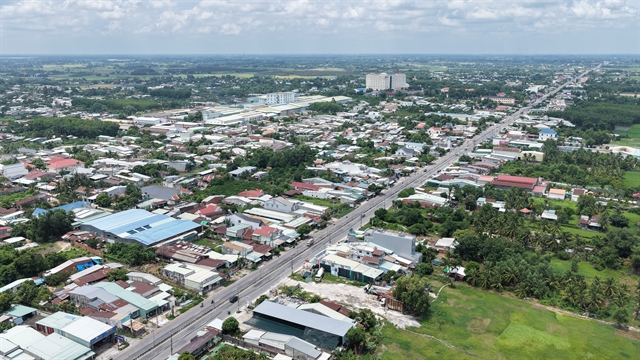
National Highway 22 in Gò Dầu Ward, Tây Ninh Province, is planned to be expanded to eight lanes. — VNA/VNS Photo
HCM CITY — Administrative restructuring is creating new opportunities to reorganise the Southeast region’s economic and social development space, experts said at a recent national conference on socio-economic structure of Southeast provinces after mergers.
According to Associate Professor, Dr Vũ Tuấn Hưng, director of the Institute of Social Sciences of the Southern Region, the Southeast is a strategically important socio-economic space in Việt Nam’s development given its advantages in location, industry, trade, services, logistics, science and technology, urbanisation and human resources.
In the new context, administrative restructuring is no longer simply a matter of reorganising institutions and local governance, but also calls for a broader rethink of development space, socio-economic transformation, resource allocation and regional connectivity.
Hưng said changes in administrative boundaries could open up opportunities to expand development, connect resources and leverage local strengths, but turning them into tangible growth would require an evidence-based approach covering infrastructure, human resources, labour markets, social welfare, governance and sustainability.
Prioritising connectivity
Discussing solutions for restructuring the Southeast’s development space after the mergers, Dr Hoàng Văn Tú of the city's Cadre Academy said investment priorities should be based on network impacts.
High-priority projects should include nodes and transport routes capable of significantly reducing travel and freight times between industrial parks, ports, airports and border gates, while removing bottlenecks and enabling multimodal connectivity.
Project selection should consider the reduction in travel time, potential shifts in freight volumes, the number of localities benefiting and the ability to mobilise non-budgetary capital, he said.
Land should also be prioritised for activities with high value and strong spillover effects.
For locations near airports, ports, ring roads and railways, project assessments should consider value added per hectare, high-skilled employment, linkages with regional businesses, energy consumption and water reuse capacity.
“Regional coordination should focus on project portfolios and economic corridors rather than general discussions. For inter-provincial projects, it is necessary to clearly identify investors, beneficiaries, co-financing mechanisms and common evaluation indicators,” Tú said.
He added that the regional coordination council could focus on projects with impacts beyond administrative boundaries, shared data and the resolution of conflicts of interest.
The region should also periodically publish a common set of indicators covering travel time between growth centres, logistics costs, industrial land productivity, quality FDI, the proportion of skilled workers, worker housing, emissions and public transport use.
Shared data would help ensure that project allocation decisions were less dependent on the individual objectives of each locality, Tú said.
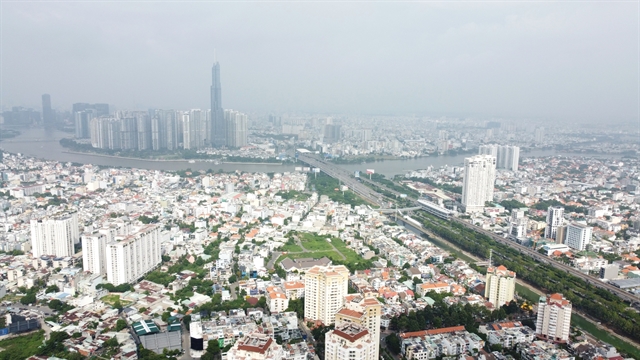
The central area of HCM City plays an important role in the development planning of the Southeast region.— VNA/VNS Photo
Infrastructure and labour
Dr Nguyễn Phúc Khánh Linh of HCM City Open University identified two major bottlenecks facing Southeast localities: infrastructure connectivity barriers and an imbalance in labour supply.
She recommended that authorities at all levels accelerate the completion of major ring roads, including Ring Roads 3, 4, 4.5 and 5, as well as railway systems directly connecting industrial production centres in Đồng Nai and Tây Ninh with the deep-water port complex at Cái Mép-Thị Vải.
Long-term development of urban railway networks and bus rapid transit routes linking neighbouring localities should also be accelerated, she said.
Integrating transit-oriented development (TOD) around major inter-regional transport hubs would increase the capacity of mass passenger transport while encouraging workers to reduce their reliance on private vehicles, thereby easing traffic congestion and reducing environmental pollution.
Linh also highlighted the need to address disparities in labour supply following administrative mergers.
Newly merged localities should establish training-order mechanisms, while major universities in HCM City should expand branches or develop local training partnerships in industrial areas on the outskirts of the city.
Such programmes should focus on equipping local workers with practical skills and updating their technological knowledge to meet the requirements of modern production, she said.
To retain experts, engineers and scientists in newly merged areas, financial incentives alone would not be sufficient. Coordinated investment in social infrastructure, including social housing, hospitals and quality schools, would encourage long-term settlement and help narrow the quality-of-life gap between core and peripheral areas.
At the conference, experts and researchers examined the current situation and trends in restructuring the Southeast’s socio-economic structure, with particular attention to changes in development space, growth centres, economic corridors, industrial structures, ownership structures and resource distribution.
They also identified opportunities, challenges and bottlenecks in regional development, particularly those related to infrastructure, human resources, labour markets, urbanisation, population distribution, access to social services and inclusive development.
The conference further examined the potential, advantages and development orientations of HCM City, Đồng Nai and Tây Ninh following the administrative restructuring.
Experts discussed the potential formation of new value chains and economic spaces, while calling for stronger intra-regional and inter-regional linkages.
The discussions are expected to contribute policy recommendations on improving governance institutions, strengthening coordination, making better use of the strengths of individual localities and promoting regional connectivity.
These measures would provide a foundation for faster and more sustainable development in the Southeast region during the 2026-30 period and beyond, participants said. — VNS
Source: VNS
Related News

BANKING / FINANCE / INSURANCE / TAX
REMITTANCES TO HCM CITY RISE NEARLY 40% IN Q3
Remittances to HCM City reached more than US$2.83 billion in the third quarter of this year, up 39.5 per cent from the previous quarter and 3.6 per cent year-on-year. This was the first quarter showing positive annual growth this year, helping narrow the decline in remittance inflows over the first nine months. According to the State Bank of Vietnam (SBV)’s Regional Branch 2, remittances transferred to HCM City through credit institutions and economic organisations totalled $2.835 billion in Q3, an increase of more than $802 million from the previous quarter.

TECHNOLOGY
TECH SECTOR GROWTH OPENS UP OPPORTUNITIES FOR VIỆT NAM TO GO GLOBAL
The growth of the electronics, semiconductor and high-tech sectors worldwide is opening up a variety of opportunities for Vietnamese enterprises to integrate more deeply into the global supply chain. However, to become suppliers for these corporations, domestic enterprises must meet rigorous standards regarding quality, technology, productivity and order fulfilment capabilities.

VIETNAM ECONOMY INVESTMENT
FOREIGN INVESTORS SEEKING A SYNCHRONISED MANUFACTURING ECOSYSTEM
Instead of focusing only on land costs and incentives as usual, foreign investors are seeking a synchronised manufacturing ecosystem, from stable power supply and logistics to shared infrastructure and the convenience of completing residence procedures for experts to serve their long-term investment in the country.

MEMBER CORNER / PROMOTIONS
SENTRYSAFE FHW40200 – PROTECT YOUR VALUABLES, ENJOY PEACE OF MIND!
Looking for a reliable solution to protect your important documents, cash, and valuables from fire and water damage? Genuine SENTRYSAFE - Reliable protection for your valuables and peace of mind! Contact Sen Wai Vietnam for more information and personalized product recommendations.

PROPERTY / INDUSTRIAL ZONE
HCM CITY ATTRACTS US$5.7 BILLION INTO EXPORT PROCESSING AND INDUSTRIAL ZONES
HCM City attracted US$5.7 billion in domestic and foreign investment into its export processing and industrial zones during the first nine months of 2026. The figure exceeded the city's full-year target by 31 per cent, highlighting strong momentum in high-quality industrial investment under Resolution No.10-NQ/TW. Total investment reached 131 per cent of the 2026 target of $4.25 billion and represented a 29 per cent increase compared with the same period in 2025, according to the city's Export Processing and Industrial Zones Authority (HEPZA).

INFRASTRUCTURE / CONSTRUCTION / LOGISTIC / PORT
DONG THAP PROVINCE STEPS UP INDUSTRIAL EXPANSION AND INFRASTRUCTURE CONNECTIVITY
Accelerating public investment, strengthening inter-regional connectivity, and expanding industrial land are helping Dong Thap efficiently bolster competitiveness and drive economic growth. Following the 2025 merger of the former Dong Thap and Tien Giang provinces, the expanded Dong Thap province in the Mekong Delta faces mounting pressure to accelerate infrastructure development and strengthen connectivity among local economic zones, urban areas, industrial parks (IPs), and production centres.
Events Sponsors






















