Want to be in the loop?
subscribe to
our notification
Business News
HCM CITY LEADS AS SOUTHEAST REMAINS PRIME DESTINATION FOR FDI
HCM City led with US$6.2 billion, followed by Đồng Nai with US$1.8 billion and Tây Ninh with US$1.215 billion, emphasising the region’s standing as a key destination for international investors despite the structural changes in governance.
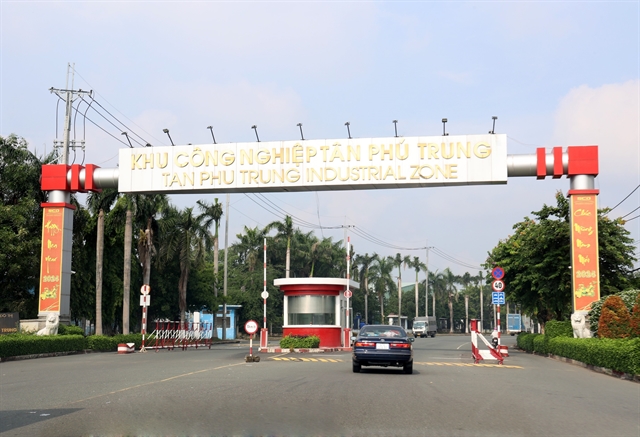
Tân Phú Trung Industrial Park in HCM City’s Củ Chi Commune, located near National Highway No.22, the arterial road connecting the city with Tây Ninh Province and the border area with Cambodia. VNA/VNS Photo
HCM CITY – Following the reorganisation of provinces and cities across the country, the southeast remains its most dynamic economic hub, with foreign direct investment inflows in the first seven months of this year running into billions of dollars.
HCM City led with US$6.2 billion, followed by Đồng Nai with US$1.8 billion and Tây Ninh with US$1.215 billion, emphasising the region’s standing as a key destination for international investors despite the structural changes in governance.
In Đồng Nai, the consistent strategy of selectivity in accepting investment remains unchanged.
The provincial Industrial Zones and Economic Zones Authority said that priority is given to large-scale projects with advanced technology and skilled labour, especially in supporting industries.
With 81 industrial zones and 63 industrial clusters, completed and planned, over more than 42,000ha of land, Đồng Nai remains one of the country’s main industrial hubs.
After more than 35 years of opening its doors to FDI, the province has become a bright spot on the international investment map with nearly 2,200 projects with capital exceeding $41.4 billion by investors from 51 countries and territories.
Major corporations such as Amata, C.P. (Thailand), Nestlé (Switzerland), Coherent, Cargill (the US) and Hyosung (South Korea) have an entrenched presence in Đồng Nai.
In the first seven months of 2025 Đồng Nai licensed 85 new projects with registered capital of more than $605 million, while 103 existing ones added over $943 million.
Chairman of the provincial People’s Committee, Võ Tấn Đức, promised continued assistance and the best conditions to investors with priority given to high-tech projects.
International investors point to Đồng Nai’s strategic location, steadily improving transport infrastructure and strong industry–services ecosystem as decisive advantages.
Tây Ninh Province has identified industrial infrastructure as a crucial driver of growth.
Its development plan for until 2030 lists 59 industrial parks, 82 industrial clusters, four international border gates, three border gate economic zones and one international port.
The province targets economic growth of 9–9.5 per cent in 2025 and in excess of 10 per cent in subsequent years.
Tây Ninh recently approved and granted construction permits for the Bình Hòa Nam No.1 Industrial Park in Đức Huệ Commune. Covering over 322ha with an investment of VNĐ3.9 trillion ($156 million) by Hoàn Cầu Long An Co., Ltd., the project is seen as a key driver to expand the province’s industrial space southwards, attract FDI and boost economic restructuring towards industrialisation and modernisation.
Huỳnh Văn Sơn, deputy chairman of the Tây Ninh People’s Committee, said investors in the province needed to focus on timely implementation and environmental protection.
He also instructed government departments and local authorities to work closely together so that the park could open soon, spurring trade, services, logistics, and labour training.
HCM City continues to hold the top position nationwide in attracting FDI.
As of July 29, its export processing and industrial zones alone had attracted $2.43 billion, contributing substantially to the total FDI of over $3.6 billion.
Remarkably, more than $1 billion came into high-tech projects, reflecting the city’s commitment to innovation-driven development.
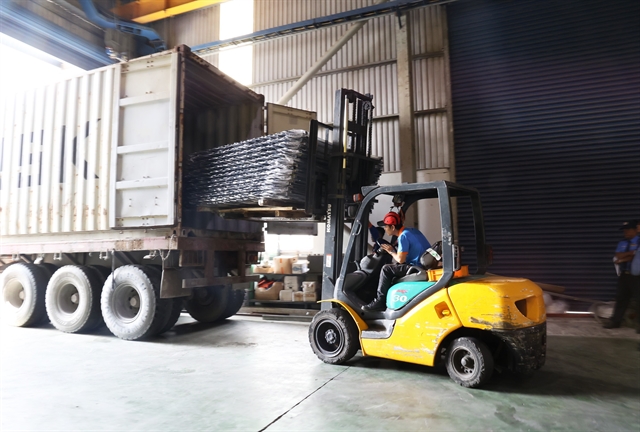
Logistics activities in HCM City's Tân Phú Trung Industrial Park. VNA/VNS Photo
Notable projects include a $42 million semiconductor equipment manufacturing plant by BE Semiconductor Industries N.V (the Netherlands) and a $48 million expansion by Amazon Data Services Việt Nam (the US).
People’s Committee chairman Nguyễn Văn Được said FDI remained a bright spot, proving the city’s strong appeal to global corporations.
To sustain growth, HCM City has been actively soliciting investment in Singapore, Malaysia and major international trade fairs, improving the business environment, upgrading infrastructure, and reducing dependence on tax incentives.
Experts said the revival of FDI flows stemmed from the city’s improved competitiveness and support policies.
On July 1 Bà Rịa – Vũng Tàu and Bình Dương provinces were merged with the city, increasing opportunities for creating inter-regional value chains linking industry, services and logistics.
The city targets $10.44 billion in FDI in 2025, with about $7 billion expected in the former HCM City area.
In the coming years, the city will focus on major programmes such as developing an international financial centre, completing its metro network and expanding its logistics and digital infrastructure to remain attractive to investors and reinforce its role as the nation’s growth locomotive.
With infrastructure advantages, international gateways and increasingly selective investment policies, the region is emerging as a magnet for multinational corporations.
This forms the foundation for sustainable growth and contributes to shaping the national investment strategy in an era of intensifying global competition. – VNS
Source: VNS
Related News

BANKING / FINANCE / INSURANCE / TAX
REMITTANCES TO HCM CITY RISE NEARLY 40% IN Q3
Remittances to HCM City reached more than US$2.83 billion in the third quarter of this year, up 39.5 per cent from the previous quarter and 3.6 per cent year-on-year. This was the first quarter showing positive annual growth this year, helping narrow the decline in remittance inflows over the first nine months. According to the State Bank of Vietnam (SBV)’s Regional Branch 2, remittances transferred to HCM City through credit institutions and economic organisations totalled $2.835 billion in Q3, an increase of more than $802 million from the previous quarter.

TECHNOLOGY
TECH SECTOR GROWTH OPENS UP OPPORTUNITIES FOR VIỆT NAM TO GO GLOBAL
The growth of the electronics, semiconductor and high-tech sectors worldwide is opening up a variety of opportunities for Vietnamese enterprises to integrate more deeply into the global supply chain. However, to become suppliers for these corporations, domestic enterprises must meet rigorous standards regarding quality, technology, productivity and order fulfilment capabilities.

VIETNAM ECONOMY INVESTMENT
FOREIGN INVESTORS SEEKING A SYNCHRONISED MANUFACTURING ECOSYSTEM
Instead of focusing only on land costs and incentives as usual, foreign investors are seeking a synchronised manufacturing ecosystem, from stable power supply and logistics to shared infrastructure and the convenience of completing residence procedures for experts to serve their long-term investment in the country.

MEMBER CORNER / PROMOTIONS
SENTRYSAFE FHW40200 – PROTECT YOUR VALUABLES, ENJOY PEACE OF MIND!
Looking for a reliable solution to protect your important documents, cash, and valuables from fire and water damage? Genuine SENTRYSAFE - Reliable protection for your valuables and peace of mind! Contact Sen Wai Vietnam for more information and personalized product recommendations.

PROPERTY / INDUSTRIAL ZONE
HCM CITY ATTRACTS US$5.7 BILLION INTO EXPORT PROCESSING AND INDUSTRIAL ZONES
HCM City attracted US$5.7 billion in domestic and foreign investment into its export processing and industrial zones during the first nine months of 2026. The figure exceeded the city's full-year target by 31 per cent, highlighting strong momentum in high-quality industrial investment under Resolution No.10-NQ/TW. Total investment reached 131 per cent of the 2026 target of $4.25 billion and represented a 29 per cent increase compared with the same period in 2025, according to the city's Export Processing and Industrial Zones Authority (HEPZA).

INFRASTRUCTURE / CONSTRUCTION / LOGISTIC / PORT
DONG THAP PROVINCE STEPS UP INDUSTRIAL EXPANSION AND INFRASTRUCTURE CONNECTIVITY
Accelerating public investment, strengthening inter-regional connectivity, and expanding industrial land are helping Dong Thap efficiently bolster competitiveness and drive economic growth. Following the 2025 merger of the former Dong Thap and Tien Giang provinces, the expanded Dong Thap province in the Mekong Delta faces mounting pressure to accelerate infrastructure development and strengthen connectivity among local economic zones, urban areas, industrial parks (IPs), and production centres.
Events Sponsors






















