Want to be in the loop?
subscribe to
our notification
Business News
HCM CITY AIMS FOR ‘SMART CITY’ STATUS BY 2025
HCM City authorities will continue to resolve flooding and traffic congestion, build major transport works, and streamline administrative procedures to reach “smart city” status by 2030, a city official has said.
Speaking at a recent city People’s Council meeting, Nguyễn Thanh Phong, chairman of the city People’s Committee, said that two transport projects worth more than VNĐ12 trillion (US$521.8 million) have been approved.
These include An Phú Intersection in Thủ Đức new city and the renovation of Tham Lương, Bến Cát and Nước Lên canals, to be implemented from now to 2025, according to Phong.
It will cost VNĐ3.926 trillion to build An Phú intersection, including VNĐ1.8 trillion from the central State budget and VNĐ2.126 trillion from the city budget.
The three-level intersection will have overpasses and a tunnel. It will start from the approach road to the HCM City-Long Thành-Dầu Giây expressway and end at the Lương Định Của Street, which often sees serious congestion.
In addition, the upgrade of the Tham Lương, Bến Cát and Nước Lên canals will need VNĐ8.2 trillion, including VNĐ4 trillion from the State budget and VNĐ4.2 trillion from the city budget.
The 32km-long project goes through District 12 and Bình Tân, Tân Phú, Tân Bình, Gò Vấp, Bình Thạnh and Bình Chánh districts.
It is expected to help reduce flooding in the central business district and the northwestern part of the city. It will also improve waterway connections between the city and southern provinces.
‘Smart city’ status by 2025
Phong said the city would focus on “research and development of AI applications in HCM City” in order to become a smart city by 2025.
Under the programme to become a smart city by 2025, a database of all sectors, ranging from housing, transport and environment to healthcare, will share data with all of the city’s administrative departments.
This will help social organisations, businesses and residents have better access to public information and services online through mobile devices and other means, according to Phong.
The city will also focus on developing AI technologies and improving human resources by using AI in education and training, and enhancing academic communications with foreign AI professionals.
In addition, an innovative urban area in the eastern part of the city will continue to be built. The city has already approved the establishment of Thủ Đức new city by merging the three eastern districts of 2, 9, and Thủ Đức.
The new city will cover more than 211sq.km and be home to more than 1.1 million people. It is expected to promote economic growth in the city and the southern region.
It will serve as a centre for three main functions: scientific and technological research and application; education and training of high-quality human resources; and production and trade of hi-tech products and services.
It is expected to contribute a third of the city’s GDP, accounting for 7 per cent of national GDP.
The city has been working on the eastern innovative urban area project, including the Thủ Thiêm New Urban Area in District 2, the Northwest urban area, and the Cần Giờ sea tourist urban area, according to Phong.
Phong pointed out that the city needs more capital for public investment in infrastructure.
He said, for example, from 2016-2021, the city needed VNĐ302.8 trillion to implement nearly 1,950 public transport projects, but the city only managed to allocate about half of that amount.
The city has asked the central government for permission to raise the budget-revenue retention ratio to 24 per cent in the 2021-2025 period, and 33 per cent in the 2026-2030 period. The latter ratio was granted to the city back in 2003. The ratio refers to revenue that the city gives to the central government.
“The new ratio will ensure that the city will achieve sustainable development,” according to Phong.
With a population of 13 million, HCM City, as the nation’s economic locomotive, contributes 24 per cent of the country’s GDP and 27 per cent of the national budget.
Source: VNS
Related News

CHARITY / EXHIBITION / OTHER EVENTS
INVESTMENT OPPORTUNITIES IN CA MAU PROVINCE: 96 PROJECTS AND 20 STRATEGIC PROJECTS
We are pleased to share with you information on investment projects currently seeking investors in Ca Mau Province. Should your esteemed company or association be interested, we kindly invite you to review the project information and complete the registration form via the links provided. The Ho Chi Minh City Investment and Trade Promotion Centre (ITPC) will consolidate the expressions of interest and facilitate connections with the leadership of Ca Mau Province at a meeting tentatively scheduled for 13 November 2026 in Ho Chi Minh City.

MEMBER CORNER / PROMOTIONS
BẰNG KIỀU LIVESHOW - A SYMPHONY OF LOVE UNDER THE GOLDEN GLOW
A masterclass in live music that takes the audience on a soulful journey through immortal love songs, guided by the peerless artistry and emotive storytelling of renowned singer Bằng Kiều. The highlight of the night is his seamless musical chemistry with special guest Triệu Hồng Ngọc, promising passionate and deeply resonant duets inside the magnificent Grand Ballroom.
INFRASTRUCTURE / CONSTRUCTION / LOGISTIC / PORT
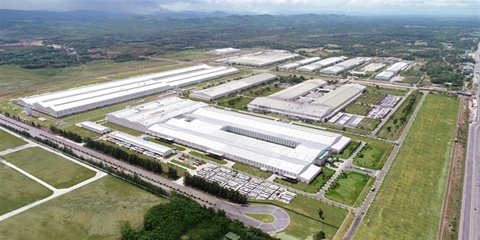
ĐÀ NẴNG GREEN-LIGHTS US$105 MILLION THAI DEVELOPMENT DEAL
The central city has approved an investment proposal by Thailand’s WHA Group to develop infrastructure for the 400ha WHA Đà Nẵng Industrial Park project on two communes of Thăng Bình and Đồng Dương, with an investment of more than VNĐ2.7 trillion (US$105 million). The city said it approved WHA Industrial Development International's status as an investor in the project, which is expected to take place between 2027 and 2034.
VIETNAM ECONOMY INVESTMENT
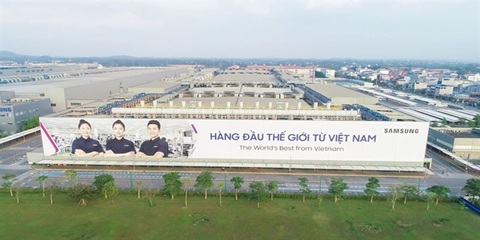
MOBILE PHONE EXPORTS RISE 20% TO $51.8 BILLION IN FIRST NINE MONTHS
Exports of mobile phones and components rose 20 per cent year-on-year to nearly US$51.8 billion in the first nine months of 2026, with China, the US and Republic of Korea accounting for more than half of the total. Shipments to the three markets reached a combined $26.18 billion, or 50.6 per cent of total exports of the product group during the period, according to data from the Vietnam Department of Customs under the Ministry of Finance.
INFRASTRUCTURE / CONSTRUCTION / LOGISTIC / PORT
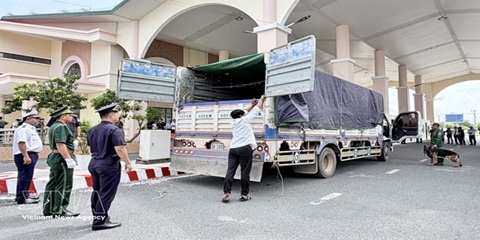
VIỆT NAM-CAMBODIA TRADE GATHERS PACE TOWARDS $20 BILLION TARGET
Trade between Việt Nam and Cambodia continues to grow, remaining a bright spot and a key pillar of bilateral cooperation as the two countries aim to raise two-way trade to US$20 billion in the coming years. After setting a record of more than $11.3 billion last year, bilateral trade reached about $8.7 billion in the first eight months of this year, up 8.3 per cent year on year.
VIETNAM ECONOMY INVESTMENT
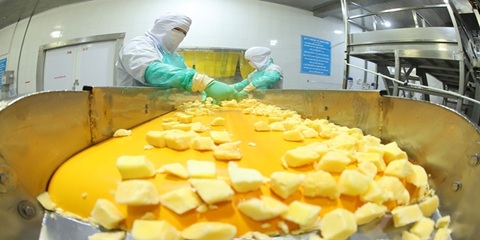
FRUIT AND VEGETABLE EXPORTS POISED TO HIT $10 BILLION IN 2026
Fruit and vegetable exports are on track to reach nearly US$10 billion in 2026, after rising 19.9 per cent year on year to nearly US$7.4 billion in the first nine months, driven by strong seasonal demand and abundant tropical fruit supplies. The Ministry of Agriculture and Environment said the growth reflected stronger international demand for fresh produce and processed agricultural products.
Events Sponsors






















