Want to be in the loop?
subscribe to
our notification
Business News
HARRIS VISIT ILLUSTRATING US EMBRACE OF SE ASIA
Vietnam and the United States are expected to see their bilateral ties, especially in investment and trade, to escalate from this year thanks to the latter’s high-level visits to the former, with both nations expected to raise their relationship to a higher level.
The White House’s senior advisor and chief spokesperson Symone Sanders confirmed that US Vice President Kamala Harris will travel to Singapore and Vietnam this month to strengthen relationships and expand economic cooperation with two critical Indo-Pacific partners of the United States.
The visit is expected to take place on August 24-26.
“During the trip, the vice president will engage the leaders of both governments on issues of mutual interest, including regional security, the global response to the COVID-19 pandemic, climate change, and our joint efforts to promote a rules-based international order,” Sanders said. “The vice president will also celebrate the strong cultural and people-to-people ties between the United States and these countries. Vice President Harris will be the first vice president to ever visit Vietnam.”
Commenting on this visit, Carl Thayer, emeritus professor at the University of New South Wales, said the visit is part of the Biden administration’s early efforts to engage Southeast Asia. “The White House announcement of the visit marks a new phase of US engagement with Southeast Asia. She will be the highest-level Biden administration official to visit the region,” Thayer said. “Vice President Harris has multiple items on her agenda, and will also promote economic cooperation to deal with cybersecurity and digital trade, on top of the other issues.”
Deepened ties
Earlier, Defence Secretary Lloyd Austin was received in Hanoi on July 28-29 with the protocol befitting a comprehensive partner. Austin was accorded courtesy meetings with State President Nguyen Xuan Phuc and Prime Minister Pham Minh Chinh, who stressed the importance of the comprehensive partnership.
PM Chinh said he believed that Austin’s visit would “contribute to a more substantive development of relations between the two countries, in line with the relationship between the two countries’ comprehensive partnership.” He suggested strengthening ties in trade and investment, climate change, science and technology, and education and training. The PM also noted economic cooperation “still has much room for development.”
In his meeting with President Phuc, Secretary Austin suggested that “the two sides study and upgrade the relationship to a strategic partnership in the future”. Austin also told PM Chinh that he attached importance to the comprehensive partnership and suggested “elevating the relationship between the two countries.”
On July 23 the United States Trade Representative’s (USTR) office said it had determined that no tariff action against Vietnam was warranted after the State Bank of Vietnam (SBV) agreed with the US Treasury not to manipulate its currency for export advantage.
Specifically, the office issued a formal determination in the Vietnam Currency Section 301 investigation reflecting the agreement reached earlier between the Department of the Treasury and the SBV. The determination finds that the Treasury-SBV agreement provides a satisfactory resolution of the matter subject to investigation and accordingly that no trade action is warranted at this time. The USTR, in coordination with Treasury, will monitor Vietnam’s implementation going forward.
“I commend Vietnam for its commitment to addressing US concerns with its currency practices and setting an important example for the Indo-Pacific region. American workers and businesses are stronger when our partners value their currency fairly and compete on a level playing field,” said US Trade Representative Katherine Tai. “Going forward, in coordination with Treasury, we will work together with Vietnam to ensure implementation, and we will continue to examine the currency practices of other major trading partners.”
Vietnam welcomed the USTR’s decision to take no action, with its Minister of Foreign Affairs Bui Thanh Son saying on Twitter, “Constructive efforts and goodwill help resolve outstanding issues and contribute to the building of a better and stronger partnership.”
Over a week ago, the US Department of Commerce (DOC) announced the results of the third administrative review for Vietnam’s oil country tubular goods (OCTG) for the period from September 1, 2018 to August 31, 2019. OCTGs are essentially tubes that are used in oil and gas production.
In the conclusion, the DOC determined that the tariff for SeAH Steel VINA Corporation (SSV) is zero per cent. Other manufacturers and exporters of Vietnam receive a 111.47 per cent tariff. This result is similar to previous reviews. The US data also showed that last year the export turnover of OCTGs to this market reached approximately $17 million, mainly from SSV.
According to the Trade Remedies Authority under Vietnam’s Ministry of Industry and Trade, the US initiated an anti-dumping investigation into OCTGs from Vietnam in 2013 and issued the final determination in 2014 with the anti-dumping rate for Vietnamese companies ranging from 9.57 to 111.47 per cent.
Brighter outlook ahead
In the 26 years since the US and Vietnam established diplomatic relations, bilateral trade has skyrocketed from almost nothing in 1995 to $90.1 billion in 2020 and $62.5 billion in the first seven months of 2021. Vietnam is now the US’ 10th-largest trading partner worldwide, ahead of India and France.
“The US remains Vietnam’s largest export destination, and Vietnam is a fast-growing market for US firms: since 2015, American exports to Vietnam have grown nearly 40 per cent. We see tremendous market opportunities in Vietnam for US goods and services in the fields of agriculture, aviation, education, energy, healthcare, and smart city technologies, to name a few,” Lynne Gadkowski, economic counsellor at the US Embassy to Vietnam, told VIR. “Our two countries are increasingly linked through global supply chains: American-made computer chips, hardwood, cotton, and animal feed fuel Vietnam’s exports of semiconductors, furniture, apparel, and seafood to the United States and diverse markets around the globe.”
According to Gadkowski, the US and Vietnam have an opportunity to deepen and expand their economic partnership to tackle some of the world’s most pressing challenges, from beating back the pandemic and restoring the global economy to reducing emissions and confronting the climate crisis.
“As a manufacturing powerhouse, Vietnam plays an integral role in ensuring diverse and secure global supply chains to bolster a strong global economic recovery. On climate, Vietnam is setting the pace for renewable energy deployment in Southeast Asia, but still faces challenges in reducing emissions overall,” Gadkowski said. “The United States and our world-class companies are committed partners in these efforts, as we take our trade and investment relationship to even greater heights.”
Adam Sitkoff, executive director of the American Chamber of Commerce in Hanoi, told VIR that he expected the US-Vietnam trade cooperation will further flourish.
“They have developed a healthy commercial relationship that has created jobs, tax revenues, and opportunity for citizens of both,” Sitkoff said. “The US is Vietnam’s largest export market. Vietnam also receives billions of US dollars of foreign investment from US companies each year - much of it to build integrated supply chains that benefit American consumers. At the same time, Vietnam has become one of America’s fastest-growing export markets.”
Statistics from the Ministry of Planning and Investment showed that as of July 20, US investors registered $9.68 billion in Vietnam for nearly 1,120 valid projects, making the US the 11th-largest foreign investor in the Southeast Asian nation. In the first seven months of 2021, the US ranked seventh in investment in Vietnam, with total newly-registered capital of $415.7 million.
Many US firms are exploring opportunities in Vietnam such as Morgan Stanley, ACORN International, General Dynamics, BlackRock’s Asian Credit, Lockheed Martin International, Smart City Works, Columbia University, and USTelecom. Many are performing well in the country, such as Cargill and Intel.
Luan Nguyen, country president of Cargill Vietnam, told VIR that it has heavily invested in the Vietnamese market and today runs 11 animal nutrition plants, a grain and oilseed warehouse, and two aqua technical application centres to serve local customers and farmers.
“Vietnam is an important market to Cargill and the company continues to invest to this day, and this is further demonstrated with the commitment of a new $28 million speciality nutrition plant in the southern province of Dong Nai, to be commissioned in late 2022,” Nguyen said.
Commenting on the upcoming visit to Vietnam by US Vice President Harris, he said Cargill sees this as a great opportunity to build on the strong US-Vietnam bilateral trade relationship. “The visit demonstrates the US commitment to Indo-Pacific region and Cargill sees this as an ideal opportunity to reinforce the importance of free and open trade across the region,” Nguyen added.
Meanwhile, Intel has asked Ho Chi Minh City authorities for special incentives for furthering investment. In January, Intel Corporation announced it had invested a further $475 million in Intel Products Vietnam, in addition to a $1 billion investment to build a state-of-the-art chip assembly and test manufacturing facility in Saigon Hi-Tech Park, first announced in 2006.
Source: VIR
Related News
BANKING / FINANCE / INSURANCE / TAX
REMITTANCES TO HCM CITY RISE NEARLY 40% IN Q3
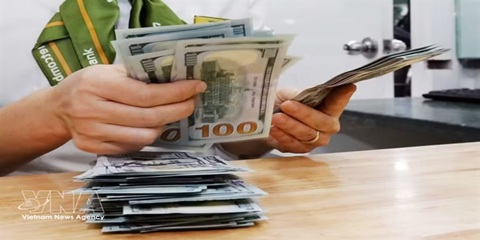
Remittances to HCM City reached more than US$2.83 billion in the third quarter of this year, up 39.5 per cent from the previous quarter and 3.6 per cent year-on-year. This was the first quarter showing positive annual growth this year, helping narrow the decline in remittance inflows over the first nine months. According to the State Bank of Vietnam (SBV)’s Regional Branch 2, remittances transferred to HCM City through credit institutions and economic organisations totalled $2.835 billion in Q3, an increase of more than $802 million from the previous quarter.
TECHNOLOGY
TECH SECTOR GROWTH OPENS UP OPPORTUNITIES FOR VIỆT NAM TO GO GLOBAL
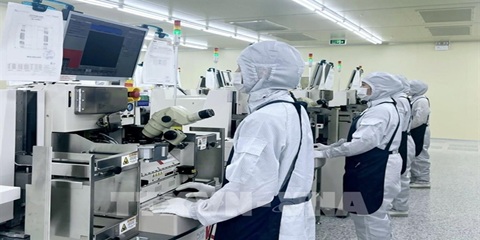
The growth of the electronics, semiconductor and high-tech sectors worldwide is opening up a variety of opportunities for Vietnamese enterprises to integrate more deeply into the global supply chain. However, to become suppliers for these corporations, domestic enterprises must meet rigorous standards regarding quality, technology, productivity and order fulfilment capabilities.
VIETNAM ECONOMY INVESTMENT
FOREIGN INVESTORS SEEKING A SYNCHRONISED MANUFACTURING ECOSYSTEM
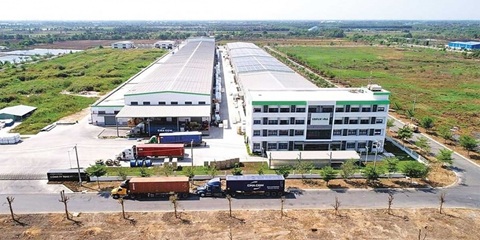
Instead of focusing only on land costs and incentives as usual, foreign investors are seeking a synchronised manufacturing ecosystem, from stable power supply and logistics to shared infrastructure and the convenience of completing residence procedures for experts to serve their long-term investment in the country.
MEMBER CORNER / PROMOTIONS
SENTRYSAFE FHW40200 – PROTECT YOUR VALUABLES, ENJOY PEACE OF MIND!
Looking for a reliable solution to protect your important documents, cash, and valuables from fire and water damage? Genuine SENTRYSAFE - Reliable protection for your valuables and peace of mind! Contact Sen Wai Vietnam for more information and personalized product recommendations.
PROPERTY / INDUSTRIAL ZONE
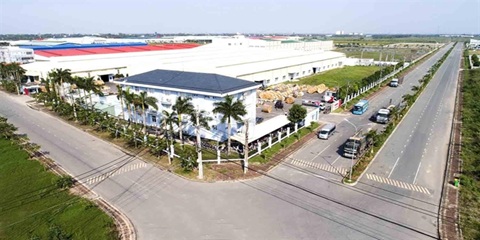
HCM CITY ATTRACTS US$5.7 BILLION INTO EXPORT PROCESSING AND INDUSTRIAL ZONES
HCM City attracted US$5.7 billion in domestic and foreign investment into its export processing and industrial zones during the first nine months of 2026. The figure exceeded the city's full-year target by 31 per cent, highlighting strong momentum in high-quality industrial investment under Resolution No.10-NQ/TW. Total investment reached 131 per cent of the 2026 target of $4.25 billion and represented a 29 per cent increase compared with the same period in 2025, according to the city's Export Processing and Industrial Zones Authority (HEPZA).
INFRASTRUCTURE / CONSTRUCTION / LOGISTIC / PORT
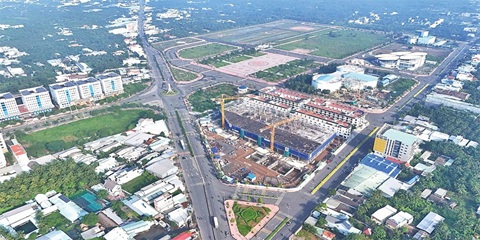
DONG THAP PROVINCE STEPS UP INDUSTRIAL EXPANSION AND INFRASTRUCTURE CONNECTIVITY
Accelerating public investment, strengthening inter-regional connectivity, and expanding industrial land are helping Dong Thap efficiently bolster competitiveness and drive economic growth. Following the 2025 merger of the former Dong Thap and Tien Giang provinces, the expanded Dong Thap province in the Mekong Delta faces mounting pressure to accelerate infrastructure development and strengthen connectivity among local economic zones, urban areas, industrial parks (IPs), and production centres.
Events Sponsors