Want to be in the loop?
subscribe to
our notification
Business News
HANOI, HCM CITY APARTMENTS NOW OUT OF REACH FOR MOST LOCALS
With the price hikes in the past few years, Hà Nội and HCM City apartments have become unaffordable for most of its citizens.
According to a recent report by the National Assembly’s supervision delegation on the real estate market laws, policies and social housing development, about 3,63 commercial housing and urban development projects were initiated in 2015-2023, covering a total area of nearly 11,200 hectares.
However, in 2022 and 2023, the real estate market declined as result of the shortcomings and limitations in the previous period were exposed under the pressure of the COVID-19 pandemic, leading to a limited supply.
During these two years, housing prices soared, exceeding the income increase of most people in the two most populated cities in the country.
Today, Hà Nội and HCM City no longer have a real estate market segment within the reach of most citizens, according to the report.
In 2022, Hà Nội saw a surge in its apartment prices. HCM City also reported price hikes and a sharp decline in real estate transactions, leading to a disparity between prices and values.
Notably, a significant number of housing projects were facing obstacles and delays during this period. With huge resources poured into these projects, this stagnation caused inefficiency in funding and land use, driving up sale prices.
Hà Nội has resolved 158 out of the 404 housing projects facing issues, while HCM City counts 220 projects in limbo.
In the past three years, real estate development in the capital city has been stagnant with no new projects approved for investment, the report said. Most of the residences on the market belong to projects approved in the previous period.
Meanwhile, approximately 800 social housing projects were initiated between 2015 and 2023, totalling 567,000 apartments.
Among these, 373 projects were completed, 129 began construction and 298 were approved for investment.
“In general, social housing laws and policies during 2015-2023 lack stability. Some of the key regulations for social housing development did not receive adequate attention or specific guidelines, resulting in difficulties for localities,” the NA report reads.
During this period, many localities failed to meet the deadlines for their social housing development programme.
The approval process for social housing beneficiaries and price evaluation often takes longer than scheduled, which greatly affects the investment cycle, capital recovery, interest payments for investors and public access to social housing.
“The average price for a social housing department remains too high compared to the income of intended beneficiaries.
“The financial support from State budget towards preferential social housing credit programmes is still inadequate, while the lending procedures are complicated and overlapping, and the maximum loan amount for social policy beneficiaries is limited and did not align with the actual situation,” the NA document reads.
The NA supervision delegation recommended that the government, along with relevant agencies, establish effective mechanisms to radically address stagnant real estate projects, thereby freeing up resources for the market and create momentum for socio-economic growth.
Authorities must also prevent the market from ‘overheating’ or ‘freezing’, which pose threats to the overall socio-economic development.
They also recommended diversifying real estate products, to balance supply and demand in alignment with the average income of the people and effectively deploy social housing development programmes with the allocated support package of VNĐ120 trillion (US$4.7 billion).
Source: VNS
Related News

CHARITY / EXHIBITION / OTHER EVENTS
INVESTMENT OPPORTUNITIES IN CA MAU PROVINCE: 96 PROJECTS AND 20 STRATEGIC PROJECTS
We are pleased to share with you information on investment projects currently seeking investors in Ca Mau Province. Should your esteemed company or association be interested, we kindly invite you to review the project information and complete the registration form via the links provided. The Ho Chi Minh City Investment and Trade Promotion Centre (ITPC) will consolidate the expressions of interest and facilitate connections with the leadership of Ca Mau Province at a meeting tentatively scheduled for 13 November 2026 in Ho Chi Minh City.

MEMBER CORNER / PROMOTIONS
BẰNG KIỀU LIVESHOW - A SYMPHONY OF LOVE UNDER THE GOLDEN GLOW
A masterclass in live music that takes the audience on a soulful journey through immortal love songs, guided by the peerless artistry and emotive storytelling of renowned singer Bằng Kiều. The highlight of the night is his seamless musical chemistry with special guest Triệu Hồng Ngọc, promising passionate and deeply resonant duets inside the magnificent Grand Ballroom.
INFRASTRUCTURE / CONSTRUCTION / LOGISTIC / PORT
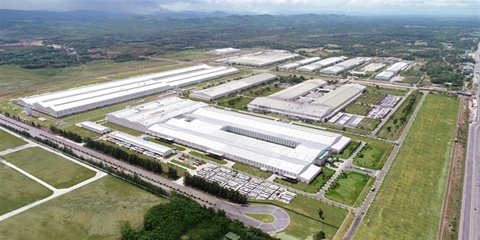
ĐÀ NẴNG GREEN-LIGHTS US$105 MILLION THAI DEVELOPMENT DEAL
The central city has approved an investment proposal by Thailand’s WHA Group to develop infrastructure for the 400ha WHA Đà Nẵng Industrial Park project on two communes of Thăng Bình and Đồng Dương, with an investment of more than VNĐ2.7 trillion (US$105 million). The city said it approved WHA Industrial Development International's status as an investor in the project, which is expected to take place between 2027 and 2034.
VIETNAM ECONOMY INVESTMENT
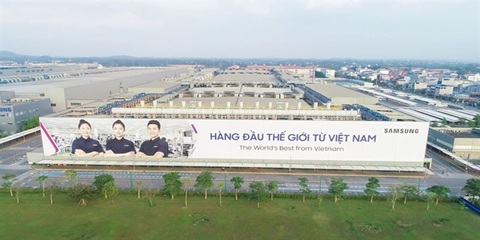
MOBILE PHONE EXPORTS RISE 20% TO $51.8 BILLION IN FIRST NINE MONTHS
Exports of mobile phones and components rose 20 per cent year-on-year to nearly US$51.8 billion in the first nine months of 2026, with China, the US and Republic of Korea accounting for more than half of the total. Shipments to the three markets reached a combined $26.18 billion, or 50.6 per cent of total exports of the product group during the period, according to data from the Vietnam Department of Customs under the Ministry of Finance.
INFRASTRUCTURE / CONSTRUCTION / LOGISTIC / PORT
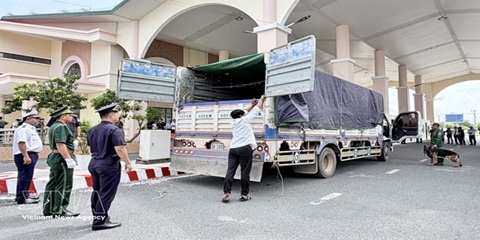
VIỆT NAM-CAMBODIA TRADE GATHERS PACE TOWARDS $20 BILLION TARGET
Trade between Việt Nam and Cambodia continues to grow, remaining a bright spot and a key pillar of bilateral cooperation as the two countries aim to raise two-way trade to US$20 billion in the coming years. After setting a record of more than $11.3 billion last year, bilateral trade reached about $8.7 billion in the first eight months of this year, up 8.3 per cent year on year.
VIETNAM ECONOMY INVESTMENT
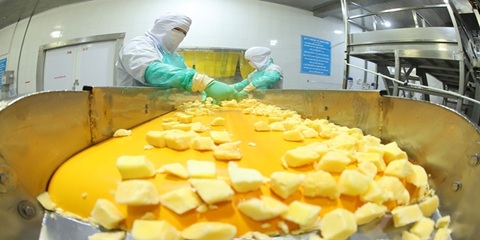
FRUIT AND VEGETABLE EXPORTS POISED TO HIT $10 BILLION IN 2026
Fruit and vegetable exports are on track to reach nearly US$10 billion in 2026, after rising 19.9 per cent year on year to nearly US$7.4 billion in the first nine months, driven by strong seasonal demand and abundant tropical fruit supplies. The Ministry of Agriculture and Environment said the growth reflected stronger international demand for fresh produce and processed agricultural products.
Events Sponsors






















