Want to be in the loop?
subscribe to
our notification
Business News
HAI PHONG AIMS TO BECOME AN INTERNATIONAL LOGISTICS CENTRE
The northern city of Hai Phong aims to become a regional and international logistics centre due to its many advantages as a transportation hub for all five types of traffic, including sea, road, air, railway, and inland waterways.
This objective is highlighted in the northern city's service sector development project for 2030, with a long-term vision to 2045, including logistics services.
The city is also studying to develop a project to establish a free trade zone, considered a breakthrough solution to exploit the best advantages in the logistics sector of Hai Phong.
The Politburo's Resolution 45 on building and development of Hai Phong city by 2030, with a vision to 2045 also states that Hai Phong must be built into a national logistics service centre by 2025.
"By 2030, it will become a modern international logistics service centre with sea, air, highway and high-speed rail".
According to former Secretary of the Hai Phong city Party Committee Tran Luu Quang, who has been appointed to the Government's Deputy Prime Minister, to develop logistics services, Hai Phong will promote administrative reform and digital transformation in the field of seaports and logistics.
It will strengthen investment attraction and trade promotion, and form logistics service chains with high added value and regional linkages.
According to the Ministry of Industry and Trade, Hai Phong has great advantages in infrastructure of seaports, fishing ports, warehouses for industrial production, and import and export activities of goods.
At the same time, some of 14 industrial parks (IPs) are built on the basis of logistics services to increase connectivity among enterprises at the supply chains.
In the past, Hải Phòng has focused on investing and upgrading seaport infrastructure in line with the development trend of regional and international shipping. Its transport system is improved and more synchronous.
Many projects on developing logistics centres in industrial zones and economic zones (EZs) have also received licences of investment, such as a logistics centre invested by KM Cargo Services Hai Phong Co, Ltd with a capital of 34.8 billion VND; a logistics project with total investment capital of 35 million USD developed by ECPVN Hai Phòng 1; JD Property Logistics Park Hai Phong 1 project in the non-tariff zone and Nam Dinh Vu Industrial Park with a total investment of 32 million USD. Those have created new opportunities for the logistics service industry in Hai Phong.
Quang said that in 2022, traditional and advantageous service sectors such as seaport and logistics services have made strong developments. They have actively contributed to the socio-economic development of Hải Phòng and the northern key economic region.
Hai Phong's growth rate of logistics services is about 20-23% per year and this sector has accounted for 13-15% of the city's GRDP.
The volume of goods through the ports in the city has grown strongly, accounting for a large market share in the seaport system of the country.
Pointing to the service's shortcomings, Dan Duc Hiep, former Vice Chairman of the municipal People's Committee, said that Hanoi has about 1,000 enterprises registering to provide logistics services, but they have limited competitiveness and a low market share.
The majority of cargo volume via Hai Phong seaport continues to be transported by road, putting great pressure on the transport system.
Meanwhile, transporting goods by rail and inland waterway is still weak.
There is also the problem of labour shortage, especially high-quality labour. Logistics and production enterprises of Hai Phong are always in a serious shortage, especially logistics sales staff, logistics information technology staff, and staff coordinating transportation and warehouse operations.
At the same time, most employees of enterprises lack logistics knowledge and skills. This will be a big challenge for the development of the service in the future.
According to forecasts, Hai Phong needs about 369,000 logistics workers by 2025, including 252,600 trained workers. By 2030, this number will increase to 460,000 employees, including 368,000 trained workers.
Human resources for the logistics sector in Vietnam in general and Hai Phong in particular will still lack in both quality and quantity for many years in the future. The human resource at present meets only about 40-45% of the industry's needs.
Therefore, Hai Phong needs to have a strategy on sustainable development of human resources for the logistics sector, Hiep said.
Source: VNS
Related News

BANKING / FINANCE / INSURANCE / TAX
REMITTANCES TO HCM CITY RISE NEARLY 40% IN Q3
Remittances to HCM City reached more than US$2.83 billion in the third quarter of this year, up 39.5 per cent from the previous quarter and 3.6 per cent year-on-year. This was the first quarter showing positive annual growth this year, helping narrow the decline in remittance inflows over the first nine months. According to the State Bank of Vietnam (SBV)’s Regional Branch 2, remittances transferred to HCM City through credit institutions and economic organisations totalled $2.835 billion in Q3, an increase of more than $802 million from the previous quarter.

TECHNOLOGY
TECH SECTOR GROWTH OPENS UP OPPORTUNITIES FOR VIỆT NAM TO GO GLOBAL
The growth of the electronics, semiconductor and high-tech sectors worldwide is opening up a variety of opportunities for Vietnamese enterprises to integrate more deeply into the global supply chain. However, to become suppliers for these corporations, domestic enterprises must meet rigorous standards regarding quality, technology, productivity and order fulfilment capabilities.
VIETNAM ECONOMY INVESTMENT
FOREIGN INVESTORS SEEKING A SYNCHRONISED MANUFACTURING ECOSYSTEM
Instead of focusing only on land costs and incentives as usual, foreign investors are seeking a synchronised manufacturing ecosystem, from stable power supply and logistics to shared infrastructure and the convenience of completing residence procedures for experts to serve their long-term investment in the country.
MEMBER CORNER / PROMOTIONS
SENTRYSAFE FHW40200 – PROTECT YOUR VALUABLES, ENJOY PEACE OF MIND!
Looking for a reliable solution to protect your important documents, cash, and valuables from fire and water damage? Genuine SENTRYSAFE - Reliable protection for your valuables and peace of mind! Contact Sen Wai Vietnam for more information and personalized product recommendations.
PROPERTY / INDUSTRIAL ZONE
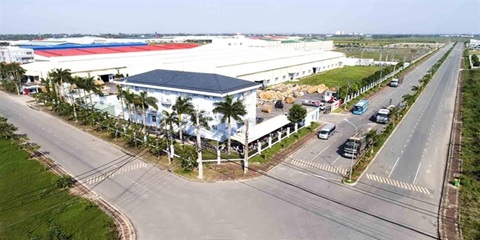
HCM CITY ATTRACTS US$5.7 BILLION INTO EXPORT PROCESSING AND INDUSTRIAL ZONES
HCM City attracted US$5.7 billion in domestic and foreign investment into its export processing and industrial zones during the first nine months of 2026. The figure exceeded the city's full-year target by 31 per cent, highlighting strong momentum in high-quality industrial investment under Resolution No.10-NQ/TW. Total investment reached 131 per cent of the 2026 target of $4.25 billion and represented a 29 per cent increase compared with the same period in 2025, according to the city's Export Processing and Industrial Zones Authority (HEPZA).
INFRASTRUCTURE / CONSTRUCTION / LOGISTIC / PORT
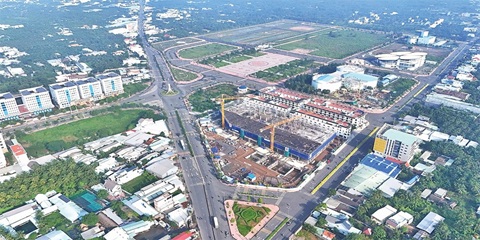
DONG THAP PROVINCE STEPS UP INDUSTRIAL EXPANSION AND INFRASTRUCTURE CONNECTIVITY
Accelerating public investment, strengthening inter-regional connectivity, and expanding industrial land are helping Dong Thap efficiently bolster competitiveness and drive economic growth. Following the 2025 merger of the former Dong Thap and Tien Giang provinces, the expanded Dong Thap province in the Mekong Delta faces mounting pressure to accelerate infrastructure development and strengthen connectivity among local economic zones, urban areas, industrial parks (IPs), and production centres.
Events Sponsors