Want to be in the loop?
subscribe to
our notification
Business News
HÀ NỘI PROMOTES FINANCIAL INCLUSION ECOSYSTEM
The capital views financial inclusion not just as an economic task, but as a vital tool for ensuring social progress and equity, as well as strengthening the social safety net for the capital's residents.
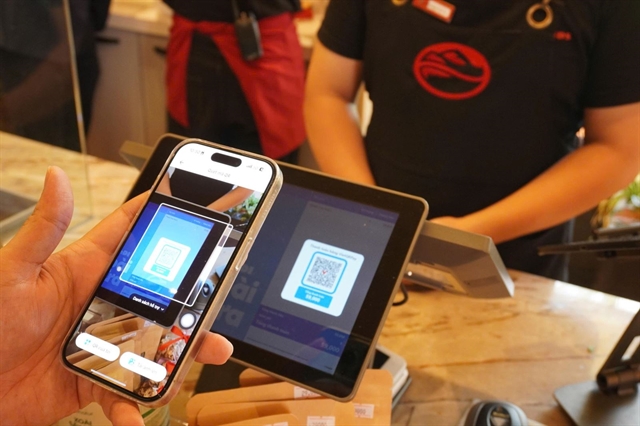
Hà Nội encourages the adoption of mobile-based digital banking, enabling rural residents to conduct transactions conveniently without needing to visit a banking office. — VNA/VNS Photo
HÀ NỘI — The Hà Nội People's Committee has issued an action plan to ensure that all its citizens and businesses, particularly priority groups, have equal and comprehensive access to basic financial products and services.
Plan 323/KH-UBND aims to carry out the National Financial Inclusion Strategy within the city through 2030.
Under the plan, Hà Nội views financial inclusion not just as an economic task, but as a vital tool for ensuring social progress and equity, as well as strengthening the social safety net for the capital's residents.
According to the Hà Nội Department of Finance, the plan clearly identifies priority groups for financial service access, including residents in rural, remote and isolated areas, as well as poor, near-poor and low- to average-income households.
City authorities have placed special emphasis on supporting students and collective economic entities, such as small- and medium-sized enterprises, cooperatives and household businesses, of which those owned by youth, women, vulnerable groups or ethnic minorities will receive more attention to ensure the strategy's inclusivity.
To ensure the plan's effectiveness, the city confirmed it will fully leverage the roles of specialised financial institutions, including the Vietnam Bank for Agriculture and Rural Development (Agribank), the Vietnam Bank for Social Policies, the Co-operative Bank of Vietnam and the system of people's credit funds.
These institutions possess extensive networks well suited to the goal of delivering capital and financial services directly to residents at the local level.
Digital finance, cashless payments
One of the plan's primary objectives is to accelerate the development and provision of digital financial products and services.
Hà Nội authorities have encouraged the adoption of mobile-based digital banking, enabling rural residents to conduct transactions conveniently without needing to visit a banking office.
The city is also fostering a healthy competitive environment that allows fintech companies and telecommunications providers to offer services and collaborate with commercial banks to diversify financial solutions.
Concurrently, the city will continue to expand service coverage in remote and isolated areas while vigorously promoting cashless payment habits.
This initiative not only enhances transaction transparency, but also enables business households and micro-enterprises to easily access modern payment services, boosting their competitiveness in the digital economy.
Municipal authorities have also mandated support for microfinance institutions and encouraged socio-political organisations and local authorities to sponsor small-scale credit programmes and projects, providing the poor with opportunities to access capital for production.
To ensure the plan is carried out effectively, Hà Nội leaders have committed to making significant investments in electronic payment infrastructure. The city is prioritising the development of mobile network infrastructure and high-speed internet, ensuring widespread coverage in ethnic communities and economically disadvantaged areas.
In particular, the completion of the National Population Database will serve as a foundation for deploying secure financial services. Under the Digital Citizen Programme and Project 06 on the development of population data, identification and electronic authentication applications, citizens will be encouraged to use electronic identification accounts to conduct payment transactions and access public services.
Alongside technical infrastructure development, the city is carrying out a national financial education programme with an aim to equip citizens with essential knowledge regarding digital finance and spending management, and teach them how to protect themselves against cybersecurity risks.
In the long term, Hà Nội’s plan is also designed to align with sustainable development goals as it encourages credit institutions to prioritise lending for green and circular economy projects. Developing a diverse range of green credit products will assist businesses and individuals in transitioning to environmentally friendly production models and meeting international standards for governance and social responsibility.
The plan also sets information security and personal data protection as top priorities. City leaders thus plan to step up guidance and inspections regarding compliance with cybersecurity regulations in financial activities, ensuring user confidence when participating in the digital financial ecosystem. — BIZHUB/VNS
Source: VNS
Related News

CHARITY / EXHIBITION / OTHER EVENTS
INVESTMENT OPPORTUNITIES IN CA MAU PROVINCE: 96 PROJECTS AND 20 STRATEGIC PROJECTS
We are pleased to share with you information on investment projects currently seeking investors in Ca Mau Province. Should your esteemed company or association be interested, we kindly invite you to review the project information and complete the registration form via the links provided. The Ho Chi Minh City Investment and Trade Promotion Centre (ITPC) will consolidate the expressions of interest and facilitate connections with the leadership of Ca Mau Province at a meeting tentatively scheduled for 13 November 2026 in Ho Chi Minh City.

MEMBER CORNER / PROMOTIONS
BẰNG KIỀU LIVESHOW - A SYMPHONY OF LOVE UNDER THE GOLDEN GLOW
A masterclass in live music that takes the audience on a soulful journey through immortal love songs, guided by the peerless artistry and emotive storytelling of renowned singer Bằng Kiều. The highlight of the night is his seamless musical chemistry with special guest Triệu Hồng Ngọc, promising passionate and deeply resonant duets inside the magnificent Grand Ballroom.
INFRASTRUCTURE / CONSTRUCTION / LOGISTIC / PORT
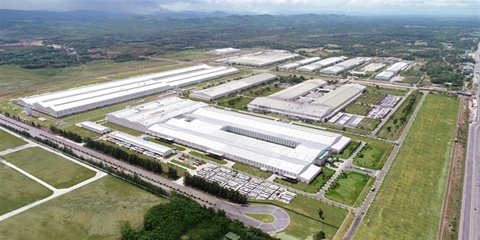
ĐÀ NẴNG GREEN-LIGHTS US$105 MILLION THAI DEVELOPMENT DEAL
The central city has approved an investment proposal by Thailand’s WHA Group to develop infrastructure for the 400ha WHA Đà Nẵng Industrial Park project on two communes of Thăng Bình and Đồng Dương, with an investment of more than VNĐ2.7 trillion (US$105 million). The city said it approved WHA Industrial Development International's status as an investor in the project, which is expected to take place between 2027 and 2034.
VIETNAM ECONOMY INVESTMENT
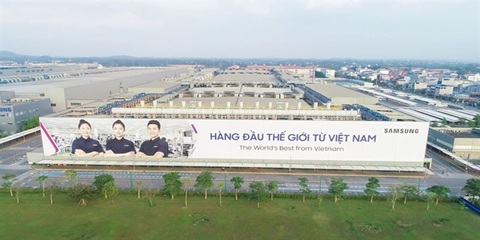
MOBILE PHONE EXPORTS RISE 20% TO $51.8 BILLION IN FIRST NINE MONTHS
Exports of mobile phones and components rose 20 per cent year-on-year to nearly US$51.8 billion in the first nine months of 2026, with China, the US and Republic of Korea accounting for more than half of the total. Shipments to the three markets reached a combined $26.18 billion, or 50.6 per cent of total exports of the product group during the period, according to data from the Vietnam Department of Customs under the Ministry of Finance.
INFRASTRUCTURE / CONSTRUCTION / LOGISTIC / PORT
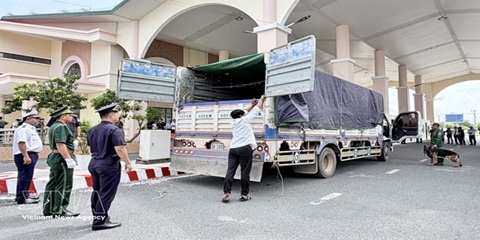
VIỆT NAM-CAMBODIA TRADE GATHERS PACE TOWARDS $20 BILLION TARGET
Trade between Việt Nam and Cambodia continues to grow, remaining a bright spot and a key pillar of bilateral cooperation as the two countries aim to raise two-way trade to US$20 billion in the coming years. After setting a record of more than $11.3 billion last year, bilateral trade reached about $8.7 billion in the first eight months of this year, up 8.3 per cent year on year.
VIETNAM ECONOMY INVESTMENT
FRUIT AND VEGETABLE EXPORTS POISED TO HIT $10 BILLION IN 2026
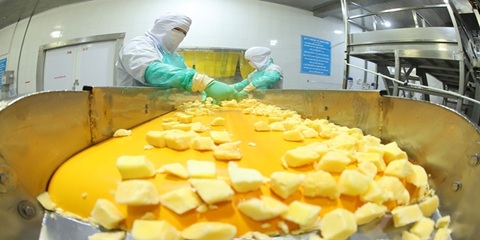
Fruit and vegetable exports are on track to reach nearly US$10 billion in 2026, after rising 19.9 per cent year on year to nearly US$7.4 billion in the first nine months, driven by strong seasonal demand and abundant tropical fruit supplies. The Ministry of Agriculture and Environment said the growth reflected stronger international demand for fresh produce and processed agricultural products.
Events Sponsors






















