Want to be in the loop?
subscribe to
our notification
Business News
HÀ NỘI OFFICE MARKET HAS GOOD PERFORMANCE IN Q1: CBRE
The Hà Nội office market fared relatively well in the first quarter this year despite the novel coronavirus COVID-19 outbreak, according to CBRE Việt Nam.
In the first quarter, total office supply in Hà Nội was around 1,380,000 sq.m, unchanged compared to the fourth quarter in 2019 because there were no newly completed projects.
Both average asking rent of Grade A and Grade B buildings remained stable compared to previous quarter, at US$26.2 and $14.3 per sq.m per month, respectively, excluding value added tax (VAT) and service charge.
In terms of vacancy rates, both grades stayed at healthy levels of below 10 per cent. Grade A’s vacancy rate reached 6.4 per cent, dropping by 2.9 percentage points (ppts) year-on-year while Grade B vacancy lowered to 8.8 per cent, down by 0.5 ppts year-on-year.
Although not as heavily impacted as other sectors, the office sector started to observe some early impacts from the pandemic, according to CBRE.
Current tenants are requesting landlords to reduce rent by 20-50 per cent due to their worse business performance during the pandemic, said Đỗ Vân Anh, CBRE Việt Nam manager.
Asking rents have yet been adjusted, but certain Grade B buildings have applied discounts from 20-30 per cent for their tenants from three months to end of 2020. Other supports, such as extending the payment schedule, are also applied, she said.
Moreover, most of the office leasing transactions in the first quarter were postponed or cancelled due to capital constraints and travel restrictions. Therefore, the total net absorption of Hà Nội office market was only 8,900 sq.m in the first quarter.
This was the lowest absorption rate recorded since the second quarter of 2013, according to CBRE Việt Nam.
During the period 2017-19, the banking, finance, insurance and information technology sectors had the highest demand on leasing office to expand branches, Vân Anh said. However, at present with the COVID-19 pandemic, they must consider their business strategy, so they delay the leasing of offices to open branches.
In the last three quarters of 2020, the market will heavily depend on the pandemic. In case COVID-19 could be contained within the second quarter of this year, performance would not be significantly affected, as most of the delayed deals in the first quarter would be restarted.
In case the pandemic extends to the end of September 2020, rents of both grades are expected to drop by 5-10 per cent, while vacancies are expected to increase by 5-15 per cent due to the resizing and closing of tenants’ offices.
According to CBRE, the outbreak of COVID-19 could reshape the office sector. Tenants would focus more on the agility of the office to adapt to unexpected changes in the business environment.
Landlords also need to apply new technology and new procedures to protect the wellbeing of people working inside the building.
Though suffering under the pandemic, the Hà Nội property market expects to have new launches of 126,000 sq.m of offices for this year. Some large office supply projects on the Hà Nội real estate market are under construction to complete at the end this year as scheduled, including Capital Place in Ba Đình District and Thai Building in Cầu Giấy District, Vân Anh said.
Source: VNS
Related News

CHARITY / EXHIBITION / OTHER EVENTS
INVESTMENT OPPORTUNITIES IN CA MAU PROVINCE: 96 PROJECTS AND 20 STRATEGIC PROJECTS
We are pleased to share with you information on investment projects currently seeking investors in Ca Mau Province. Should your esteemed company or association be interested, we kindly invite you to review the project information and complete the registration form via the links provided. The Ho Chi Minh City Investment and Trade Promotion Centre (ITPC) will consolidate the expressions of interest and facilitate connections with the leadership of Ca Mau Province at a meeting tentatively scheduled for 13 November 2026 in Ho Chi Minh City.

MEMBER CORNER / PROMOTIONS
BẰNG KIỀU LIVESHOW - A SYMPHONY OF LOVE UNDER THE GOLDEN GLOW
A masterclass in live music that takes the audience on a soulful journey through immortal love songs, guided by the peerless artistry and emotive storytelling of renowned singer Bằng Kiều. The highlight of the night is his seamless musical chemistry with special guest Triệu Hồng Ngọc, promising passionate and deeply resonant duets inside the magnificent Grand Ballroom.
INFRASTRUCTURE / CONSTRUCTION / LOGISTIC / PORT
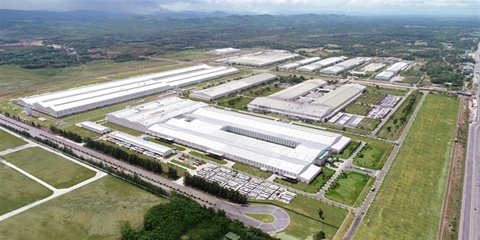
ĐÀ NẴNG GREEN-LIGHTS US$105 MILLION THAI DEVELOPMENT DEAL
The central city has approved an investment proposal by Thailand’s WHA Group to develop infrastructure for the 400ha WHA Đà Nẵng Industrial Park project on two communes of Thăng Bình and Đồng Dương, with an investment of more than VNĐ2.7 trillion (US$105 million). The city said it approved WHA Industrial Development International's status as an investor in the project, which is expected to take place between 2027 and 2034.
VIETNAM ECONOMY INVESTMENT
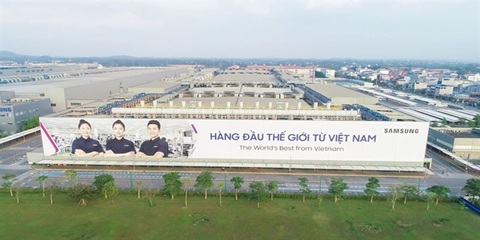
MOBILE PHONE EXPORTS RISE 20% TO $51.8 BILLION IN FIRST NINE MONTHS
Exports of mobile phones and components rose 20 per cent year-on-year to nearly US$51.8 billion in the first nine months of 2026, with China, the US and Republic of Korea accounting for more than half of the total. Shipments to the three markets reached a combined $26.18 billion, or 50.6 per cent of total exports of the product group during the period, according to data from the Vietnam Department of Customs under the Ministry of Finance.

INFRASTRUCTURE / CONSTRUCTION / LOGISTIC / PORT
VIỆT NAM-CAMBODIA TRADE GATHERS PACE TOWARDS $20 BILLION TARGET
Trade between Việt Nam and Cambodia continues to grow, remaining a bright spot and a key pillar of bilateral cooperation as the two countries aim to raise two-way trade to US$20 billion in the coming years. After setting a record of more than $11.3 billion last year, bilateral trade reached about $8.7 billion in the first eight months of this year, up 8.3 per cent year on year.
VIETNAM ECONOMY INVESTMENT
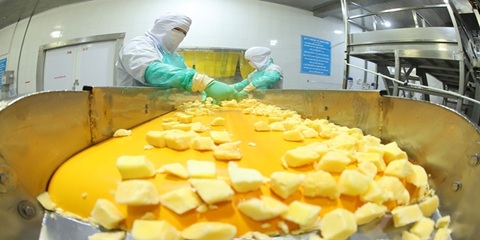
FRUIT AND VEGETABLE EXPORTS POISED TO HIT $10 BILLION IN 2026
Fruit and vegetable exports are on track to reach nearly US$10 billion in 2026, after rising 19.9 per cent year on year to nearly US$7.4 billion in the first nine months, driven by strong seasonal demand and abundant tropical fruit supplies. The Ministry of Agriculture and Environment said the growth reflected stronger international demand for fresh produce and processed agricultural products.
Events Sponsors






















