Want to be in the loop?
subscribe to
our notification
Business News
GREEN TRANSFORMATION ENHANCES COMPETITIVENESS FOR VIETNAMESE LOGISTICS FIRMS
According to the World Bank (WB), transport activities in Vietnam emit an average of more than 50 million metric tons of CO2 annually, with road transport accounting for 85%. Green logistics is becoming an essential trend as businesses must optimize efficiency and reduce their environmental impact in the context of globalization and climate change.
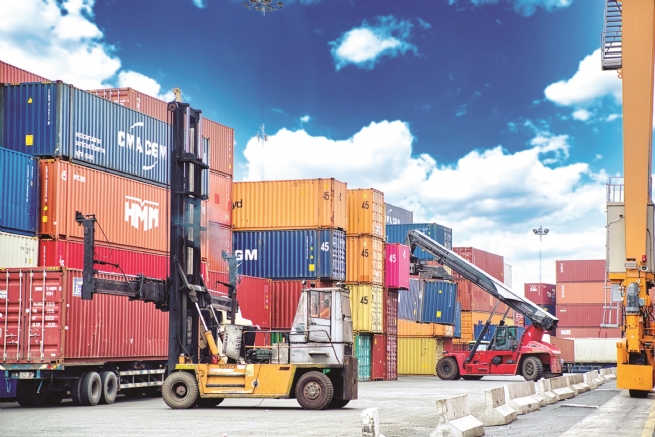
The logistics industry is embracing a significant opportunity as Vietnam emerges as one of the countries with a booming e-commerce market. According to statistics, in 2024, Vietnam's retail e-commerce market size reached US$25 billion, a 20% growth from the previous year.
Vietnam's logistics growth averages 16% annually (according to the WB), playing a crucial role in the yearly growth of Vietnam's total import and export turnover. In 2023, Vietnam ranked 43rd in the Logistics Performance Index and was in the Top 5 among ASEAN countries.
In recent years, Vietnam has focused on investing in its infrastructure system, with continuous expansion of roads, airports, railways, seaports, warehousing systems and commercial centers. This is coupled with the development of related services, and import-export procedures have also been simplified to improve service quality.
Notably, the logistics sector has been facilitated for development as the Party and the Government have focused on investing in and promoting green development. For example, Decision 876/QD-TTg, which approves the action program on green energy transition, carbon and methane emission reduction for the transport sector, aims to develop a green transport system to achieve net-zero greenhouse gas emissions by 2050. The Logistics Service Development Strategy for the 2025-2035 period, with a vision to 2050, sets the goal of developing a sustainable, efficient, high-quality, and high-value-added Vietnamese logistics industry that is regionally and globally competitive, leveraging Vietnam's advantages in the global value chain.
Mr. Tran Thanh Hai, Deputy Director of the Agency of Foreign Trade (Ministry of Industry and Trade), said that the global market has witnessed major shocks in recent years that have not only affected the flow of global goods but also created an urgent demand for the adaptability and resilience of the global logistics industry. In this context, green logistics is defined as a key, a foothold for global businesses, including Vietnamese, to overcome those shocks.
Green logistics refers to logistics activities that aim for sustainable, environmentally friendly, and protective goals, minimizing negative environmental impacts. By investing in fuel-efficient vehicles, using smart containers, optimizing routes, and digitizing warehouse management, green logistics also helps businesses reduce long-term cost burdens. This is a much-needed “economic shield” when oil and transportation prices are always volatile.
In the face of the global trend of sustainable development, green logistics is becoming the new standard for the export market and a customer requirement. Major markets like Europe have implemented the Carbon Border Adjustment Mechanism (CBAM), which levies a carbon tax on high-emission imports. Especially, by obtaining green certificates, businesses are creating a significant competitive advantage in an increasingly fierce market.
Climate change is one of the biggest global challenges of the 21st century. The logistics industry alone contributes an estimated 7-8% of carbon emissions (CO2). Therefore, similar to other economic sectors, developing green logistics and reducing emissions is becoming a critical component of any supply chain.
However, in reality, according to the Ministry of Industry and Trade, the number of logistics companies implementing this green transition is very limited among the more than 34,000 logistics businesses nationwide because most of them have limited awareness, outdated habits, and infrastructure that does not support the development of green transport vehicles. Green transformation requires a significant investment cost, posing difficulties for businesses, especially SMEs. Additionally, businesses face challenges in choosing technology and a lack of experts with knowledge and capacity to implement these changes.
To effectively transition to green practices, the logistics sector first needs to shift to renewable energy, such as electric, hydrogen, and LNG-powered vehicles. Vietnam should encourage a shift to waterways and railways, which have large transport capacities. In addition, it is necessary to optimize processes through larger-scale transportation, reducing empty runs, and building smart warehouses and ports. Implementing emission offsets by participating in afforestation is also a recommended direction.
He suggested businesses develop strategies aligned with green development goals; upgrade and expand warehousing systems; invest in modern equipment; and prioritize the use of environmentally friendly transport vehicles. Businesses need to share and cooperate, apply new technologies and AI to optimize operations, and build integrated green logistics models.
Source: VCCI
Related News

MEMBER CORNER / PROMOTIONS
AN ELECTRIFYING NIGHT WITH THE "QUEEN OF DANCE" THU MINH AT THE GRAND HO TRAM!
The stage at The Grand Ballroom is set to catch fire as Vietnam’s undisputed "Queen of Dance," Thu Minh, takes the spotlight. Renowned for her powerhouse vocals, magnetic stage presence, and sultry, high-energy performances, Thu Minh promises an evening of pure musical euphoria. The energy escalates with an exclusive appearance by special guest and The Voice champion, Vu Thao My.

HR / LABOUR/ EMPLOYMENT
HIGH-QUALITY HUMAN RESOURCES NEEDED TO ATTRACT NEW TECH INVESTMENT CAPITAL
Besides infrastructure, Việt Nam must also rapidly develop a highly skilled workforce to attract investment in AI, semiconductors and advanced manufacturing, experts have said. Don Lam, CEO and co-founder of investment management company VinaCapital, said that global technology investors were increasingly looking at the readiness of the entire ecosystem, with high-quality human resources a decisive factor.

HR / LABOUR/ EMPLOYMENT
HIRING OUTLOOK STRENGTHENS IN Q4 AS SKILLS SHORTAGES PERSIST
Hiring intentions among employers in Việt Nam strengthened in the fourth quarter, with 52 per cent of surveyed companies planning to increase headcount between October and December, according to a ManpowerGroup survey released this week. Việt Nam's hiring outlook was stronger than the Asia Pacific and Middle East (APME) regional average of 33 per cent and the global average of 29 per cent, ranking third in the region and 11th globally among 42 markets surveyed.

BANKING / FINANCE / INSURANCE / TAX
LARGE BANKS FORECAST TO GAIN HIGHER PROFITABILITY IN H2 2026
The return on average assets (ROAA) of the banking sector will likely remain stable at around 1.5 per cent in the second half of 2026, but profitability divergence among banks will increase, with large banks outperforming peers on stronger margins and diversified earnings, analysts forecast. In a recent report on the banking sector, analysts from the Vietnam Investors Service Rating said the sector’s ROAA rose by 10 basis points quarter-on-quarter to 1.51 per cent in the first half of this year, driven by net interest margin (NIM) improvements at some State-owned banks and large private banks.
GARMENT / TEXTILE
VIỆT NAM'S FOOTWEAR, BAG EXPORTS TO US TOP $8 BILLION IN EIGHT MONTHS
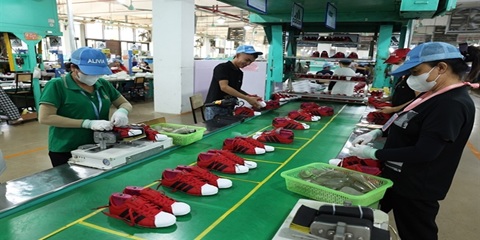
Việt Nam's exports of footwear and handbags to the US exceeded US$8 billion in the first eight months of 2026, as the US and EU remained the country's biggest markets despite sluggish growth in footwear shipments. Exports from Việt Nam's leather and footwear sector reached more than $2.45 billion in August, down 9 per cent from July but up 3 per cent from a year earlier, according to preliminary statistics.
VIETNAM ECONOMY INVESTMENT
LÂM ĐỒNG TARGETS DIGITAL ECONOMY TO ACCOUNT FOR 30 PER CENT OF GRDP BY 2030
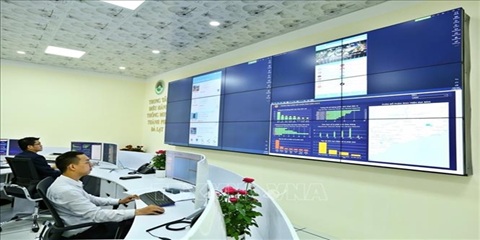
Lâm Đồng Province aims to raise the digital economy’s contribution to around 30 per cent of its gross regional domestic product (GRDP) by 2030, as part of a five-year plan to develop digital economy and society issued recently. Under Plan No. 15358/KH-UBND, the province targets more than 60 per cent of small- and medium-sized enterprises (SMEs) to adopt digital technologies by 2030 while increasing the value of cashless payments to 30 times its GRDP.
Events Sponsors






















