Want to be in the loop?
subscribe to
our notification
Business News
GOVERNMENT CONSIDERING TAX ON MULTIPLE PROPERTIES
The Ministry of Finance (MoF) is reviewing a proposal to tax individuals who own multiple properties to promote a more transparent and sustainable real estate market, according to Deputy Minister Nguyen Duc Chi on September 27.
In a report to the Government Office, the Ministry of Construction (MoC) has recommended taxing those who own or use multiple properties to curb speculation and short-term trading for profit.
Speaking at a press conference, Chi said the MoF supports the proposal. "This is a very compelling suggestion. The Ministry acknowledges the importance of this and will study the policy," said Chi.
However, Chi stressed that any policy must be comprehensive. "A tax policy alone cannot achieve the full picture," he said, adding that other policies related to land use and planning must also be coordinated to ensure transparency in the real estate sector.
The MoC had earlier called on the financial sector to collaborate on drafting tax policies for second homes or unused properties, as property and housing prices have skyrocketed since the start of the year. In some suburban land auctions, winning bids have soared to as high as hundreds of millions of VND per square metre, significantly above starting prices, distorting the healthy development of the market.
Besides land, the condominium market has also experienced steep price increases. Data from the Vietnam Association of Realtors (VARS) shows that in the second quarter, apartment prices in Hanoi and Ho Chi Minh City have surged 58 per cent and 27 per cent respectively since 2019.
More than 80 per cent of this year’s new supply is priced above VND50 million ($2,000) per sq.m. In suburban areas, prices range from VND40-80 million ($1,600-$3,200) per sq.m, while in central areas, prices exceed VND100 million ($4,000) per sq.m.
This is not the first time a tax on second properties has been proposed to cool the housing market.
VARS recently recommended a real estate tax targeting buyers of second homes and owners of idle projects, with increasing rates for transactions where properties are held for short periods.
Last year, voters in Ho Chi Minh City called for taxes on second homes and higher levies on vacant land or properties that aren’t generating value. At the time, the MoF said it was working on a draft of the Real Estate Tax Law, which would include such measures. Authorities plan to introduce the law in the 2024 legislative agenda, but for now, the proposals remain under consideration.
Source: VIR
Related News
VIETNAM ECONOMY INVESTMENT
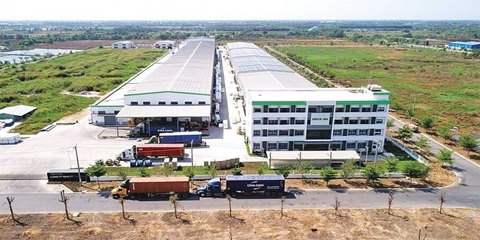
FOREIGN INVESTORS SEEKING A SYNCHRONISED MANUFACTURING ECOSYSTEM
Instead of focusing only on land costs and incentives as usual, foreign investors are seeking a synchronised manufacturing ecosystem, from stable power supply and logistics to shared infrastructure and the convenience of completing residence procedures for experts to serve their long-term investment in the country.
INFRASTRUCTURE / CONSTRUCTION / LOGISTIC / PORT
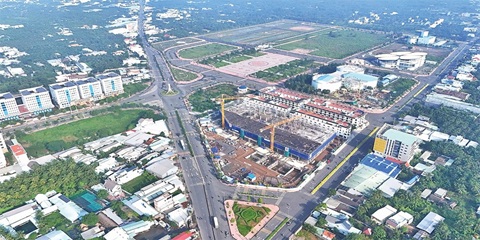
DONG THAP PROVINCE STEPS UP INDUSTRIAL EXPANSION AND INFRASTRUCTURE CONNECTIVITY
Accelerating public investment, strengthening inter-regional connectivity, and expanding industrial land are helping Dong Thap efficiently bolster competitiveness and drive economic growth. Following the 2025 merger of the former Dong Thap and Tien Giang provinces, the expanded Dong Thap province in the Mekong Delta faces mounting pressure to accelerate infrastructure development and strengthen connectivity among local economic zones, urban areas, industrial parks (IPs), and production centres.
PROPERTY / INDUSTRIAL ZONE
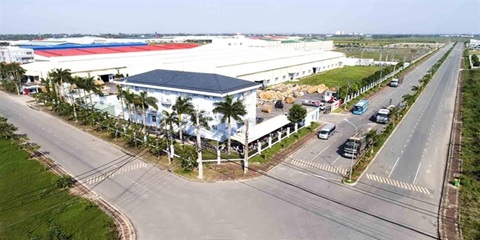
HCM CITY ATTRACTS US$5.7 BILLION INTO EXPORT PROCESSING AND INDUSTRIAL ZONES
HCM City attracted US$5.7 billion in domestic and foreign investment into its export processing and industrial zones during the first nine months of 2026. The figure exceeded the city's full-year target by 31 per cent, highlighting strong momentum in high-quality industrial investment under Resolution No.10-NQ/TW. Total investment reached 131 per cent of the 2026 target of $4.25 billion and represented a 29 per cent increase compared with the same period in 2025, according to the city's Export Processing and Industrial Zones Authority (HEPZA).

BANKING / FINANCE / INSURANCE / TAX
REMITTANCES TO HCM CITY RISE NEARLY 40% IN Q3
Remittances to HCM City reached more than US$2.83 billion in the third quarter of this year, up 39.5 per cent from the previous quarter and 3.6 per cent year-on-year. This was the first quarter showing positive annual growth this year, helping narrow the decline in remittance inflows over the first nine months. According to the State Bank of Vietnam (SBV)’s Regional Branch 2, remittances transferred to HCM City through credit institutions and economic organisations totalled $2.835 billion in Q3, an increase of more than $802 million from the previous quarter.
VIETNAM ECONOMY INVESTMENT
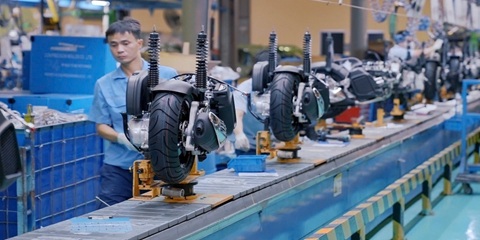
LOCALITIES REPORT BREAKTHROUGH RESULTS IN FDI IN FIRST NINE MONTHS
In Ho Chi Minh City, total registered capital reached $17.2 billion in the first nine months, up 4.2 times from the same period last year. The figure included more than $9.35 billion in newly registered capital and over $4.9 billion in additional capital for existing projects. Foreign investors also registered more than $2.9 billion through capital contributions and share purchases.

TECHNOLOGY
TECH SECTOR GROWTH OPENS UP OPPORTUNITIES FOR VIỆT NAM TO GO GLOBAL
The growth of the electronics, semiconductor and high-tech sectors worldwide is opening up a variety of opportunities for Vietnamese enterprises to integrate more deeply into the global supply chain. However, to become suppliers for these corporations, domestic enterprises must meet rigorous standards regarding quality, technology, productivity and order fulfilment capabilities.
Events Sponsors






















