Want to be in the loop?
subscribe to
our notification
Business News
GOVERNMENT ALLAYS PROPERTY BUBBLE FEARS
The ministry's report said there were about 14,000 transactions in the first half of this year, more than double the figure of the same period last year.
He said the recovery was thanks to the Government's measures for tackling problems in the property market, together with the housing development strategy implemented in the years after the market crash in 2008.
However, he said speculation would be unavoidable during the recovery period, and that "it is important to tighten management to prevent overheated growth that would create a property bubble".
Preventing speculation required the joint efforts of relevant ministries and organisations, especially the banking sector's tight control over the credit flow into the property market.
Controlling credit
Looking back at the 2006-07 period, when easier credit was one of the factors that fuelled the property bubble, resulting in huge non-performing debts in the real estate sector when the bubble burst, experts said banks should tighten control over outstanding loan growth in this sector.
Tran Du Lich, a member of the National Monetary and Financial Policy Advisory Council, said the rising capital flow into the property market was a good sign.
However, banks must control the growth of outstanding loans in the real estate sector to avoid risks, he said.
Banks should select good projects to provide loans, he said.
The property sector has received increasing capital flows from banks, foreign direct investment (FDI) and overseas remittances from the beginning of this year.
Statistics of the State Bank of Viet Nam showed that as of the end of May, credit growth in the property sector was 10.89 per cent, nearly double the overall credit growth of the economy.
According to the Foreign Investment Agency under the Ministry of Planning and Investment, the property sector ranked second in attracting FDI in the first half of the year with a total of more than US$465 million, accounting for 8.5 per cent of the country's FDI.
The capital flow into the property sector was expected to rise as the central bank recently agreed to increase the credit growth targets for several commercial banks.
However, tight supervision of loans given to sectors with high risks such as the real estate sector was required.
Nguyen Van Duc, deputy director of Dat Lanh Real Estate Company, said it was important that the right money went to the right places.
The central bank at its press conference last month said the loans were mainly channelled into construction and completion of works, adding that it would continue to monitor credit flow into the real estate sector.
At the Government meeting in April, the Prime Minister said active measures should be taken to ensure healthy and sustainable development of the property market, together with preventing the return of a market bubble.
Source: VIR
Related News

MEMBER CORNER / PROMOTIONS
KNIC EXCLUSIVE GATHERING & NETWORKING 2026: A NEW MEETING POINT FOR INDUSTRIAL INVESTMENT IN HANOI
On October 2, 2026, KN Industrial City (KNIC) will host KNIC Exclusive Gathering & Networking 2026 at the National Innovation Center (NIC) in Hanoi. Building on a series of business networking and investment promotion activities in Ho Chi Minh City and Dong Nai, the event marks a new opportunity for KNIC to connect with businesses, investors, and partners in Northern Vietnam.
MEMBER CORNER / PROMOTIONS
KNIC ENGAGES WITH GOVERNMENT AND HIGH-TECH BUSINESS COMMUNITIES IN CHINA
From Beijing to Shandong, KN Holdings and KN Industrial City are continuing to expand their engagement with government authorities, trade promotion organizations, and high-tech business communities in China. In Beijing, the delegation met with the Center for International Economic and Technological Cooperation under the Ministry of Industry and Information Technology (MIIT), exchanging perspectives on industrial and technology cooperation between the two markets.

VIETNAM ECONOMY INVESTMENT
VIETNAM’S TRADE TOPS $825 BILLION BY MID-SEPTEMBER
Figures released on September 21 showed goods trade reached nearly $55 billion in the first 15 days of September alone, bringing cumulative turnover since the beginning of the year to more than $825 billion. The strong growth reflects robust trade flows, with demand for consumer goods and production inputs remaining high.

TECHNOLOGY
VIỆT NAM'S BUSINESSES MOVE TOWARDS AI AGENTS
Việt Nam’s AI landscape is entering a new phase as businesses move beyond generative AI (GenAI) tools designed to assist human users towards autonomous AI, agentic AI and AI agents that can take action with limited supervision, experts have said. The shift comes as Việt Nam seeks to accelerate science and technology, innovation and digital transformation under Politburo Resolution 57-NQ/TW, issued on December 22, 2024.
GARMENT / TEXTILE
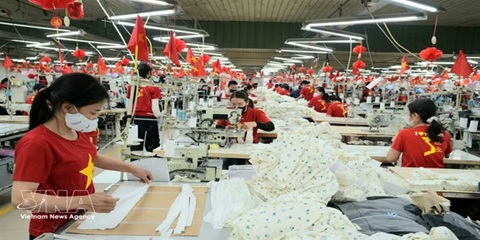
VIỆT NAM TARGETS $48 BILLION IN TEXTILE-GARMENT EXPORTS
Việt Nam’s textile and garment industry is facing both opportunities and challenges amid complex and unpredictable developments in the global market, prompting businesses to improve growth quality, optimise production costs and enhance adaptability in pursuit of an export turnover of about $48 billion this year. The target is considered an important milestone that requires concerted efforts from management agencies and the business community.
INFRASTRUCTURE / CONSTRUCTION / LOGISTIC / PORT
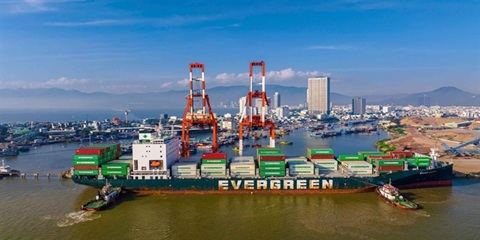
CUTTING LOGISTICS COSTS KEY TO BOOSTING EXPORTS
Reducing costs has become an increasingly urgent priority for import-export activities, particularly logistics costs, a conference in Hà Nội was told on Tuesday. According to Deputy General Director of the Ministry of Industry and Trade's Agency for Foreign Trade, Trần Thanh Hải, import-export activities has remained a bright spot for the economy in recent years, playing an important role and helping drive macroeconomic growth.
Events Sponsors






















