Want to be in the loop?
subscribe to
our notification
Business News
GOVERNANCE MANAGEMENT OF VIETNAMESE ENTERPRISES IS STILL LOW: EXPERTS
The management level of large enterprises in Việt Nam is still very low, compared with countries such as Singapore, Philippines, Malaysia, Indonesia, Thailand, according to experts.
Hoàng Quang Phòng, vice president of the Vietnam Chamber of Commerce and Industry (VCCI), said Việt Nam would build an independent and self-reliant economy in the context of international integration, adding the Party has properly understood and appreciated the role of businesspeople in realising the goal of building an independent and self-reliant economy, especially in the current context of deep integration.
Phòng said such efforts helped the team of entrepreneurs and businesses to grow. By the end of 2021, Việt Nam had nearly 860,000 enterprises in operation, about 15,300 non-agricultural cooperatives and about 5.1 million business households.
Phòng announced six local entrepreneurs had entered the top "dollar billionaires" globally in 2021 and 124 businesses with 283 products that are national brands, saying some brands resonate and affirm their brand value in regional and international markets such as Viettel, Vinamilk, VinFast, Thaco, TH True Milk and ST25 rice.
From another angle, he said business development still faced many difficulties and has not met expectations as the number of enterprises was unlikely to reach the set target of 1.5 million enterprises by 2025 while the quality of enterprises in value chains and global production networks were still limited, and have not yet taken full advantage of the opportunities brought by FTAs.
There are still some businesspeople who violate ethics, traditional culture and even the law, he told a seminar held by VCCI on September 27 aimed to improve competitiveness for the business community to develop and grow the local economy.
It is necessary to build a team of Vietnamese entrepreneurs who are not only talented but also have business ethics and culture, thus contributing to making Việt Nam a developing country by 2030, have modern industry, high average income; and become a high-income developed country by 2045 as said in the Resolution of the 13th Party Congress.
Deputy Director of the Department of Enterprise Development, Ministry of Planning and Investment, Bùi Thu Thuỷ told the seminar: “There are about 878,600 enterprises operating in the whole country; of which 97.2 per cent are small and medium sized.”
She added despite being ranked as a large enterprise, the average size of large enterprises in the private sector in Việt Nam was also much smaller than the average in other countries in the ASEAN region.
At the same time, Việt Nam's stock market is home to the largest concentration of private enterprises with a large number of listed companies compared to other stock exchanges in the region, said Thuỷ.
According to newly updated data, although Việt Nam's stock market has a good growth rate, the average capitalisation of enterprises listed on the two exchanges in Hà Nội and HCM City was still still far behind other countries in the region.
Compared with countries such as Singapore, the Philippines, Malaysia, Indonesia, and Thailand, the governance level of Việt Nam's large enterprises was still very low, only half of that of countries with high corporate governance scores.
This may partly explain the ability of large enterprises to grow and reach the regional and world level in these countries, which is still much higher than that of large enterprises in Việt Nam.
According to the assessment, Vietnamese enterprises still have many limitations in risk management issues; information disclosure and transparency; activities of the Board of Directors and the Supervisory Board. Not to mention, good corporate governance practices in recent times have added to the assessment of environmental protection policies in the practice of production and business activities of enterprises. This is a very new criterion for most Vietnamese businesses.
Lê Xuân Sang, Deputy Director of the Vietnam Institute of Economics, said that in the process of building an independent - self-reliant economy associated with integration, Việt Nam has seen many important achievements with increasingly diversified industries, and enhanced production capacity, strong development of private businesses and large corporations of international and regional stature.
Sang said in order to seize opportunities, deal with challenges and be a link, enterprises need to be proactive and active in improving their own capacity and competitiveness.
Sang suggested enterprises change management and administration methods, have a brand development strategy, actively register and manage product trademarks for legal protection; improve the ability to participate in the global value chain in the stages of product design, product distribution, supporting research and training development.
To overcome the limitations of small scale and limited capital, small and medium enterprises should attract external capital; promote association and cooperation activities with other enterprises.
Along with that, experts at the seminar said they should focus on developing human resources, improve professional qualifications and pay attention to deeper understanding of rules of origin; Intellectual Property; and administrative procedures - customs, especially commitments under free trade agreements.
Source: VNS
Related News

BANKING / FINANCE / INSURANCE / TAX
REMITTANCES TO HCM CITY RISE NEARLY 40% IN Q3
Remittances to HCM City reached more than US$2.83 billion in the third quarter of this year, up 39.5 per cent from the previous quarter and 3.6 per cent year-on-year. This was the first quarter showing positive annual growth this year, helping narrow the decline in remittance inflows over the first nine months. According to the State Bank of Vietnam (SBV)’s Regional Branch 2, remittances transferred to HCM City through credit institutions and economic organisations totalled $2.835 billion in Q3, an increase of more than $802 million from the previous quarter.

TECHNOLOGY
TECH SECTOR GROWTH OPENS UP OPPORTUNITIES FOR VIỆT NAM TO GO GLOBAL
The growth of the electronics, semiconductor and high-tech sectors worldwide is opening up a variety of opportunities for Vietnamese enterprises to integrate more deeply into the global supply chain. However, to become suppliers for these corporations, domestic enterprises must meet rigorous standards regarding quality, technology, productivity and order fulfilment capabilities.
VIETNAM ECONOMY INVESTMENT
FOREIGN INVESTORS SEEKING A SYNCHRONISED MANUFACTURING ECOSYSTEM
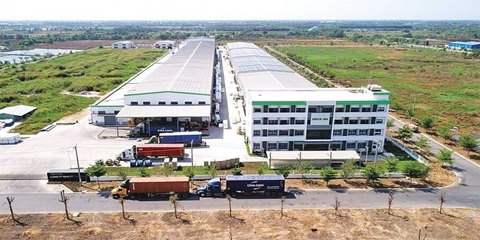
Instead of focusing only on land costs and incentives as usual, foreign investors are seeking a synchronised manufacturing ecosystem, from stable power supply and logistics to shared infrastructure and the convenience of completing residence procedures for experts to serve their long-term investment in the country.
MEMBER CORNER / PROMOTIONS
SENTRYSAFE FHW40200 – PROTECT YOUR VALUABLES, ENJOY PEACE OF MIND!
Looking for a reliable solution to protect your important documents, cash, and valuables from fire and water damage? Genuine SENTRYSAFE - Reliable protection for your valuables and peace of mind! Contact Sen Wai Vietnam for more information and personalized product recommendations.
PROPERTY / INDUSTRIAL ZONE
HCM CITY ATTRACTS US$5.7 BILLION INTO EXPORT PROCESSING AND INDUSTRIAL ZONES
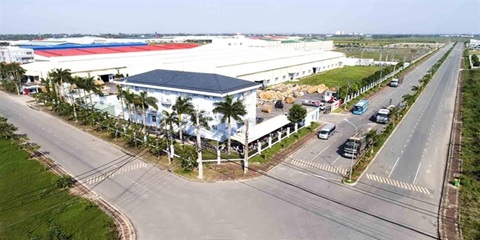
HCM City attracted US$5.7 billion in domestic and foreign investment into its export processing and industrial zones during the first nine months of 2026. The figure exceeded the city's full-year target by 31 per cent, highlighting strong momentum in high-quality industrial investment under Resolution No.10-NQ/TW. Total investment reached 131 per cent of the 2026 target of $4.25 billion and represented a 29 per cent increase compared with the same period in 2025, according to the city's Export Processing and Industrial Zones Authority (HEPZA).
INFRASTRUCTURE / CONSTRUCTION / LOGISTIC / PORT
DONG THAP PROVINCE STEPS UP INDUSTRIAL EXPANSION AND INFRASTRUCTURE CONNECTIVITY
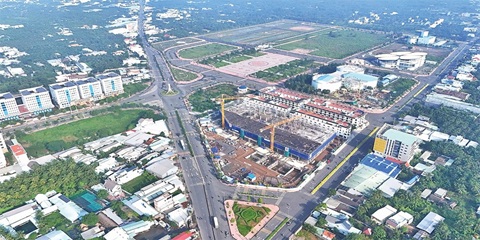
Accelerating public investment, strengthening inter-regional connectivity, and expanding industrial land are helping Dong Thap efficiently bolster competitiveness and drive economic growth. Following the 2025 merger of the former Dong Thap and Tien Giang provinces, the expanded Dong Thap province in the Mekong Delta faces mounting pressure to accelerate infrastructure development and strengthen connectivity among local economic zones, urban areas, industrial parks (IPs), and production centres.
Events Sponsors






















