Want to be in the loop?
subscribe to
our notification
Business News
GOLDEN OPPORTUNITIES FOR SMES IN STOCK MARKET
Experts warn investors to assess valuation levels against the growth potential of these companies for informed decisions.
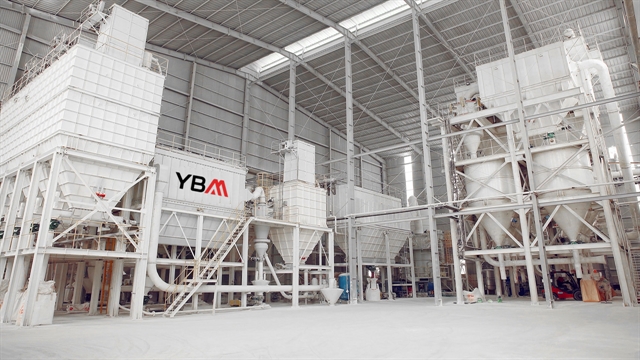
A Yên Bái Industry Mineral processing plant in Yên Bái Province. — Photo courtesy of the company
HÀ NỘI — The domestic stock market has seen an impressive performance of mid- and small-cap stocks, outperforming the market average.
However, experts warn investors to assess valuation levels against the growth potential of these companies for informed decisions.
Post-Lunar New Year, there has been a notable improvement in market liquidity, with funds spreading across various sectors, leading to an overall increase in stock prices.
The VN-Index has risen for five consecutive weeks, surpassing the significant 1,300-point threshold, a level it struggled to breach throughout 2024.
Average trading value since early February has reached approximately VNĐ17.5 trillion (US$684.5 million) per session, marking a 36 per cent increase compared to January. In the most recent week, liquidity exceeded VNĐ20 trillion per session.
However, when compared to the same period last year, February's liquidity was down by 25 per cent, and year-to-date figures show a 28 per cent decrease.
During this period, mid- and small-cap stocks, particularly in sectors like mining, building materials, construction, rubber and chemicals, have experienced significant price increases.
The market surpassing the 1,300-point threshold, driven by mid- and small-cap stocks, is seen as a positive signal, especially amid global market volatility.
In February, the top ten best-performing stocks were dominated by the mining sector (Yên Bái Industry Mineral JSC, Fecon Mining, Becamex) and financial services sector (Icapital Investment JSC, APG Securities, Ocean Group JSC).
The recent surge in mineral stocks can largely be attributed to escalating trade tensions among major economies, said Lâm Gia Khang, Head of Market Strategy at VietinBank Securities.
With China tightening export controls on key raw materials, particularly strategic metals and minerals, supply chain disruptions have driven investors toward these stocks.
However, after a strong rally, investors should be cautious. Despite the price surge, profits after tax in this sector have remained low in recent years, making valuations less attractive and raising the risk of short-term corrections.
Meanwhile, some non-life insurance stocks have been gaining momentum, partly due to a recovery in insurance demand after the crisis of confidence at the end of 2022.
Việt Nam’s insurance market still has substantial growth potential. By the end of 2024, the insurance penetration rate (measured by premiums as a percentage of GDP) is expected to range from 2.3 per cent to 2.8 per cent, which is still lower than the ASEAN average of 3.35 per cent, Asia’s 5.37 per cent and the global average of 6.3 per cent.
However, with many insurance stocks rising sharply and even reaching new highs, there is a risk of a market correction, especially as companies face pressure to cover claims from Typhoon Yagi, which struck in early September 2024.
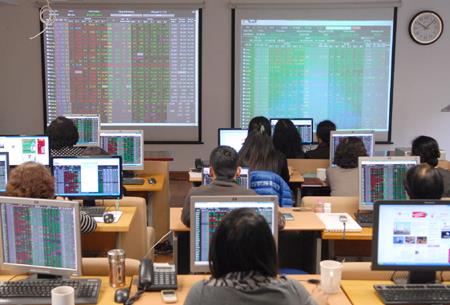
Investors watch market movements on a securities firm trading floor. VNA/VNS Photo
Cautious approach
The stock market is expected to see strong divergence in 2025, creating opportunities for portfolio restructuring and new investments.
According to Khang, investors should focus on mid- and small-cap stocks in sectors benefiting from Government and Central bank policies aimed at achieving at least 8 per cent GDP growth, such as civil construction, infrastructure and public investment.
Stocks like Tradico, which maintained over VNĐ110 billion in annual net profit (2022–2024) despite industry-wide losses, and PV Coating, which is set to gain from the Lô B - Ô Môn project, are worth considering, he added.
The project could generate over VNĐ3.14 billion in revenue and VNĐ471 billion in profit after tax, a significant jump from previous years.
However, Lê Đức Khánh, Head of Research at VPS Securities, notes that the recent rally in mid- and small-cap stocks is largely a recovery after prior declines.
For sustained market growth, blue-chip stocks must regain momentum. He expects capital to shift back to these larger stocks.
Bùi Văn Huy, Head of Investment Research at FIDT, agrees, arguing that large-cap stocks with stable price consolidation offer a more reasonable investment strategy than overheated smaller stocks.
The 2025 market will revolve around economic growth, public investment and market upgrades. Sectors with strong potential include banking, construction, building materials, retail and consumer goods.
Huy expects clearer opportunities in late 2025, as neither global nor Vietnamese markets have undergone significant corrections despite macroeconomic uncertainties. Recommended long-term picks include banking, steel and construction, attractive options if prices adjust, he said.— BIZHUB/VNS
Source: VNS
Related News

BANKING / FINANCE / INSURANCE / TAX
REMITTANCES TO HCM CITY RISE NEARLY 40% IN Q3
Remittances to HCM City reached more than US$2.83 billion in the third quarter of this year, up 39.5 per cent from the previous quarter and 3.6 per cent year-on-year. This was the first quarter showing positive annual growth this year, helping narrow the decline in remittance inflows over the first nine months. According to the State Bank of Vietnam (SBV)’s Regional Branch 2, remittances transferred to HCM City through credit institutions and economic organisations totalled $2.835 billion in Q3, an increase of more than $802 million from the previous quarter.

TECHNOLOGY
TECH SECTOR GROWTH OPENS UP OPPORTUNITIES FOR VIỆT NAM TO GO GLOBAL
The growth of the electronics, semiconductor and high-tech sectors worldwide is opening up a variety of opportunities for Vietnamese enterprises to integrate more deeply into the global supply chain. However, to become suppliers for these corporations, domestic enterprises must meet rigorous standards regarding quality, technology, productivity and order fulfilment capabilities.

VIETNAM ECONOMY INVESTMENT
FOREIGN INVESTORS SEEKING A SYNCHRONISED MANUFACTURING ECOSYSTEM
Instead of focusing only on land costs and incentives as usual, foreign investors are seeking a synchronised manufacturing ecosystem, from stable power supply and logistics to shared infrastructure and the convenience of completing residence procedures for experts to serve their long-term investment in the country.

MEMBER CORNER / PROMOTIONS
SENTRYSAFE FHW40200 – PROTECT YOUR VALUABLES, ENJOY PEACE OF MIND!
Looking for a reliable solution to protect your important documents, cash, and valuables from fire and water damage? Genuine SENTRYSAFE - Reliable protection for your valuables and peace of mind! Contact Sen Wai Vietnam for more information and personalized product recommendations.

PROPERTY / INDUSTRIAL ZONE
HCM CITY ATTRACTS US$5.7 BILLION INTO EXPORT PROCESSING AND INDUSTRIAL ZONES
HCM City attracted US$5.7 billion in domestic and foreign investment into its export processing and industrial zones during the first nine months of 2026. The figure exceeded the city's full-year target by 31 per cent, highlighting strong momentum in high-quality industrial investment under Resolution No.10-NQ/TW. Total investment reached 131 per cent of the 2026 target of $4.25 billion and represented a 29 per cent increase compared with the same period in 2025, according to the city's Export Processing and Industrial Zones Authority (HEPZA).

INFRASTRUCTURE / CONSTRUCTION / LOGISTIC / PORT
DONG THAP PROVINCE STEPS UP INDUSTRIAL EXPANSION AND INFRASTRUCTURE CONNECTIVITY
Accelerating public investment, strengthening inter-regional connectivity, and expanding industrial land are helping Dong Thap efficiently bolster competitiveness and drive economic growth. Following the 2025 merger of the former Dong Thap and Tien Giang provinces, the expanded Dong Thap province in the Mekong Delta faces mounting pressure to accelerate infrastructure development and strengthen connectivity among local economic zones, urban areas, industrial parks (IPs), and production centres.
Events Sponsors






















