Want to be in the loop?
subscribe to
our notification
Business News
GARMENT AND TEXTILE INDUSTRY TARGETS US$39 MILLION EXPORT TURNOVER IN 2021
The garment and textile sector is targeting an export turnover of US$38-39 billion in 2021, said Lê Tiến Trường, general director of the Việt Nam Textile and Garment Group (Vinatex).
Trường told an online meeting held yesterday that forecasts showed that the global garment and textile market would not return to the levels of demand seen in 2019 until the second quarter of 2022 or even the fourth quarter of 2023, so next year would still be tough for the sector, depending on how the COVID-19 pandemic develops.
Despite the challenges of 2021, Vinatex aims to reach export turnover equivalent to 2019.
To achieve this target, the group proposes reducing long-term interest rates.
Trường said 2021 would begin an investment cycle to meet new requirements post-COVID-19 pandemic as well as to invest in the production of raw materials to meet the rules of origin from new-generation free trade agreements (FTAs).
Meanwhile, after a year of hardship and low efficiency, investment projects in the garment and textile sector would no longer hold high priority. This would make it difficult for businesses to access capital so the commercial banking system would need to be flexible in credit ratings in proportion to the speed of market recovery.
Enterprises also expect the Government to offer policies to develop supporting technologies for the sector, according to Trường.
Firms hope the Government continues to direct to reduce non-production costs, especially logistics costs through the planning of the national logistics network, and other non-tariff costs. The Ministry of Industry and Trade has helped businesses make use of new FTAs through early issuance of guidelines on meeting rules of origin and having a portal to look up benefits from this agreement.
This year was the first time in 25 years that Viet Nam's textile exports posted a negative growth rate at 10.5 per cent, only reaching US$35 billion compared to $39 billion in 2019.
However, amid the global aggregate reduction of more than 22 per cent, the results of Việt Nam's textile and apparel industry were relatively positive.
Global textile and apparel industry profits fell by 93 per cent and many major fashion brands went bankrupt, making workers lose their jobs. Meanwhile, thanks to good pandemic prevention and no production interruption, the market share of Việt Nam's garment and textile continued to grow, reaching export growth of 20 per cent for the first time in the US market.
Trade agreements were unable to compensate for the decline in turnover but had a significant effect in reducing the shortage of orders.
Trường said the textile industry had been proactive since the beginning of the year when the material supply chain was interrupted by shifting supply.
The industry also identified the two most important assets to recover as soon as the market returns, namely a skilled workforce and a position in the global supply chain.
Therefore, the textile and footwear industries had worked to guarantee jobs for as many workers as possible.
In 2020, Vinatex’s export turnover and profit fell by 10 per cent from the previous year. However, workers' salaries were cut by only 4.5 per cent to the average level of VNĐ8.5 million each per month. The group has maintained jobs for 150,000 people.
High hope on UKVFTA
The UK-Việt Nam Free Trade Agreement (UKVFTA), expected to come into force at the beginning of 2021, could be an export boon for Vietnamese garment-textile and footwear enterprises.
According to the Ministry of Industry and Trade, the proportion of Vietnamese goods currently accounts for just 1 per cent of the UK's annual import turnover of nearly $700 billion. With the UKVFTA, Vietnamese firms have more opportunities to export to the UK, especially important as the EVFTA will no longer apply to the UK after Brexit.
The EVFTA is expected to fuel the growth of Việt Nam’s textile and garment industries by 6 and 14 per cent by 2030.
Vũ Đức Giang, Chairman of the Việt Nam Textile and Apparel Association (VITAS), said that, along with other agreements such as the EVFTA and the Regional Comprehensive Economic Partnership (RCEP), the UKVFTA would create a firmer foundation for the garment-textile sector.
The industry would be able to diversify its raw material supplies via importing from Japan and the Republic of Korea for export to the UK and the EU with preferential tax rates, he said, adding that this is a strength many ASEAN countries lack.
Predicting rising apparel demand in these markets in 2021 and 2022, Giang recommended Vietnamese firms pay attention to product origin and technical, labour and environmental standards.
Nguyễn Khánh Ngọc, deputy head of the European - American Market Department under the Ministry of Industry and Trade, said the UKVFTA would help Việt Nam compete with China, India and ASEAN.
Minister of Industry and Trade Trần Tuấn Anh and UK Secretary of State for International Trade Liz Truss signed the agreed minutes on the conclusion of negotiations over the UKVFTA on December 11. Ninety-nine per cent of tariffs on goods traded between Việt Nam and the UK would be cut at the end of the tariff elimination roadmap.
Source: VNS
Related News

BANKING / FINANCE / INSURANCE / TAX
REMITTANCES TO HCM CITY RISE NEARLY 40% IN Q3
Remittances to HCM City reached more than US$2.83 billion in the third quarter of this year, up 39.5 per cent from the previous quarter and 3.6 per cent year-on-year. This was the first quarter showing positive annual growth this year, helping narrow the decline in remittance inflows over the first nine months. According to the State Bank of Vietnam (SBV)’s Regional Branch 2, remittances transferred to HCM City through credit institutions and economic organisations totalled $2.835 billion in Q3, an increase of more than $802 million from the previous quarter.

TECHNOLOGY
TECH SECTOR GROWTH OPENS UP OPPORTUNITIES FOR VIỆT NAM TO GO GLOBAL
The growth of the electronics, semiconductor and high-tech sectors worldwide is opening up a variety of opportunities for Vietnamese enterprises to integrate more deeply into the global supply chain. However, to become suppliers for these corporations, domestic enterprises must meet rigorous standards regarding quality, technology, productivity and order fulfilment capabilities.
VIETNAM ECONOMY INVESTMENT
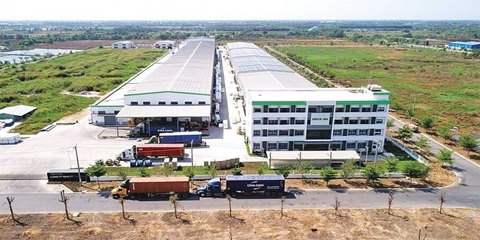
FOREIGN INVESTORS SEEKING A SYNCHRONISED MANUFACTURING ECOSYSTEM
Instead of focusing only on land costs and incentives as usual, foreign investors are seeking a synchronised manufacturing ecosystem, from stable power supply and logistics to shared infrastructure and the convenience of completing residence procedures for experts to serve their long-term investment in the country.
MEMBER CORNER / PROMOTIONS
SENTRYSAFE FHW40200 – PROTECT YOUR VALUABLES, ENJOY PEACE OF MIND!
Looking for a reliable solution to protect your important documents, cash, and valuables from fire and water damage? Genuine SENTRYSAFE - Reliable protection for your valuables and peace of mind! Contact Sen Wai Vietnam for more information and personalized product recommendations.
PROPERTY / INDUSTRIAL ZONE
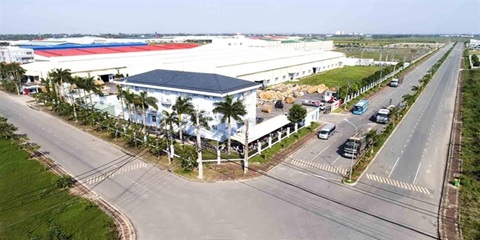
HCM CITY ATTRACTS US$5.7 BILLION INTO EXPORT PROCESSING AND INDUSTRIAL ZONES
HCM City attracted US$5.7 billion in domestic and foreign investment into its export processing and industrial zones during the first nine months of 2026. The figure exceeded the city's full-year target by 31 per cent, highlighting strong momentum in high-quality industrial investment under Resolution No.10-NQ/TW. Total investment reached 131 per cent of the 2026 target of $4.25 billion and represented a 29 per cent increase compared with the same period in 2025, according to the city's Export Processing and Industrial Zones Authority (HEPZA).
INFRASTRUCTURE / CONSTRUCTION / LOGISTIC / PORT
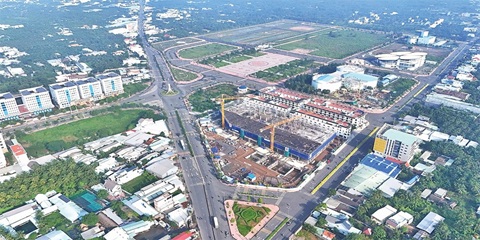
DONG THAP PROVINCE STEPS UP INDUSTRIAL EXPANSION AND INFRASTRUCTURE CONNECTIVITY
Accelerating public investment, strengthening inter-regional connectivity, and expanding industrial land are helping Dong Thap efficiently bolster competitiveness and drive economic growth. Following the 2025 merger of the former Dong Thap and Tien Giang provinces, the expanded Dong Thap province in the Mekong Delta faces mounting pressure to accelerate infrastructure development and strengthen connectivity among local economic zones, urban areas, industrial parks (IPs), and production centres.
Events Sponsors






















