Want to be in the loop?
subscribe to
our notification
Business News
FROM ASSEMBLY TO MANUFACTURING: NEW CHAPTER FOR VIETNAM AUTO INDUSTRY
At a time when Vietnam’s auto sector has been spending nearly US$10 billion on imported components, export competitiveness remains limited and underdeveloped, and the global economy is reshaping supply chains, the industry stands at a major turning point with clear opportunities to move toward technological and manufacturing self-reliance.
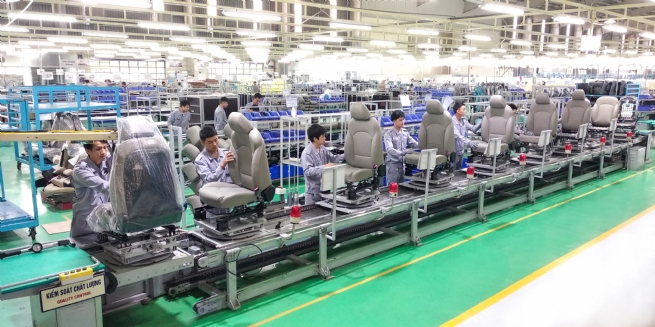
At THACO, localization rates reach 70% for some models
For nearly three decades, Vietnam’s auto industry has operated mainly under an assembly model, with record-low localization rates for passenger vehicles. This has created a macroeconomic “bottleneck.” Low localization has resulted in trade imbalances, limited domestic value creation, the lack of a strong local supply chain, and, in particular, the failure to build high-tech manufacturing capacity at home, placing heavy pressure on the balance of payments and foreign exchange reserves.
However, the 2024-2026 period has brought a clear shift. Leading domestic companies such as VinFast have raised localization rates to a new level. According to the company, the localization rate of its electric vehicles has surpassed 60%, covering key components such as body frames, motors, headliners, and shock absorbers. VinFast aims to increase localization to 84% in 2026.
Vietnam’s supporting industries play an important role in the broader economy, particularly in manufacturing sectors such as automotive production. Yet the sector still faces major challenges. First, its scale remains fragmented, as most supporting firms are small and medium-sized enterprises with limited investment in technology and production capacity. Second, competitiveness remains modest. Products from domestic suppliers often struggle to meet international standards on quality and price. Third, supply chain linkages are weak. Domestic firms lack strong connections with large enterprises and global supply chains.
Given this reality, to ensure the fast and sustainable development of Vietnam’s automotive manufacturing sector and to bring “Made in Vietnam” vehicles to export markets, especially as the country enters a new era of prosperity and national advancement, the industry must prepare more carefully to achieve real breakthroughs and new leaps forward, starting with a meaningful increase in the localization rate of vehicles produced in Vietnam.
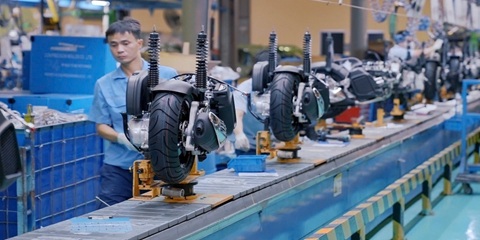
In response to these practical demands, alongside VinFast, major players such as Truong Hai Auto Corporation (THACO) of Truong Hai Group have proactively produced key components including wiring harnesses, seats, and body frames. At THACO, localization rates have reached 70% for certain models. The company’s ecosystem includes an R&D center, a mechanical engineering center, and 17 component manufacturing plants. THACO has taken the lead in producing a wide range of auto components and parts, including seats, interior components, glass, wiring harnesses, leaf springs; molds; air-conditioning systems for passenger cars, trucks, and buses; plastic components; vehicle bodies, semi-trailers, bumpers, seat covers, seat frames, mechanical components, plastic-composite components, and other industrial equipment.
Most recently, Tran Ba Duong, Chairman of the Board of Truong Hai Group, announced plans to launch a passenger car brand (vehicles with fewer than nine seats) under its own name in 2027, creating what many described as a “shockwave” across Vietnam’s auto industry. If carried out, the plan would represent not only a strategic move by a leading company but also a sign of broader transformation across the entire automotive sector.
The shift from “assembly” to “manufacturing” not only helps lower production costs but also reduces the economy’s exposure to exchange rate shocks and global supply chain disruptions.
In the draft outline of the Strategy for the Development of the Automotive Industry to 2030, with a vision to 2045, prepared by the Ministry of Industry and Trade, the target for Vietnam’s auto market by 2035 is total output of about 1,531,400 vehicles, including roughly 852,600 vehicles with up to nine seats, around 84,400 vehicles with 10 seats or more, about 587,900 trucks, and approximately 6,500 specialized vehicles.
The draft sets a target for domestically produced and assembled vehicles to account for about 78% of domestic demand. For supporting industries, the 2026–2035 period aims to meet more than 65% of domestic demand for components and spare parts used in vehicle production and assembly.
To reach these goals, the strategy outlines clear directions, including identifying and forming strategic partnerships; encouraging investment in projects large enough to create markets for supporting industries; promoting the production of environmentally friendly vehicles (fuel-efficient vehicles, hybrid vehicles, biofuel-powered vehicles, electric vehicles, etc.); and complying with emission standards under the roadmap approved by the Prime Minister.
According to a report by the National Statistics Office under the Ministry of Finance, an estimated 76,186 new vehicles, including both domestically produced and imported units, were added to the Vietnamese market in December 2025. This marked an increase of 12.8% compared with November (67,550 vehicles).
Domestic vehicle production and assembly in December were estimated at 60,700 units, up 23.4% from November and 57.5% from December 2024. For the full year 2025, domestic automakers produced an estimated 484,500 vehicles, a 39.1% increase year-on-year. This marked the highest annual output ever recorded by Vietnam’s auto industry.
Among the top 10 best-selling models in the Vietnamese market in 2025, seven were domestically produced and assembled vehicles. VinFast’s electric models held the top four positions. The VinFast VF3 ranked first with 44,585 units sold, followed by the VinFast VF5 with 43,913 units, the VinFast Limo Green with 27,127 units, and the VinFast VF6 with 23,291 units.
Amid these market shifts and the growth of domestic auto companies, Dr. Bui Quang Tuan, Vice President of the Vietnam Economic Association and former Director General of the Vietnam Institute of Economics, praised the efforts and achievements of leading firms such as VinFast. These are encouraging signs for the industry. “VinFast will lead from the front, moving ahead while guiding the rest of the industry rather than advancing alone, with the entire sector developing in step with the new context,” he said.
According to Dr. Nguyen Van Hoi, Director General of the Vietnam Institute of Strategy and Policy for Industry and Trade, the goal is not only to serve the domestic market but also to export components and integrate more deeply into global value chains. This requires companies to build real competitiveness in international markets. The forthcoming Law on the Development of Key Industries is expected to provide a strong enough legal framework to support these directions.
Despite strong prospects, the “new dawn” of Vietnam’s auto industry still faces significant challenges, as market scale must expand further. Domestic consumption has increased but remains too small to optimize the costs of large-scale component production. In addition, intense competition from imported vehicles under the roadmap to cut ASEAN import tariffs to 0% and free trade agreements such as the EU-Vietnam Free Trade Agreement (EVFTA) and the UK-Vietnam Free Trade Agreement (UKVFTA) has placed domestic vehicles under heavy price pressure from markets including Thailand, Indonesia, and China.
Self-reliance in the auto sector therefore goes beyond producing a vehicle carrying a Vietnamese brand; it means building an independent automotive industry. In 2026, as electric and green vehicle markets expand rapidly, Vietnam faces a rare opportunity to leapfrog and reposition itself on the global automotive industry map. Achieving comprehensive transformation will require close coordination between long-term policy support from the government and the ambition and technological self-reliance of private sector conglomerates willing to think boldly and act decisively.
Source: VCCI
Related News
VIETNAM ECONOMY INVESTMENT
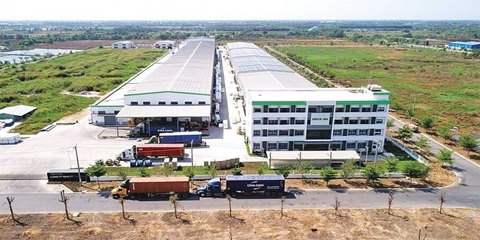
FOREIGN INVESTORS SEEKING A SYNCHRONISED MANUFACTURING ECOSYSTEM
Instead of focusing only on land costs and incentives as usual, foreign investors are seeking a synchronised manufacturing ecosystem, from stable power supply and logistics to shared infrastructure and the convenience of completing residence procedures for experts to serve their long-term investment in the country.
INFRASTRUCTURE / CONSTRUCTION / LOGISTIC / PORT
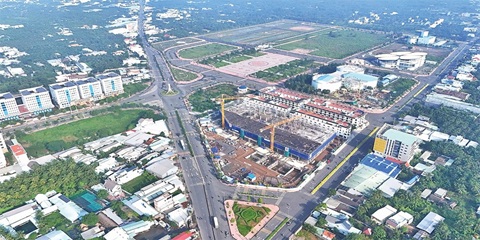
DONG THAP PROVINCE STEPS UP INDUSTRIAL EXPANSION AND INFRASTRUCTURE CONNECTIVITY
Accelerating public investment, strengthening inter-regional connectivity, and expanding industrial land are helping Dong Thap efficiently bolster competitiveness and drive economic growth. Following the 2025 merger of the former Dong Thap and Tien Giang provinces, the expanded Dong Thap province in the Mekong Delta faces mounting pressure to accelerate infrastructure development and strengthen connectivity among local economic zones, urban areas, industrial parks (IPs), and production centres.
PROPERTY / INDUSTRIAL ZONE
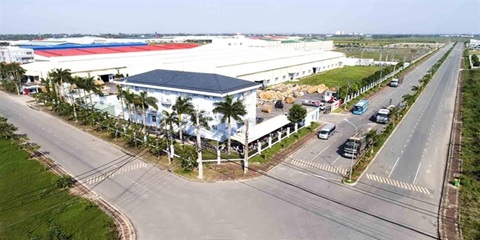
HCM CITY ATTRACTS US$5.7 BILLION INTO EXPORT PROCESSING AND INDUSTRIAL ZONES
HCM City attracted US$5.7 billion in domestic and foreign investment into its export processing and industrial zones during the first nine months of 2026. The figure exceeded the city's full-year target by 31 per cent, highlighting strong momentum in high-quality industrial investment under Resolution No.10-NQ/TW. Total investment reached 131 per cent of the 2026 target of $4.25 billion and represented a 29 per cent increase compared with the same period in 2025, according to the city's Export Processing and Industrial Zones Authority (HEPZA).

BANKING / FINANCE / INSURANCE / TAX
REMITTANCES TO HCM CITY RISE NEARLY 40% IN Q3
Remittances to HCM City reached more than US$2.83 billion in the third quarter of this year, up 39.5 per cent from the previous quarter and 3.6 per cent year-on-year. This was the first quarter showing positive annual growth this year, helping narrow the decline in remittance inflows over the first nine months. According to the State Bank of Vietnam (SBV)’s Regional Branch 2, remittances transferred to HCM City through credit institutions and economic organisations totalled $2.835 billion in Q3, an increase of more than $802 million from the previous quarter.
VIETNAM ECONOMY INVESTMENT
LOCALITIES REPORT BREAKTHROUGH RESULTS IN FDI IN FIRST NINE MONTHS
In Ho Chi Minh City, total registered capital reached $17.2 billion in the first nine months, up 4.2 times from the same period last year. The figure included more than $9.35 billion in newly registered capital and over $4.9 billion in additional capital for existing projects. Foreign investors also registered more than $2.9 billion through capital contributions and share purchases.

TECHNOLOGY
TECH SECTOR GROWTH OPENS UP OPPORTUNITIES FOR VIỆT NAM TO GO GLOBAL
The growth of the electronics, semiconductor and high-tech sectors worldwide is opening up a variety of opportunities for Vietnamese enterprises to integrate more deeply into the global supply chain. However, to become suppliers for these corporations, domestic enterprises must meet rigorous standards regarding quality, technology, productivity and order fulfilment capabilities.
Events Sponsors






















