Want to be in the loop?
subscribe to
our notification
Business News
FOREIGN LABOURERS’ INTERNAL MOVEMENT WITHIN ENTERPRISES: OBSTACLES REMAIN
[12-11-2015] Circular 41/2014/TT-BCT issued by the Ministry of Industry and Trade dated November 5, 2014 stipulates foundations and procedures to define foreign labourers’ internal movement in enterprises operating in 11 service sectors specified in Vietnam’s commitments schedule to the WTO not subject to labour licensing.
However, in practice, this Circular has revealed certain shortcomings. With the purpose of gaining feedback and proposals from relevant departments and agencies, representatives of law firms as well as FDI enterprises operating in Vietnam in order to improve Circular 41, the Planning Department in collaboration with the European Trade Policy and Investment Support Project (EU-MUTRAP) recently organised a workshop to introduce Circular 41 as well as other related issues.
In his opening speech, Mr Nguyen Hoang Giang - Deputy Director General of the Planning Department, Ministry of Industry and Trade, said that on September 5, 2013, the government issued Decree 102/2013/ND-CP detailing the implementation of some articles of Labour Code on foreign workers in Vietnam. As stated by Article 7 of the Decree, “The Ministry of Industry and Trade shall provide guidance on the basis and procedure for identifying reassigned foreign workers within 11 aforesaid service industries”. On this basis, the Ministry of Industry and Trade has developed Circular 41 to institutionalise the commitments on services between Vietnam and WTO on labour, also to make the provisions of the Labour Code and the government’s Decree 102/2013/ND-CP more detailed. However, as noted by Mr Giang, like many other legal documents, Circular 41 has its own shortcomings needed to be fixed or adjusted to fit the development trends of the market today.
According to Lawyer Nguyen Viet Hung, Mayer Brown GSM Law Firm, the issuance of Circular 41 was a major policy of the government to attract FDI; also an effort of ministries and agencies to promote the administrative reform. This Circular identifies all forms of commercial presence of foreign enterprises under the Law on Enterprises and the Investment Law 2005. However, it doesn’t include some new forms of investment mentioned in the Enterprise Law and the Investment Law that took effect on July 1, 2015, such as the public-private partnerships (PPP) investment. Lawyer Nguyen Viet Hung therefore suggested the Ministry of Industry and Trade should consider including the PPP as one of the beneficiary exempt from applying for the work permit for workers moving within an enterprise.
Mr Hung also said that moving staff internally in an enterprise of foreign investor was very common and in fact, an understandable move of businesses.
However, Circular 41 had yet to include the case of worker movement between two subsidiaries in the same foreign group. Therefore, to further promote the administrative reform, Lawyer Nguyen Viet Hung suggested that the Ministry of Industry and Trade consider making this case a work permit exemption.
Regarding the moving of expert international labours stipulated in Circular 41, Lawyer Nguyen Thuy Hang, Baker & McKenzie Law Firm, said as the barriers to the movement of foreign labourers into Vietnam was gradually being removed while the demand for expertise international workers continued to climb, at least in the near future, the movement procedure still faced some challenges. These challenges could cause difficulties for Vietnam in complying with international commitments made in terms of affected production and business of enterprises in Vietnam on the micro level. To ensure the implementation of Vietnam's commitments on the free movement of labourers, Lawyer Nguyen Thuy Hang proposed that Vietnam and ASEAN countries should step up discussions on increasing the number of fields covered by agreements on mutual recognition. Additionally, the Ministry of Labour, Invalids and Social Affairs should have specific guidelines on the definition of “internal movement” so that local departments of Labour, Invalids and Social Affairs could work uniformly, making it easier for businesses to use foreign workers. “The synchronisation of regulations and uniform application at local levels play a key role in ensuring Vietnam’s compliance with regional and international commitments,” stressed Ms Hang.
Regarding the provisions of Vietnam's laws relating to the management of foreign labourers in Vietnam, Ms Pham Thi Huyen, Lecturer at National Economics University, said Vietnam had been developing several policies and regulations on the management of foreign workers such as Decree 34/2008/ND - CP dated March 25, 2008 provided for the recruitment and management of foreigners working in Vietnam; Decree 46/2011/ND - CP dated June 17, 2011 amending and supplementing some articles of Decree 34/2008/ND - CP which regulated the employment of foreigners working in Vietnam under employment contract.
Besides Circular 41, in February, the Ministry of Labour, Invalids and Social Affairs also issued Circular 03/2014/ TT - BLDTBXH providing guidelines on some provisions applying to foreign workers working in Vietnam. However, according to Ms Huyen, the implementation of those provisions remained very much limited. Whereas the entrance into the Trans-Pacific Partnership Agreement (TPP) required member states, including Vietnam, to tighten regulations on labour standards. Ms Huyen hoped Circular 41 would help provide businesses and foreign workers more detailed instructions in the use of foreign labourers; especially a specific definition of foreign workers exempted from work permits, as in Article 7 of Decree 102/2013/ND-CP of the government, thereby ensuring the stability of the Vietnamese labour market.
Source: VCCI
Related News

CHARITY / EXHIBITION / OTHER EVENTS
INVESTMENT OPPORTUNITIES IN CA MAU PROVINCE: 96 PROJECTS AND 20 STRATEGIC PROJECTS
We are pleased to share with you information on investment projects currently seeking investors in Ca Mau Province. Should your esteemed company or association be interested, we kindly invite you to review the project information and complete the registration form via the links provided. The Ho Chi Minh City Investment and Trade Promotion Centre (ITPC) will consolidate the expressions of interest and facilitate connections with the leadership of Ca Mau Province at a meeting tentatively scheduled for 13 November 2026 in Ho Chi Minh City.

MEMBER CORNER / PROMOTIONS
BẰNG KIỀU LIVESHOW - A SYMPHONY OF LOVE UNDER THE GOLDEN GLOW
A masterclass in live music that takes the audience on a soulful journey through immortal love songs, guided by the peerless artistry and emotive storytelling of renowned singer Bằng Kiều. The highlight of the night is his seamless musical chemistry with special guest Triệu Hồng Ngọc, promising passionate and deeply resonant duets inside the magnificent Grand Ballroom.
INFRASTRUCTURE / CONSTRUCTION / LOGISTIC / PORT
ĐÀ NẴNG GREEN-LIGHTS US$105 MILLION THAI DEVELOPMENT DEAL
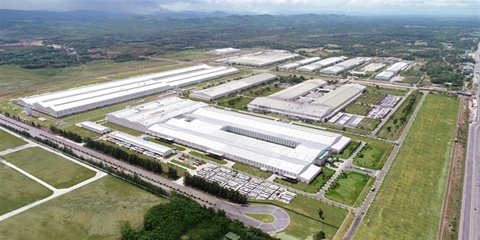
The central city has approved an investment proposal by Thailand’s WHA Group to develop infrastructure for the 400ha WHA Đà Nẵng Industrial Park project on two communes of Thăng Bình and Đồng Dương, with an investment of more than VNĐ2.7 trillion (US$105 million). The city said it approved WHA Industrial Development International's status as an investor in the project, which is expected to take place between 2027 and 2034.
VIETNAM ECONOMY INVESTMENT
MOBILE PHONE EXPORTS RISE 20% TO $51.8 BILLION IN FIRST NINE MONTHS
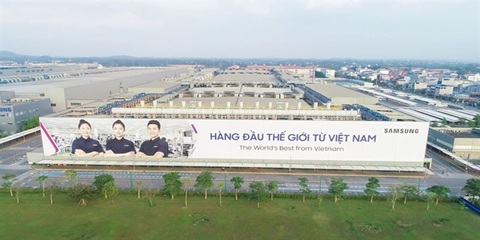
Exports of mobile phones and components rose 20 per cent year-on-year to nearly US$51.8 billion in the first nine months of 2026, with China, the US and Republic of Korea accounting for more than half of the total. Shipments to the three markets reached a combined $26.18 billion, or 50.6 per cent of total exports of the product group during the period, according to data from the Vietnam Department of Customs under the Ministry of Finance.
INFRASTRUCTURE / CONSTRUCTION / LOGISTIC / PORT
VIỆT NAM-CAMBODIA TRADE GATHERS PACE TOWARDS $20 BILLION TARGET
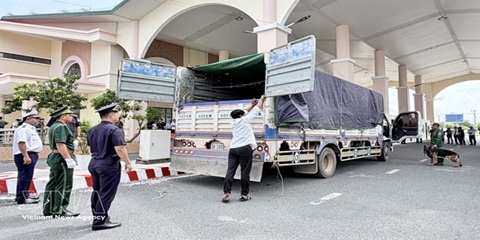
Trade between Việt Nam and Cambodia continues to grow, remaining a bright spot and a key pillar of bilateral cooperation as the two countries aim to raise two-way trade to US$20 billion in the coming years. After setting a record of more than $11.3 billion last year, bilateral trade reached about $8.7 billion in the first eight months of this year, up 8.3 per cent year on year.
VIETNAM ECONOMY INVESTMENT
FRUIT AND VEGETABLE EXPORTS POISED TO HIT $10 BILLION IN 2026
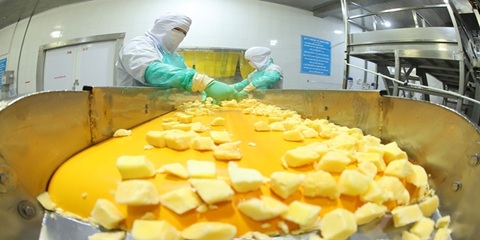
Fruit and vegetable exports are on track to reach nearly US$10 billion in 2026, after rising 19.9 per cent year on year to nearly US$7.4 billion in the first nine months, driven by strong seasonal demand and abundant tropical fruit supplies. The Ministry of Agriculture and Environment said the growth reflected stronger international demand for fresh produce and processed agricultural products.
Events Sponsors






















