Want to be in the loop?
subscribe to
our notification
Business News
FOREIGN INVESTMENT ROOM DELIVERS MIXED PICTURE AT BANKS
While the foreign ownership limit at several top-tier banks has almost reached its cap with a desire for further expansion, other banks have significant room for international investment.
Among the 27 listed commercial banks, 14 have foreign ownership rates exceeding 15 per cent of their charter capital.
Many banks have already maxed out or are close to maxing out their foreign investment room, including ACB, TPBank, ABBank, MBBank, Techcombank, VIB, and VPBank.
In contrast to banks that have reached the maximum foreign ownership cap of 30 per cent, some have opted to reserve capacity for future capital raising.
For instance, in early July, VIB locked its foreign room at 4.99 per cent. Previously, the bank capped foreign ownership at 20.5 per cent, which was consistently fully utilised.
Southern lender OCB also locked its foreign room at 22 per cent. In mid-2021, OCB sold 15 per cent of its shares to its Japanese partner, Aozora Bank.
Meanwhile, HDBank unveiled that it has reserved about 10 per cent of its foreign room for potential capital-raising initiatives, including selling shares to strategic investors amid favourable market conditions and when suitable partners are found.
At present, the Ho Chi Minh City-based lender has garnered interest from diverse potential partners in South Korea, Europe, and the US.
Selecting suitable partners for capital issuance and attracting strategic shareholders aligns with the bank’s objective of enhancing its financial capacity to support growth, ensuring capital safety, and maintaining liquidity targets.
In contrast to top-tier banks, many other banks have very low foreign investor ownership rates or even fully available foreign room. These include NCB, Eximbank, SHB, LienVietPostBank, SeABank, VietCapital Bank, Nam A Bank, and SaigonBank.
For Eximbank, after strategic shareholder Sumitomo Mitsui Banking Corporation (SMBC) fully divested its stake, foreign ownership in the bank dropped to less than 10 per cent of its charter capital. Eximbank currently has no plans to sell additional shares to foreign investors.
Nam A Bank is in the process of negotiating with foreign partners to find suitable investors. The bank plans to utilise its foreign room cap of up to 20 per cent to attract additional capital.
Whether banks have reached their maximum foreign caps or still have room, most hope for an increase in the foreign ownership limit to create more space for future capital-raising initiatives, potentially through sales to foreign shareholders.
According to a draft amendment to the law on foreign investors purchasing shares in Vietnamese credit institutions, foreign room for banks involved in mandatory transfers of weak credit institutions may be raised to 49 per cent, instead of the current 30 per cent.
If approved, this would mean that banks participating in restructuring weak credit institutions, including Vietcombank, MBBank, HDBank, and VPBank, may see their foreign ownership limits increased to 49 per cent of their charter capital.
The amendment, however, requires the state to hold at least 65 per cent of the total voting shares in state-owned commercial banks during the 2021-2025 period.
Additionally, under the Vietnam-EU Free Trade Agreement, Vietnam is committed to considering allowing two European credit institutions to own up to 49 per cent of the charter capital in two local banks within five years from the agreement's enforcement on August 1, 2020.
This agreement does not apply to state-owned banks, including BIDV, VietinBank, Vietcombank, and Agribank.
Nguyen Quoc Hung, secretary general of Vietnam Banks Association, stated that increasing the foreign ownership limit at Vietnamese banks would lure in foreign capital, help banks enhance their capital base, improve financial and competitive capacity, accelerate bad debt resolution, and drive socioeconomic development.
Analysts believe that foreign investment in Vietnamese banks is beneficial for the domestic banking sector.
The involvement of foreign investors has brought positive changes in finance, technology, management, and governance, aligning Vietnamese credit institutions more closely with international practices and standards.
Raising the foreign ownership limit in banks may prove necessary. Although the financial health of the local banking system has improved, the system remains undercapitalised overall, with a capital adequacy ratio significantly lower than the regional average.
Source: VIR
Related News

BANKING / FINANCE / INSURANCE / TAX
REMITTANCES TO HCM CITY RISE NEARLY 40% IN Q3
Remittances to HCM City reached more than US$2.83 billion in the third quarter of this year, up 39.5 per cent from the previous quarter and 3.6 per cent year-on-year. This was the first quarter showing positive annual growth this year, helping narrow the decline in remittance inflows over the first nine months. According to the State Bank of Vietnam (SBV)’s Regional Branch 2, remittances transferred to HCM City through credit institutions and economic organisations totalled $2.835 billion in Q3, an increase of more than $802 million from the previous quarter.
TECHNOLOGY
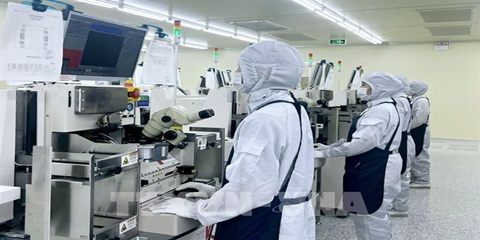
TECH SECTOR GROWTH OPENS UP OPPORTUNITIES FOR VIỆT NAM TO GO GLOBAL
The growth of the electronics, semiconductor and high-tech sectors worldwide is opening up a variety of opportunities for Vietnamese enterprises to integrate more deeply into the global supply chain. However, to become suppliers for these corporations, domestic enterprises must meet rigorous standards regarding quality, technology, productivity and order fulfilment capabilities.
VIETNAM ECONOMY INVESTMENT
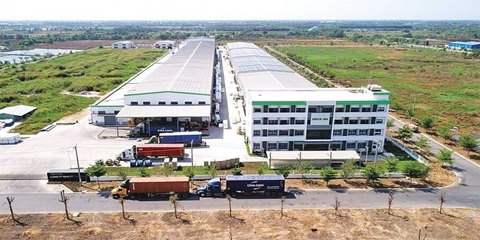
FOREIGN INVESTORS SEEKING A SYNCHRONISED MANUFACTURING ECOSYSTEM
Instead of focusing only on land costs and incentives as usual, foreign investors are seeking a synchronised manufacturing ecosystem, from stable power supply and logistics to shared infrastructure and the convenience of completing residence procedures for experts to serve their long-term investment in the country.
MEMBER CORNER / PROMOTIONS
SENTRYSAFE FHW40200 – PROTECT YOUR VALUABLES, ENJOY PEACE OF MIND!
Looking for a reliable solution to protect your important documents, cash, and valuables from fire and water damage? Genuine SENTRYSAFE - Reliable protection for your valuables and peace of mind! Contact Sen Wai Vietnam for more information and personalized product recommendations.
PROPERTY / INDUSTRIAL ZONE
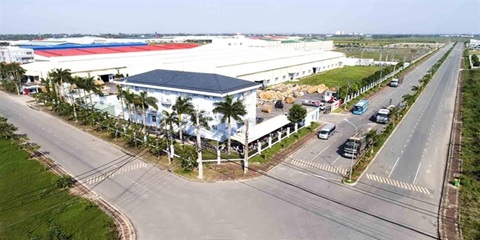
HCM CITY ATTRACTS US$5.7 BILLION INTO EXPORT PROCESSING AND INDUSTRIAL ZONES
HCM City attracted US$5.7 billion in domestic and foreign investment into its export processing and industrial zones during the first nine months of 2026. The figure exceeded the city's full-year target by 31 per cent, highlighting strong momentum in high-quality industrial investment under Resolution No.10-NQ/TW. Total investment reached 131 per cent of the 2026 target of $4.25 billion and represented a 29 per cent increase compared with the same period in 2025, according to the city's Export Processing and Industrial Zones Authority (HEPZA).
INFRASTRUCTURE / CONSTRUCTION / LOGISTIC / PORT
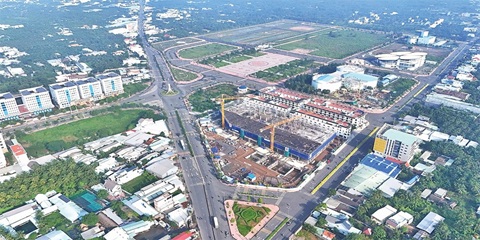
DONG THAP PROVINCE STEPS UP INDUSTRIAL EXPANSION AND INFRASTRUCTURE CONNECTIVITY
Accelerating public investment, strengthening inter-regional connectivity, and expanding industrial land are helping Dong Thap efficiently bolster competitiveness and drive economic growth. Following the 2025 merger of the former Dong Thap and Tien Giang provinces, the expanded Dong Thap province in the Mekong Delta faces mounting pressure to accelerate infrastructure development and strengthen connectivity among local economic zones, urban areas, industrial parks (IPs), and production centres.
Events Sponsors






















