Want to be in the loop?
subscribe to
our notification
Business News
FOREIGN INVESTMENT IN VIỆT NAM SURGES IN FIVE MONTHS
Experts highlight that foreign investment contributes to GDP growth through three main channels - increasing capital accumulation, facilitating technology transfer and enhancing management efficiency and production organisation.
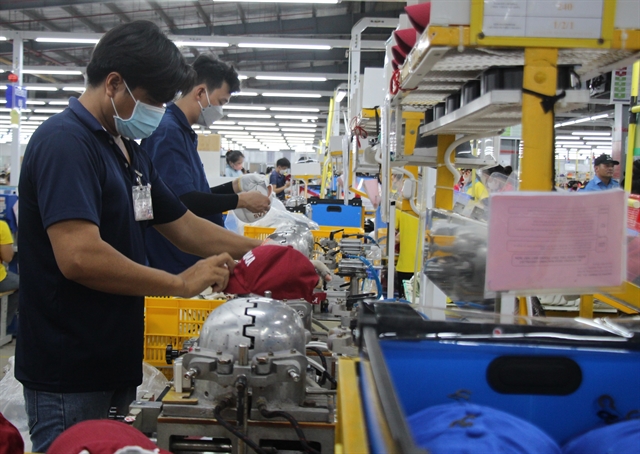
A production line of the South Korea-invested Unipax Vị Thanh Co in Hậu Giang Province. — VNA/VNS Photos
HÀ NỘI — Foreign investment in Việt Nam reached nearly $18.4 billion in the first five months of 2025, a 51 per cent increase year-on-year, according to the Ministry of Finance’s Foreign Investment Agency (FIA).
Of the total, over $7.02 billion came from 1,549 newly licensed foreign-invested projects. While this reflected a 13.2 per cent drop in value, it marked a 14 per cent increase in the number of new projects.
Meanwhile, 672 capital-added projects contributed an additional $8.51 billion, up 28 per cent in volume and more than 3.4 times the value of the same period last year.
In addition, foreign investors conducted 1,358 capital contribution and share purchase transactions, a 6.6 per cent rise year-on-year, with the total value soaring to over $2.85 billion – 1.8 times the figure of the previous year.
Disbursed foreign investment also saw a positive trend, reaching approximately $8.9 billion, up 7.9 per cent from the same period in 2024.
During the first five months, the manufacturing and processing sector continued to dominate, attracting $10.39 billion – 56.5 per cent of total registered capital and up 32 per cent year-on-year. The real estate sector came in second with $4.99 billion, accounting for 27.1 per cent of the total and more than doubling compared to the same period last year. Science and technology drew $1.02 billion, followed by the wholesale and retail sector with over $596.8 million.
In terms of investing countries and territories, Singapore led with over $4.38 billion, making up 23.8 per cent of total foreign investment and increasing 30.1 per cent year-on-year. South Korea ranked second with more than $2.93 billion – nearly 16 per cent of the total and 2.47 times last year's figure.
Foreign capital was distributed across 52 provinces and cities. Hà Nội led with more than $3.2 billion in registered investment, representing 17.6 per cent of the national total and nearly 2.8 times last year's value. Bắc Ninh followed with $2.7 billion (14.8 per cent), and HCM City came third with $2.58 billion (14.1 per cent), both seeing more than 2.5-fold increases.
As of May 31, Việt Nam had 43,346 valid foreign-invested projects with a total registered capital of $517.14 billion. Disbursed capital reached nearly $331.46 billion, equivalent to 64.6 per cent of total committed investment.
According to the FIA, foreign investment flows into Việt Nam continue to grow steadily despite ongoing fluctuations in the global economy.
It added that the increase in newly registered projects, capital adjustments and share purchase transactions reflects strong investor confidence in the Vietnamese market. This confidence is demonstrated not only through new investments but also in the expansion of existing operations.
Challenges remain
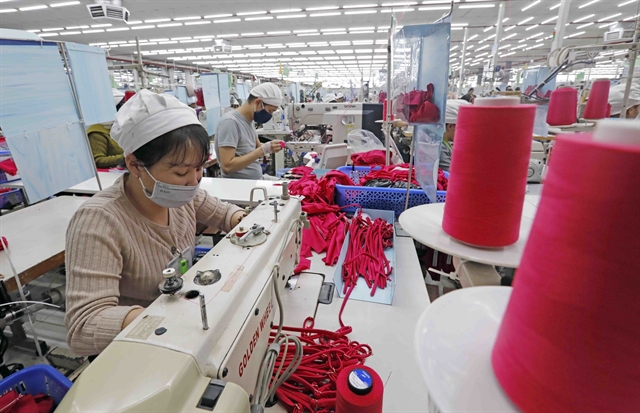
Garment products are made by workers of French SCAVI Huế Co in Thừa Thiên Huế Province.
Experts noted that the surge in foreign investment is a highly positive indicator, particularly given that the foreign-invested sector contributed approximately $20.5 billion to Việt Nam’s state budget in 2024 and accounted for about 74 per cent of the nation’s total export turnover.
These figures underscore the vital role foreign investment plays in driving Việt Nam’s economic growth, which the Government has set a target of 8 per cent for this year.
Experts highlight that foreign investment contributes to GDP growth through three main channels: increasing capital accumulation, facilitating technology transfer and enhancing management efficiency and production organisation.
They also cited studies as saying that foreign investment positively influences exports, not only in volume but also in product structure. Major foreign investment attracting sectors such as electronics, computers and components, garments and footwear remain the backbone of the country’s export performance.
Việt Nam’s reform-oriented policies, its commitment to global economic integration, and its open-door stance have made it an increasingly attractive destination for foreign investors. However, experts also pointed to existing shortcomings in the country’s ability to attract and effectively utilise foreign investment.
Việt Nam suffered a loss in net benefits from foreign investment, as most of the profits were repatriated by investors while the transfer of technology and management skills remained limited, Nguyễn Mại, chairman of the Việt Nam's Association of Foreign Invested Enterprises (VAFIE) told thoibaonganhang.vn.
Other experts also cited the weak links between the foreign-invested sector and domestic enterprises as a major challenge. They said local firms failed to participate deeply in the supply chains of foreign corporations, resulting in limited spillover effects from foreign investment into the broader economy.
In this context - coupled with rapidly evolving technologies and increasing environmental protection demands - the need for a strategic shift in attracting foreign investment has become more urgent.
Adding to this perspective, Nguyễn Văn Toàn, deputy chairman of VAFIE told the online newspaper that the strategic focus in the future will be to attract high-tech, environmentally friendly foreign investment projects with strong technology transfer potential. — VNS
Source: VNS
Related News
BANKING / FINANCE / INSURANCE / TAX
REMITTANCES TO HCM CITY RISE NEARLY 40% IN Q3
Remittances to HCM City reached more than US$2.83 billion in the third quarter of this year, up 39.5 per cent from the previous quarter and 3.6 per cent year-on-year. This was the first quarter showing positive annual growth this year, helping narrow the decline in remittance inflows over the first nine months. According to the State Bank of Vietnam (SBV)’s Regional Branch 2, remittances transferred to HCM City through credit institutions and economic organisations totalled $2.835 billion in Q3, an increase of more than $802 million from the previous quarter.
TECHNOLOGY
TECH SECTOR GROWTH OPENS UP OPPORTUNITIES FOR VIỆT NAM TO GO GLOBAL
The growth of the electronics, semiconductor and high-tech sectors worldwide is opening up a variety of opportunities for Vietnamese enterprises to integrate more deeply into the global supply chain. However, to become suppliers for these corporations, domestic enterprises must meet rigorous standards regarding quality, technology, productivity and order fulfilment capabilities.
VIETNAM ECONOMY INVESTMENT
FOREIGN INVESTORS SEEKING A SYNCHRONISED MANUFACTURING ECOSYSTEM
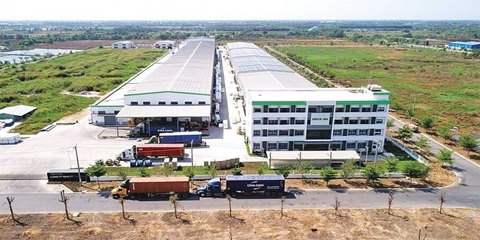
Instead of focusing only on land costs and incentives as usual, foreign investors are seeking a synchronised manufacturing ecosystem, from stable power supply and logistics to shared infrastructure and the convenience of completing residence procedures for experts to serve their long-term investment in the country.
MEMBER CORNER / PROMOTIONS
SENTRYSAFE FHW40200 – PROTECT YOUR VALUABLES, ENJOY PEACE OF MIND!
Looking for a reliable solution to protect your important documents, cash, and valuables from fire and water damage? Genuine SENTRYSAFE - Reliable protection for your valuables and peace of mind! Contact Sen Wai Vietnam for more information and personalized product recommendations.
PROPERTY / INDUSTRIAL ZONE
HCM CITY ATTRACTS US$5.7 BILLION INTO EXPORT PROCESSING AND INDUSTRIAL ZONES
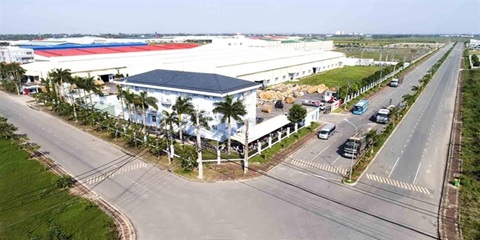
HCM City attracted US$5.7 billion in domestic and foreign investment into its export processing and industrial zones during the first nine months of 2026. The figure exceeded the city's full-year target by 31 per cent, highlighting strong momentum in high-quality industrial investment under Resolution No.10-NQ/TW. Total investment reached 131 per cent of the 2026 target of $4.25 billion and represented a 29 per cent increase compared with the same period in 2025, according to the city's Export Processing and Industrial Zones Authority (HEPZA).
INFRASTRUCTURE / CONSTRUCTION / LOGISTIC / PORT
DONG THAP PROVINCE STEPS UP INDUSTRIAL EXPANSION AND INFRASTRUCTURE CONNECTIVITY
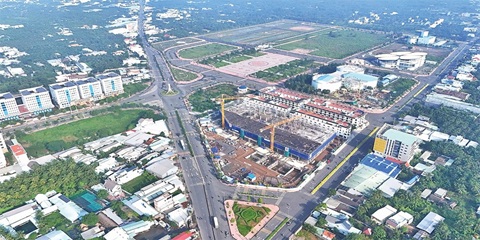
Accelerating public investment, strengthening inter-regional connectivity, and expanding industrial land are helping Dong Thap efficiently bolster competitiveness and drive economic growth. Following the 2025 merger of the former Dong Thap and Tien Giang provinces, the expanded Dong Thap province in the Mekong Delta faces mounting pressure to accelerate infrastructure development and strengthen connectivity among local economic zones, urban areas, industrial parks (IPs), and production centres.
Events Sponsors






















