Want to be in the loop?
subscribe to
our notification
Business News
FOREIGN-INVESTED PROJECTS KICKED INTO HIGHER GEAR
Ho Chi Minh City People’s Committee is actively pushing for progress in long-delayed foreign-invested real estate projects in the city.
The city has just permitted a joint venture to develop the $1.2 billion Empire City venture, to be able to launch more than 130 units of the Cove Residences into the market. In its latest document issued mid-November, Ho Chi Minh City Construction Department stated that the joint venture has reached enough conditions for being permitted to sell the apartment units.
The joint venture will be responsible for mobilising capital of not more than 30 per cent of the total value of the assets in its first phase. The following phases of mobilising investment capital must be appropriated with the construction’s progress, but not be exceeding 50 per cent of the total value before the units are handed over to buyers.
The joint venture was also requested not to collect more than 95 per cent of the asset value before the ownership certification is handed over to the buyers.
The investor has been requested to contact Ho Chi Minh City’s Public Security Department and local military department for fixing the number of units which will be able to sell to foreign buyers as part of this particular venture.
Empire City, located in Thu Thiem Urban Development Area in District 2, has been beset with delays for more than a year, due to obstacles in legal procedures.
Other proposals from the joint venture included asking Ho Chi Minh City People’s Committee to reissue the revised investment certificate after the joint venture had increased its contribution capital from $76 million to $240 million in 2018; and extension of the contribution progress from within 36 months from the day it received investment certificate in 2015, to right after it receives the revised investment certificate.
The joint venture is now completing procedures to start work on the basement of the 88-storey Observation Tower, a focal point of the construction.
Empire City was granted an investment certificate in 2015 with the total investment capital of $1.2 billion, and covers 14.5 hectares. Domestic funding comes from Tien Phuoc Real Estate JSC and Tran Thai Real Estate JSC, while Corredance Pte., Ltd. of Singapore and Denver Power Ltd., of the British Virgin Islands have also poured investment.
According to the construction plan, the whole project is to be completed in 2022 and has been divided into four phases since 2016.
Some of the buildings were erected in the second phase from 2017 to 2019, while the 88-storey tower complex itself is being built in the third phase to 2021.
Meanwhile, the Ministry of Planning and Investment (MPI) has reported to the prime minister its plan to adjust the lifespan of Saigon Centre IV and V, 27 years after being given certification but without the land being handed over to investors. According to the MPI’s proposal, operations will last until 2070 instead of 2043 due to the slow land delivery.
According to Ho Chi Minh City People’s Committee several months ago, this adjustment would suit the regulation on the lifespan of projects under Article 43 of the Law on Investment which stipulates that for projects where land is granted and leased by the government but land delivery is slow, the time of delay must be excluded from the lifespan of those projects.
The Saigon Centre project was given an investment certificate in 1993 with the investment capital of $270 million by Keppel Land Watco Co., Ltd., a joint venture between Keppel Land Singapore and domestic partners. It has been transferred many times since then, with the latest investor being Real Estate Saigon Corporation.
So far, Saigon Centre I, II, and III have finished construction and have been put into operation. However, Saigon Centre IV and V have not received land yet. These two projects were to be located on more than 8,500 square metres on an area currently occupied by the Ministry of Transport’s agencies.
The Saigon Centre is located on a 2ha prime site in the heart of the central business district in District 1, a short distance from two planned underground subway stations at Ben Thanh Market and the Opera House.
The first phase of the project was completed in 1996 and comprises of a 25-storey mixed-use development, including a three-storey retail podium, Grade A office space, and 89 luxury serviced apartments.
According to figures from the MPI, the total foreign direct investment capital into real estate market has increased from $0.26 billion in the first quarter to $0.58 billion in the second quarter, and jumped to $2.35 billion in the third quarter of this year.
Source: VIR
Related News
BANKING / FINANCE / INSURANCE / TAX
REMITTANCES TO HCM CITY RISE NEARLY 40% IN Q3
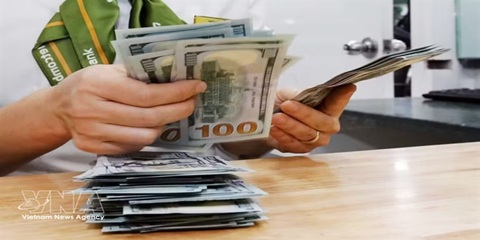
Remittances to HCM City reached more than US$2.83 billion in the third quarter of this year, up 39.5 per cent from the previous quarter and 3.6 per cent year-on-year. This was the first quarter showing positive annual growth this year, helping narrow the decline in remittance inflows over the first nine months. According to the State Bank of Vietnam (SBV)’s Regional Branch 2, remittances transferred to HCM City through credit institutions and economic organisations totalled $2.835 billion in Q3, an increase of more than $802 million from the previous quarter.
TECHNOLOGY
TECH SECTOR GROWTH OPENS UP OPPORTUNITIES FOR VIỆT NAM TO GO GLOBAL
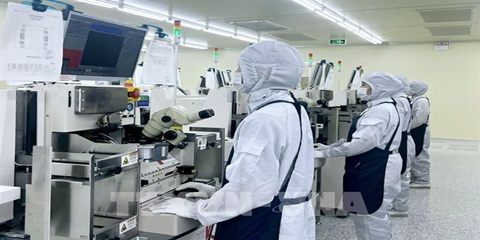
The growth of the electronics, semiconductor and high-tech sectors worldwide is opening up a variety of opportunities for Vietnamese enterprises to integrate more deeply into the global supply chain. However, to become suppliers for these corporations, domestic enterprises must meet rigorous standards regarding quality, technology, productivity and order fulfilment capabilities.
VIETNAM ECONOMY INVESTMENT
FOREIGN INVESTORS SEEKING A SYNCHRONISED MANUFACTURING ECOSYSTEM
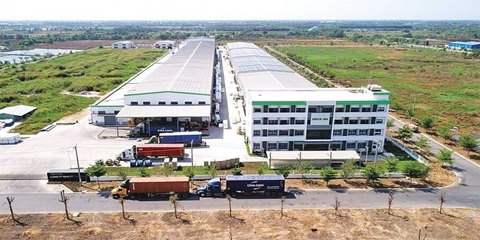
Instead of focusing only on land costs and incentives as usual, foreign investors are seeking a synchronised manufacturing ecosystem, from stable power supply and logistics to shared infrastructure and the convenience of completing residence procedures for experts to serve their long-term investment in the country.
MEMBER CORNER / PROMOTIONS
SENTRYSAFE FHW40200 – PROTECT YOUR VALUABLES, ENJOY PEACE OF MIND!
Looking for a reliable solution to protect your important documents, cash, and valuables from fire and water damage? Genuine SENTRYSAFE - Reliable protection for your valuables and peace of mind! Contact Sen Wai Vietnam for more information and personalized product recommendations.
PROPERTY / INDUSTRIAL ZONE
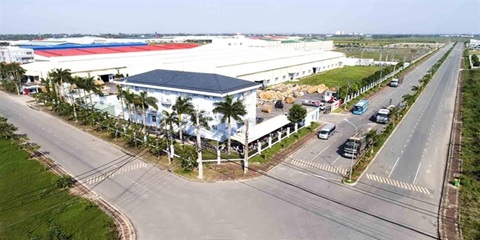
HCM CITY ATTRACTS US$5.7 BILLION INTO EXPORT PROCESSING AND INDUSTRIAL ZONES
HCM City attracted US$5.7 billion in domestic and foreign investment into its export processing and industrial zones during the first nine months of 2026. The figure exceeded the city's full-year target by 31 per cent, highlighting strong momentum in high-quality industrial investment under Resolution No.10-NQ/TW. Total investment reached 131 per cent of the 2026 target of $4.25 billion and represented a 29 per cent increase compared with the same period in 2025, according to the city's Export Processing and Industrial Zones Authority (HEPZA).
INFRASTRUCTURE / CONSTRUCTION / LOGISTIC / PORT
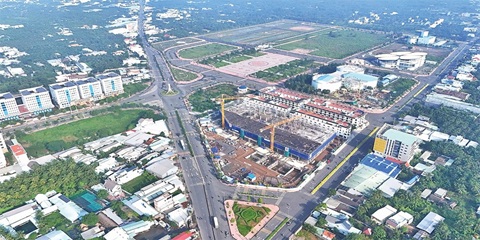
DONG THAP PROVINCE STEPS UP INDUSTRIAL EXPANSION AND INFRASTRUCTURE CONNECTIVITY
Accelerating public investment, strengthening inter-regional connectivity, and expanding industrial land are helping Dong Thap efficiently bolster competitiveness and drive economic growth. Following the 2025 merger of the former Dong Thap and Tien Giang provinces, the expanded Dong Thap province in the Mekong Delta faces mounting pressure to accelerate infrastructure development and strengthen connectivity among local economic zones, urban areas, industrial parks (IPs), and production centres.
Events Sponsors






















