Want to be in the loop?
subscribe to
our notification
Business News
FOREIGN GROUPS KEEN ON SMART MANUFACTURING
More foreign financiers are planning new initiatives in Vietnam as it strives to transform itself into a smart manufacturing powerhouse.
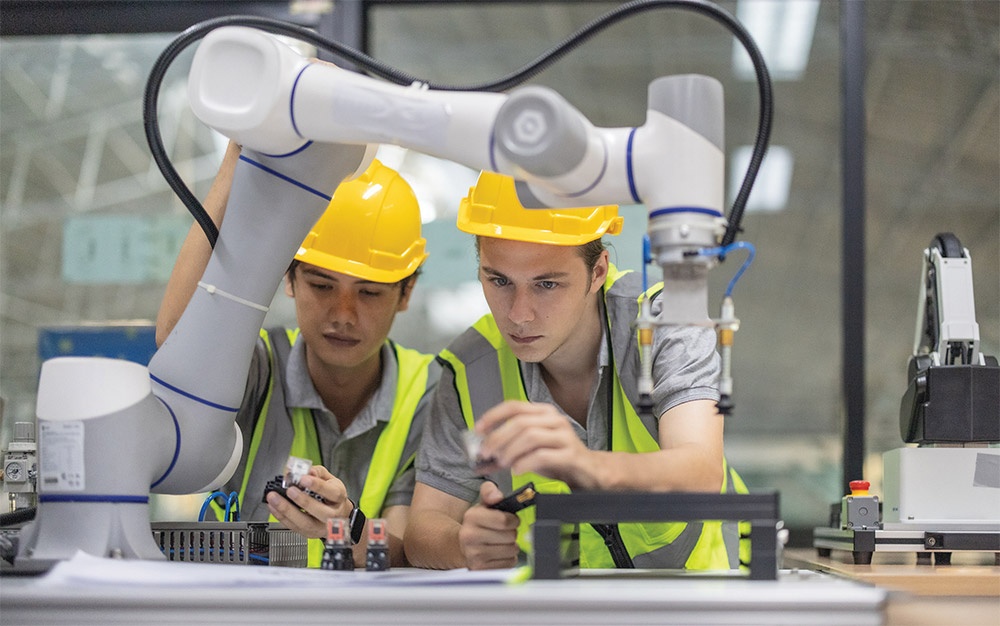
Vietnam is transitioning from traditional sectors to high-end electronics and smart manufacturing, Photo: Shutterstock
At last week’s conference on intelligent manufacturing industry collaboration in Hanoi, experts and Chinese businesses praised the status of Vietnam as an attractive destination for foreign investors and an important link in the global supply chain.
“The cooperation between Vietnamese and Chinese enterprises in developing the supply chain welcomes great opportunities. More businesses with smart, digital devices will contribute to upgrading Vietnam’s manufacturing industry, together welcoming the huge chance to restructure the global industrial chain,” said Wu Lang Wen, CEO of media organisation Sunrise Big Data.
The data asserts that Vietnam is transforming from the traditional textile and footwear industry to the high-end electronics and smart manufacturing industry, Wen added. Last year, Vietnam’s total import-export turnover reached $786.3 billion, up 15.4 per cent on year. In terms of exports alone, in 2024, there were 37 items with an export turnover of over $1 billion, accounting for 94 per cent of total export turnover.
According to Sunrise Big Data, the number of Chinese-listed companies in Vietnam is increasing rapidly, which will be more than 350 manufacturing facilities by the end of 2025. Chinese enterprises moving to Vietnam are gradually shifting from labour-intensive industries such as household appliances, textiles, footwear, and toys, with the move of Samsung and LG out of China, followed by the shift of the entire supply chain.
Meanwhile Chen Hui, deputy general director of vehicle maker Chery Vietnam, said that, as one of the important strategic points in Southeast Asia, Vietnam is becoming a key link in its globalisation strategy.
“Particularly, while the global supply chain is restructuring strongly now, seizing new opportunities for the Vietnamese manufacturing industry and strengthening cooperation in the industry chain has become a special interest of Chinese businesses,” he said.
Brand automobile manufacturer Omoda & Jaecoo, a joint venture between Geleximco Group and Chery International, is building a factory in Hung Phu Industrial Park in the northern province of Thai Binh. With a capacity of 200,000 units per year, the factory will produce Omoda and Jaecoo car models. The construction will be carried out in three phases, with a total investment estimated at more than $800 million. The first phase is expected to be completed in the first quarter of 2026.
“Chery has identified Vietnam as the main vehicle manufacturing centre of Southeast Asia,” Hui added. “We choose very capable partners and a destination with great potential to build a factory.”
Another vehicle manufacturer, Geely, also chose Vietnam to set up a factory. At the end of 2024, Tasco Auto and Geely signed documents related to the assembly and distribution of Geely brands in Vietnam, as well as building an assembly plant in Thai Binh province.
The annual factory’s capacity will be 75,000 vehicles in the first phase, with investment of about $168 million. Construction of the plant is expected to begin this year, and the first vehicle will be delivered in 2026.
Seeing the trend of high-tech manufacturing supply chain development increasingly moving to Vietnam, Andrew Stuart Cunane, senior sales manager at NanoFilm Technologies Vietnam, said that the company is planning to expand production capacity, add production lines, and optimise manufacturing processes to meet global market demand.
“We will strengthen local cooperation with original equipment manufacturers and tech companies, empower Vietnam’s manufacturing industry, encourage innovation, train people, and optimise supply chains, contributing to making Vietnam a global optical manufacturing centre with some core and unique technologies like microlens array, five-axis diamond turning, and micro-optics,” he said.
Wang Li, CEO of investment consultants 1Station Vietnam, stated that more and more Chinese electrical manufacturers are interested in Vietnam as the supply chains of big giants like Apple, Samsung, Dell, HP are in the country. “This contributes significantly to enhancing the quality of supply chains and vendors in Vietnam,” Li said.
However, Li also raised some concerns from investors. “The trend clear, but this year there have been some problems in terms of possible tariffs from the United States, difficulties in hiring workers in some provinces, and the increase in the cost of both land and labour,” he said.
Experts said Vietnam should shift to more efficient smart production to gain a more favourable position in the global value chains. Wen from Sunrise Big Data pointed out the problem in Vietnam’s current industrial chains that the capacity to support domestic supply chains is still weak, so businesses in the chain have to import raw materials and accessories from abroad.
“This not only increases the cost of businesses but also reduces the flexibility and stability of the supply chain,” he said. “Vietnam needs to localise supply chain services, research and develop new materials, and adapt advanced technologies.”
He also recommended that Vietnamese businesses boost cooperation with supply chain enterprises from China, Japan, South Korea, and Taiwan to upgrade smart production chains, especially those associated with semiconductors and AI digitalisation.
Source: VIR
Related News

BANKING / FINANCE / INSURANCE / TAX
REMITTANCES TO HCM CITY RISE NEARLY 40% IN Q3
Remittances to HCM City reached more than US$2.83 billion in the third quarter of this year, up 39.5 per cent from the previous quarter and 3.6 per cent year-on-year. This was the first quarter showing positive annual growth this year, helping narrow the decline in remittance inflows over the first nine months. According to the State Bank of Vietnam (SBV)’s Regional Branch 2, remittances transferred to HCM City through credit institutions and economic organisations totalled $2.835 billion in Q3, an increase of more than $802 million from the previous quarter.
TECHNOLOGY
TECH SECTOR GROWTH OPENS UP OPPORTUNITIES FOR VIỆT NAM TO GO GLOBAL
The growth of the electronics, semiconductor and high-tech sectors worldwide is opening up a variety of opportunities for Vietnamese enterprises to integrate more deeply into the global supply chain. However, to become suppliers for these corporations, domestic enterprises must meet rigorous standards regarding quality, technology, productivity and order fulfilment capabilities.
VIETNAM ECONOMY INVESTMENT
FOREIGN INVESTORS SEEKING A SYNCHRONISED MANUFACTURING ECOSYSTEM
Instead of focusing only on land costs and incentives as usual, foreign investors are seeking a synchronised manufacturing ecosystem, from stable power supply and logistics to shared infrastructure and the convenience of completing residence procedures for experts to serve their long-term investment in the country.
MEMBER CORNER / PROMOTIONS
SENTRYSAFE FHW40200 – PROTECT YOUR VALUABLES, ENJOY PEACE OF MIND!
Looking for a reliable solution to protect your important documents, cash, and valuables from fire and water damage? Genuine SENTRYSAFE - Reliable protection for your valuables and peace of mind! Contact Sen Wai Vietnam for more information and personalized product recommendations.
PROPERTY / INDUSTRIAL ZONE
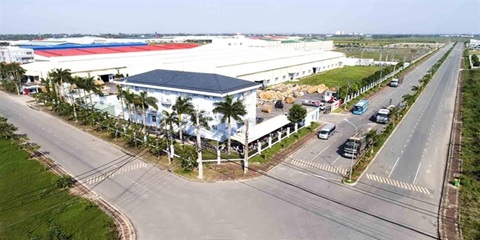
HCM CITY ATTRACTS US$5.7 BILLION INTO EXPORT PROCESSING AND INDUSTRIAL ZONES
HCM City attracted US$5.7 billion in domestic and foreign investment into its export processing and industrial zones during the first nine months of 2026. The figure exceeded the city's full-year target by 31 per cent, highlighting strong momentum in high-quality industrial investment under Resolution No.10-NQ/TW. Total investment reached 131 per cent of the 2026 target of $4.25 billion and represented a 29 per cent increase compared with the same period in 2025, according to the city's Export Processing and Industrial Zones Authority (HEPZA).
INFRASTRUCTURE / CONSTRUCTION / LOGISTIC / PORT
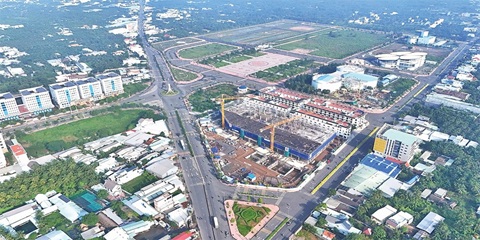
DONG THAP PROVINCE STEPS UP INDUSTRIAL EXPANSION AND INFRASTRUCTURE CONNECTIVITY
Accelerating public investment, strengthening inter-regional connectivity, and expanding industrial land are helping Dong Thap efficiently bolster competitiveness and drive economic growth. Following the 2025 merger of the former Dong Thap and Tien Giang provinces, the expanded Dong Thap province in the Mekong Delta faces mounting pressure to accelerate infrastructure development and strengthen connectivity among local economic zones, urban areas, industrial parks (IPs), and production centres.
Events Sponsors






















