Want to be in the loop?
subscribe to
our notification
Business News
FOREIGN FIRMS CONTINUE TO SEE VIETNAM AS GOOD INVESTMENT LOCATION
While a number of foreign companies have moved part of their production or orders to other countries, many still see Vietnam as a good location for investment in the long term.
Speaking at a virtual conference called ‘Invest in Vietnam. Wins and challenges’ organised by Adamed and Davipharm last week, Nguyen Hai Minh, partner at Mazars and Vice Chairman of EuroCham, said: “In Vietnam, FDI plays an important role, contributing a lot to the growth of the country, especially exports.”
There was a slowdown in foreign investment in the country due to COVID-19 this year, and some people were even concerned that foreign investors would not come or even move out of the country, he said.
“So Eurocham did a survey in August. It showed that 18 percent of surveyed companies have already shifted part of their production to other countries and another 16 percent are still considering.
“But we need to be very specific here to have a correct understanding of the situation. Companies actually are not moving factories or investment out of Vietnam, but just part of their production and orders.
“We talked to many companies. [Many said] ‘COVID will not last long, we see Vietnam is still a good location for investment.' Many companies are even looking at Vietnam as a hub for sales in the region.”
Michal Wieczorek, CEO of Davipharm, said he saw a great opportunity in Vietnam’s pharmaceutical market.
Domestically produced drugs only met 47 percent of demand, healthcare spending was expected to continue to grow, there was an ageing population with an increase in non-communicable diseases, and there was growth in the private hospital sector, he said.
Vietnam’s pharmaceutical market would remain one of the fastest growing in the world, he said.
When in 2017 Adamed bought 70 percent of shares in Davipharm, becoming the biggest direct Polish investor in Vietnam, it had a crystal-clear strategy, he said.
Despite pandemic challenges, the company succeeded in achieving the EU-GMP certification for the drug manufacturing line in its factory in Binh Duong.
“With this EU-GMP certification, we are ready to achieve our other ambitious goals,” he said.
Speakers at the event also talked about challenges that businesses had faced.
Minh said the business environment had improved a lot, especially in the last three or four years, though administrative procedures was still a big barrier, especially in terms of implementation of regulations at the provincial level where there were a lot of uncertainties in terms of implementing regulations.
Jean-Jacques Bouflet, former head of Trade Affairs in the EU Delegation to Vietnam, said since last year foreign businesses had experienced many regulatory challenges.
Today, faced with the pandemic reality, the country should also find a solution to live with COVID-19 since having workers live on-site proved to be very difficult for companies to implement, he said.
“The global COVID situation has proved that it is possible to combine both health protection and economic activities. This is what we need in Vietnam today: running an economy with welcoming institutional regulations for foreign investors, especially the pharmaceutical industry, which is so critical for protecting health.”
Wieczorek said: “If the Government creates an attractive and welcoming investment environment for the pharmaceutical industry, I’m convinced that many more companies will follow in our footsteps.”
“But we need incentives, not obstacles. Unquestionably, Vietnam is going to stay on the list of top priorities for Adamed this year and in future,” he said.
Source: VIR
Related News

BANKING / FINANCE / INSURANCE / TAX
REMITTANCES TO HCM CITY RISE NEARLY 40% IN Q3
Remittances to HCM City reached more than US$2.83 billion in the third quarter of this year, up 39.5 per cent from the previous quarter and 3.6 per cent year-on-year. This was the first quarter showing positive annual growth this year, helping narrow the decline in remittance inflows over the first nine months. According to the State Bank of Vietnam (SBV)’s Regional Branch 2, remittances transferred to HCM City through credit institutions and economic organisations totalled $2.835 billion in Q3, an increase of more than $802 million from the previous quarter.
TECHNOLOGY
TECH SECTOR GROWTH OPENS UP OPPORTUNITIES FOR VIỆT NAM TO GO GLOBAL
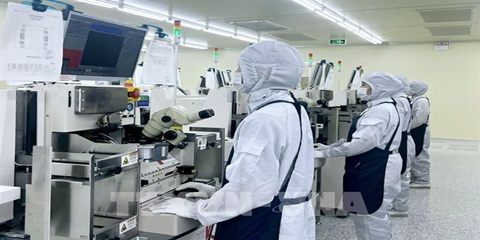
The growth of the electronics, semiconductor and high-tech sectors worldwide is opening up a variety of opportunities for Vietnamese enterprises to integrate more deeply into the global supply chain. However, to become suppliers for these corporations, domestic enterprises must meet rigorous standards regarding quality, technology, productivity and order fulfilment capabilities.
VIETNAM ECONOMY INVESTMENT
FOREIGN INVESTORS SEEKING A SYNCHRONISED MANUFACTURING ECOSYSTEM
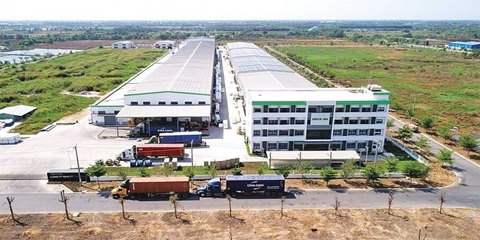
Instead of focusing only on land costs and incentives as usual, foreign investors are seeking a synchronised manufacturing ecosystem, from stable power supply and logistics to shared infrastructure and the convenience of completing residence procedures for experts to serve their long-term investment in the country.
MEMBER CORNER / PROMOTIONS
SENTRYSAFE FHW40200 – PROTECT YOUR VALUABLES, ENJOY PEACE OF MIND!
Looking for a reliable solution to protect your important documents, cash, and valuables from fire and water damage? Genuine SENTRYSAFE - Reliable protection for your valuables and peace of mind! Contact Sen Wai Vietnam for more information and personalized product recommendations.
PROPERTY / INDUSTRIAL ZONE
HCM CITY ATTRACTS US$5.7 BILLION INTO EXPORT PROCESSING AND INDUSTRIAL ZONES
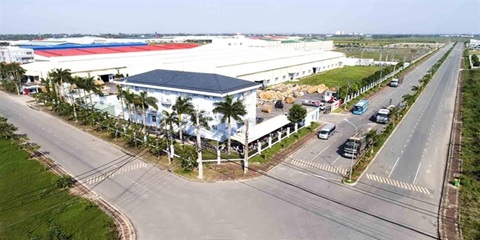
HCM City attracted US$5.7 billion in domestic and foreign investment into its export processing and industrial zones during the first nine months of 2026. The figure exceeded the city's full-year target by 31 per cent, highlighting strong momentum in high-quality industrial investment under Resolution No.10-NQ/TW. Total investment reached 131 per cent of the 2026 target of $4.25 billion and represented a 29 per cent increase compared with the same period in 2025, according to the city's Export Processing and Industrial Zones Authority (HEPZA).
INFRASTRUCTURE / CONSTRUCTION / LOGISTIC / PORT
DONG THAP PROVINCE STEPS UP INDUSTRIAL EXPANSION AND INFRASTRUCTURE CONNECTIVITY
Accelerating public investment, strengthening inter-regional connectivity, and expanding industrial land are helping Dong Thap efficiently bolster competitiveness and drive economic growth. Following the 2025 merger of the former Dong Thap and Tien Giang provinces, the expanded Dong Thap province in the Mekong Delta faces mounting pressure to accelerate infrastructure development and strengthen connectivity among local economic zones, urban areas, industrial parks (IPs), and production centres.
Events Sponsors






















