Want to be in the loop?
subscribe to
our notification
Business News
FOREIGN EXCHANGE RATE INCREASES AGAIN IN OCTOBER
According to experts, the exchange rate has increased again due to a recovery of the US dollar price in the international market and a slowdown in Việt Nam’s trade surplus.
After cooling down in August 2024 and bottoming out at the end of September, the USD/VNĐ exchange rate has shown signs of increasing again since the beginning of October.
According to experts, the exchange rate has increased again due to a recovery of the US dollar price in the international market and a slowdown in Việt Nam’s trade surplus.
The central exchange rate announced by the State Bank of Vietnam on October 1 was VNĐ24,081 per dollar, but it has been continuously adjusted up since then to reach VNĐ24,168 per dollar currently.
The exchange rates listed at commercial banks have also been adjusted up since the beginning of this month. Specifically, the dollar selling rate at Vietcombank on October 1 was at VNĐ24,770 per dollar and currently surpasses the VNĐ25,000 mark.
The domestic exchange rate has been moving in the same direction with the upward trend of the dollar in the international market over the past week. In early October, the dollar index (DXY) was still at just under 101, which was also the lowest level over the past two years. However, the greenback suddenly increased sharply in just a few days to more than 102 on October 4 and has remained at this high level since then.
The sudden jump in the dollar price came after US Federal Reserve (Fed)’s chairman Jerome Powell said that recent revisions to data on economic growth, savings rates and personal income had removed some of the risks the Fed was concerned about. Meanwhile, important information on the US labour market released in early October showed that private payrolls in the US increased by 143,000 jobs in September, surpassing economists' forecast of 120,000.
Director of VPBank Securities Company’s market strategy division, Trần Hoàng Sơn, said that US economic indicators showed that the economy was still in good shape and from there, investors predicted that the Fed would not need to cut interest rates quickly.
In addition to factors from the international market, a slowdown in Việt Nam’s trade surplus was also one of the temporary disadvantages for the domestic exchange rate.
Data from the General Statistics Office shows Việt Nam’s trade surplus in September narrowed to US$2.29 billion, against $4.5 billion in August. In the month, the country’s export turnover reached $34.05 billion, down 9.9 per cent compared to the previous month, while import turnover was $31.76 billion, down 5.9 per cent compared to the previous month. The above figures show that both exports and imports decreased compared to the previous month, but exports decreased at a faster rate than imports.
According to experts, from a monetary perspective, the decline in exports can be considered a warning factor about a decline in foreign currency revenue.
However, the import-export figures of one month may only be temporary and may not represent a cycle. Some financial experts are still optimistic about Việt Nam's export prospects in the final months of 2024.
Head of VNDirect Securities Company’s macro and market strategy department, Đinh Quang Hinh, forecast Việt Nam's export turnover this year might grow by about 15 per cent compared to last year. In the last months of the year, Hinh predicted that exports of some groups of products, including agricultural products, seafood, textiles, and footwear, would make a breakthrough due to increasing orders and the low base level in 2023.
Other products, such as electronic components, computers, machinery, equipment and means of transport, would maintain a positive growth trend in the fourth quarter of this year thanks to the improvement of the global economy and investment environment after a series of recent loosening of monetary policies, Hinh said.
Source: VNS
Related News

BANKING / FINANCE / INSURANCE / TAX
REMITTANCES TO HCM CITY RISE NEARLY 40% IN Q3
Remittances to HCM City reached more than US$2.83 billion in the third quarter of this year, up 39.5 per cent from the previous quarter and 3.6 per cent year-on-year. This was the first quarter showing positive annual growth this year, helping narrow the decline in remittance inflows over the first nine months. According to the State Bank of Vietnam (SBV)’s Regional Branch 2, remittances transferred to HCM City through credit institutions and economic organisations totalled $2.835 billion in Q3, an increase of more than $802 million from the previous quarter.
TECHNOLOGY
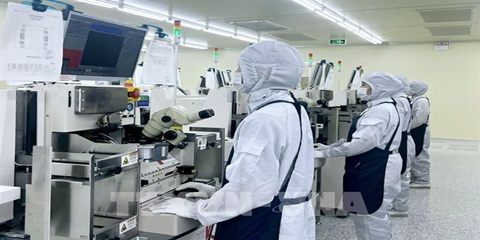
TECH SECTOR GROWTH OPENS UP OPPORTUNITIES FOR VIỆT NAM TO GO GLOBAL
The growth of the electronics, semiconductor and high-tech sectors worldwide is opening up a variety of opportunities for Vietnamese enterprises to integrate more deeply into the global supply chain. However, to become suppliers for these corporations, domestic enterprises must meet rigorous standards regarding quality, technology, productivity and order fulfilment capabilities.
VIETNAM ECONOMY INVESTMENT
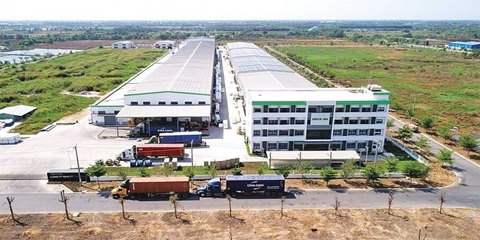
FOREIGN INVESTORS SEEKING A SYNCHRONISED MANUFACTURING ECOSYSTEM
Instead of focusing only on land costs and incentives as usual, foreign investors are seeking a synchronised manufacturing ecosystem, from stable power supply and logistics to shared infrastructure and the convenience of completing residence procedures for experts to serve their long-term investment in the country.

MEMBER CORNER / PROMOTIONS
SENTRYSAFE FHW40200 – PROTECT YOUR VALUABLES, ENJOY PEACE OF MIND!
Looking for a reliable solution to protect your important documents, cash, and valuables from fire and water damage? Genuine SENTRYSAFE - Reliable protection for your valuables and peace of mind! Contact Sen Wai Vietnam for more information and personalized product recommendations.
PROPERTY / INDUSTRIAL ZONE
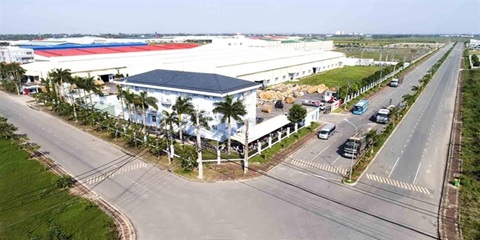
HCM CITY ATTRACTS US$5.7 BILLION INTO EXPORT PROCESSING AND INDUSTRIAL ZONES
HCM City attracted US$5.7 billion in domestic and foreign investment into its export processing and industrial zones during the first nine months of 2026. The figure exceeded the city's full-year target by 31 per cent, highlighting strong momentum in high-quality industrial investment under Resolution No.10-NQ/TW. Total investment reached 131 per cent of the 2026 target of $4.25 billion and represented a 29 per cent increase compared with the same period in 2025, according to the city's Export Processing and Industrial Zones Authority (HEPZA).
INFRASTRUCTURE / CONSTRUCTION / LOGISTIC / PORT
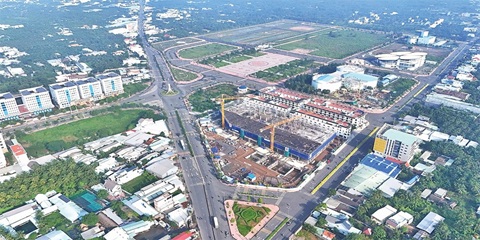
DONG THAP PROVINCE STEPS UP INDUSTRIAL EXPANSION AND INFRASTRUCTURE CONNECTIVITY
Accelerating public investment, strengthening inter-regional connectivity, and expanding industrial land are helping Dong Thap efficiently bolster competitiveness and drive economic growth. Following the 2025 merger of the former Dong Thap and Tien Giang provinces, the expanded Dong Thap province in the Mekong Delta faces mounting pressure to accelerate infrastructure development and strengthen connectivity among local economic zones, urban areas, industrial parks (IPs), and production centres.
Events Sponsors






















