Want to be in the loop?
subscribe to
our notification
Business News
FOREIGN EXCHANGE RATE FORECAST TO BE UNDER CONTROL IN 2024
Việt Nam still has effective tools to proactively control the VNĐ/USD exchange rate in 2024 even if the US Federal Reserve (Fed) has to maintain its interest rates at the current high level for an extended time due to the conflict in the Red Sea and other new uncertainties, experts said.
Though the VNĐ/USD exchange rate seems to temporarily stabilise after forecasts that the Fed will not increase interest rates, it still could change and cause exchange rate fevers in the domestic market if the Fed keeps the rates at the current high level for a long time.
In the global market, the US dollar price is trending up as investors continue to buy the greenback in the expectation that the Fed will not cut interest rates soon. As of February 16, 2024, the dollar index (DXY) on the international market reached 104.29 points, up 0.24 per cent over the previous month.
In the domestic market, the State Bank of Vietnam (SBV)’s central rate of the Vietnamese đồng against the dollar on February 16, 2024 was VNĐ23,971. However, the average dollar price on the unofficial market has exceeded VNĐ25,000 for the first time since October 2022 and although it has decreased slightly, it is currently still at a high level.
Director of HSBC Vietnam’s Foreign Exchange, Capital Markets and Securities Services Division Ngô Đăng Khoa, forecast that the VNĐ/USD exchange rate would be under increasing pressure in the first quarter of 2024. Khoa cited two reasons for the greenback strengthening in January.
Firstly, the recent positive signals from the US labour market and economy, as well as statements from members of the US Federal Open Market Committee (FOMC) about continuing to act based on actual data have caused the market to gradually reduce expectations that the FOMC will soon lower policy interest rates.
The move has pushed US government bond yields to increase slightly again, which has caused the dollar to regain its strength in the international market. The DXY currently maintains above 104, which is one of reasons currencies in Asia, including the đồng, have become weaker against the dollar.
In fact, most of the increases in the VNĐ/USD exchange rate stemmed from the appreciation of the greenback. In particular, geopolitical instability is always a catalyst for money to find the dollar as a safe haven.
In 2023, the DXY increased to more than 106 which caused the VNĐ/USD exchange rate to sharply surge. The đồng at some points lost more than 4 per cent compared to the dollar in the year.
According to experts, the VNĐ/USD exchange rates are still likely to increase in the first half of this year as the interest rate gap between dollar and đồng is still high. Rising pressure on the exchange rate will reduce only when the dollar reaches its peak and the Fed lowers interest rates.
Another factor that can affect the VNĐ/USD exchange rate in 2024 is geopolitical instability in the world. The Red Sea conflict has had a negative effect on the world economy, making economic recovery to a normal state more difficult due to increase in production costs, prices and inflation.
Economist Phạm Thế Anh, head of the National Economics University’s Department of Economics, said once prices and inflation increase, monetary policy will be slower to return to normal.
According to Anh, basically, Việt Nam can still be proactive with the VNĐ/USD exchange as the country has the advantages of a large surplus trade balance and relatively positive FDI disbursement. In 2023, Việt Nam's trade balance of goods had a surplus of more than US$28 billion, while FDI disbursement also set a record high of more than $23 billion, both favourable factors for the SBV to increase the nation’s foreign exchange reserves.
In 2024, production will gradually recover so imports will likely grow a bit faster than exports, but in general, the overall balance will still help Việt Nam take the initiative to regulate the VNĐ/USD exchange rates, Anh forecast.
According to estimates of VNDirect Securities Company’s analysts, Việt Nam's foreign exchange reserves are quite abundant, at about $95-96 billion, creating room for the SBV to respond if DXY increases.
In spite of recent negative events globally, the general trend will still be to gradually loosen and lower interest rates.
The events can only slow the process of lowering interest rates, but interest rate hike is unlikely because the world economy has reached its limit and cannot bear any more interest rate increases, Anh said.
Therefore, the foreign exchange rate is probably not too big a problem for the Vietnamese economy in 2024.
In addition, the exchange rate also depends on domestic inflation. Overall, inflation in Việt Nam is still under control. Overproduction and oversupply in both China and Việt Nam, amid weak demand, are preventing prices from rising.
Recent gold or foreign currency fevers on the unofficial market are mainly speculative activities. This is not a concern if the SBV continues to control inflation and is not too hasty in lowering deposit interest rates. It will not affect macroeconomic stability, experts said.
Source: VNS
Related News

BANKING / FINANCE / INSURANCE / TAX
REMITTANCES TO HCM CITY RISE NEARLY 40% IN Q3
Remittances to HCM City reached more than US$2.83 billion in the third quarter of this year, up 39.5 per cent from the previous quarter and 3.6 per cent year-on-year. This was the first quarter showing positive annual growth this year, helping narrow the decline in remittance inflows over the first nine months. According to the State Bank of Vietnam (SBV)’s Regional Branch 2, remittances transferred to HCM City through credit institutions and economic organisations totalled $2.835 billion in Q3, an increase of more than $802 million from the previous quarter.
TECHNOLOGY
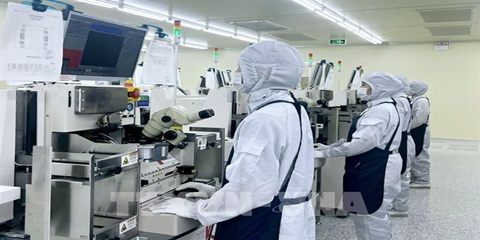
TECH SECTOR GROWTH OPENS UP OPPORTUNITIES FOR VIỆT NAM TO GO GLOBAL
The growth of the electronics, semiconductor and high-tech sectors worldwide is opening up a variety of opportunities for Vietnamese enterprises to integrate more deeply into the global supply chain. However, to become suppliers for these corporations, domestic enterprises must meet rigorous standards regarding quality, technology, productivity and order fulfilment capabilities.
VIETNAM ECONOMY INVESTMENT
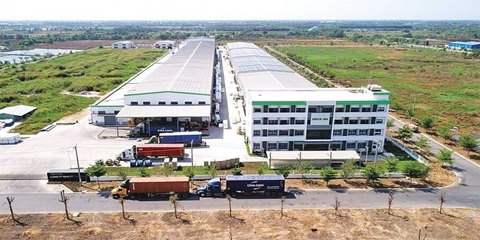
FOREIGN INVESTORS SEEKING A SYNCHRONISED MANUFACTURING ECOSYSTEM
Instead of focusing only on land costs and incentives as usual, foreign investors are seeking a synchronised manufacturing ecosystem, from stable power supply and logistics to shared infrastructure and the convenience of completing residence procedures for experts to serve their long-term investment in the country.
MEMBER CORNER / PROMOTIONS
SENTRYSAFE FHW40200 – PROTECT YOUR VALUABLES, ENJOY PEACE OF MIND!
Looking for a reliable solution to protect your important documents, cash, and valuables from fire and water damage? Genuine SENTRYSAFE - Reliable protection for your valuables and peace of mind! Contact Sen Wai Vietnam for more information and personalized product recommendations.
PROPERTY / INDUSTRIAL ZONE
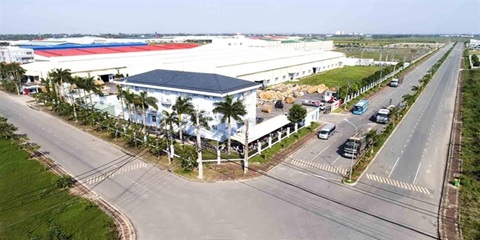
HCM CITY ATTRACTS US$5.7 BILLION INTO EXPORT PROCESSING AND INDUSTRIAL ZONES
HCM City attracted US$5.7 billion in domestic and foreign investment into its export processing and industrial zones during the first nine months of 2026. The figure exceeded the city's full-year target by 31 per cent, highlighting strong momentum in high-quality industrial investment under Resolution No.10-NQ/TW. Total investment reached 131 per cent of the 2026 target of $4.25 billion and represented a 29 per cent increase compared with the same period in 2025, according to the city's Export Processing and Industrial Zones Authority (HEPZA).
INFRASTRUCTURE / CONSTRUCTION / LOGISTIC / PORT
DONG THAP PROVINCE STEPS UP INDUSTRIAL EXPANSION AND INFRASTRUCTURE CONNECTIVITY
Accelerating public investment, strengthening inter-regional connectivity, and expanding industrial land are helping Dong Thap efficiently bolster competitiveness and drive economic growth. Following the 2025 merger of the former Dong Thap and Tien Giang provinces, the expanded Dong Thap province in the Mekong Delta faces mounting pressure to accelerate infrastructure development and strengthen connectivity among local economic zones, urban areas, industrial parks (IPs), and production centres.
Events Sponsors






















