Want to be in the loop?
subscribe to
our notification
Business News
FOCUSING ON TECHNOLOGY TRANSFER IN ATTRACTING NEW WAVE OF FDI CAPITAL
As Vietnam is attracting high-quality foreign inflows, domestic firms now have an even greater opportunity to draw technology transfer to improve added value in its manufacturing industry.
This was emphasized at the second Industrial Real Estate Forum held by the Central Institute for Economic Management (CIEM) in collaboration with the Vietnam Real Estate Association (VNREA) in June in Hanoi.
Mr. Vu Tu Thanh, deputy regional managing director and representative of the US-ASEAN Business Council in Vietnam, said that Vietnam was expected to welcome around five to seven major companies in this foreign direct investment (FDI) wave, which would be a remarkable achievement.
“The arrival of these top companies will bring more small- and medium-sized enterprises (SMEs) in their global supply chains to Vietnam. It is like what we have done with Intel, Samsung, LG, and other giants” he said.
It also opens up new occasions for Vietnamese firms to tie up with foreign SMEs which have extensive experience in the supply chain for global companies. Therefore, Vietnamese firms can take this opportunity to receive technology transfer from oversea and improve its management skills.
The foreign suppliers will become a new source of tenants for many existing and upcoming industrial parks in Vietnam.
According to Economic Zones Management Department under the Ministry of Planning and Investment (MPI), by May 2020 the whole country has 561 industrial parks with a total area of about 201,000 hectares, including 374 established industrial parks with an area of about 114,400ha and 259 unestablished industrial parks with 86,600ha. Big Investor Foxconn is also proposing the development of a new industrial park in Vietnam. Meanwhile, localities such as Haiphong are su plans to implement over dozens of new industrial parks.
Prepared for new quality FDI
At the Industrial Real Estate Forum 2020, Mr. Do Nhat Hoang, general director of the Foreign Investment Agency under the MPI, underlined that the country had failed to meet some expectations after 30 years of FDI attraction, particularly in technology transfer and the added value by foreign investors in Vietnam. The spillover effects remained low.
To improve FDI attraction, the Vietnamese National Assembly has recently approved the revised Law on Investment, adding a new group of investors who are entitled to preferential treatment such as high-tech firms, sci-tech firms and organisations as well as innovation centres. However, it is not easy for Vietnamese firms to become suppliers for these big investors due to the insufficiency of requisite technology.
Mr. Nguyen Thanh Phuong, general director of Sao Do Group, said that Vietnam had more advantages than other ASEAN countries in attracting new foreign inflows, especially in the wave of manufacturing relocation outside of China. However, Vietnam needs to make breakthroughs in administrative reforms and prepare highly skilled workforce to progress to higher-level qualifications.
Otherwise, Vietnam will continue to be an outsourcing destination despite luring big investors in the new FDI wave. This will not improve the added value for the local manufacturing industry.
“We should not expect sudden and immediate changes as foreign investors need time to conduct research and consider the efficiency of the relocation plan. There will be a delay in luring these foreign inflows. Thus, it is time for us to make careful preparation,” he stressed.
He further noted that Vietnam should consider the capability to absorb the capital wave. Industrial parks in the country should be at ready to meet investors’ demand. Besides the facilities construction, It is also important to develop high-quality workforce and skilled foreign workers in order to prepare a huge personel for new FDI projects.
Source: VIR
Related News

CHARITY / EXHIBITION / OTHER EVENTS
INVESTMENT OPPORTUNITIES IN CA MAU PROVINCE: 96 PROJECTS AND 20 STRATEGIC PROJECTS
We are pleased to share with you information on investment projects currently seeking investors in Ca Mau Province. Should your esteemed company or association be interested, we kindly invite you to review the project information and complete the registration form via the links provided. The Ho Chi Minh City Investment and Trade Promotion Centre (ITPC) will consolidate the expressions of interest and facilitate connections with the leadership of Ca Mau Province at a meeting tentatively scheduled for 13 November 2026 in Ho Chi Minh City.

MEMBER CORNER / PROMOTIONS
BẰNG KIỀU LIVESHOW - A SYMPHONY OF LOVE UNDER THE GOLDEN GLOW
A masterclass in live music that takes the audience on a soulful journey through immortal love songs, guided by the peerless artistry and emotive storytelling of renowned singer Bằng Kiều. The highlight of the night is his seamless musical chemistry with special guest Triệu Hồng Ngọc, promising passionate and deeply resonant duets inside the magnificent Grand Ballroom.
INFRASTRUCTURE / CONSTRUCTION / LOGISTIC / PORT
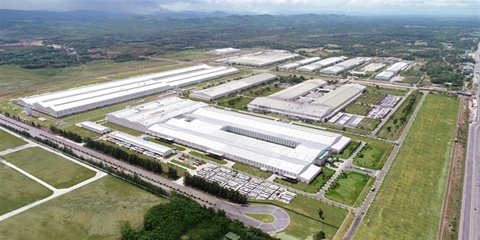
ĐÀ NẴNG GREEN-LIGHTS US$105 MILLION THAI DEVELOPMENT DEAL
The central city has approved an investment proposal by Thailand’s WHA Group to develop infrastructure for the 400ha WHA Đà Nẵng Industrial Park project on two communes of Thăng Bình and Đồng Dương, with an investment of more than VNĐ2.7 trillion (US$105 million). The city said it approved WHA Industrial Development International's status as an investor in the project, which is expected to take place between 2027 and 2034.
VIETNAM ECONOMY INVESTMENT
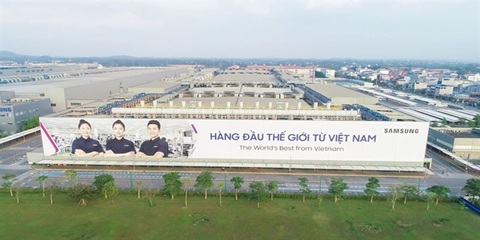
MOBILE PHONE EXPORTS RISE 20% TO $51.8 BILLION IN FIRST NINE MONTHS
Exports of mobile phones and components rose 20 per cent year-on-year to nearly US$51.8 billion in the first nine months of 2026, with China, the US and Republic of Korea accounting for more than half of the total. Shipments to the three markets reached a combined $26.18 billion, or 50.6 per cent of total exports of the product group during the period, according to data from the Vietnam Department of Customs under the Ministry of Finance.
INFRASTRUCTURE / CONSTRUCTION / LOGISTIC / PORT
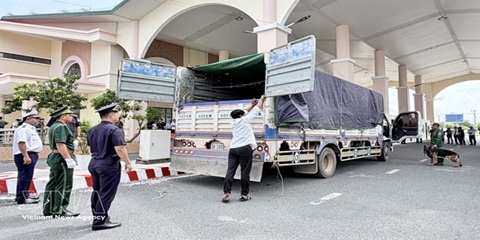
VIỆT NAM-CAMBODIA TRADE GATHERS PACE TOWARDS $20 BILLION TARGET
Trade between Việt Nam and Cambodia continues to grow, remaining a bright spot and a key pillar of bilateral cooperation as the two countries aim to raise two-way trade to US$20 billion in the coming years. After setting a record of more than $11.3 billion last year, bilateral trade reached about $8.7 billion in the first eight months of this year, up 8.3 per cent year on year.
VIETNAM ECONOMY INVESTMENT
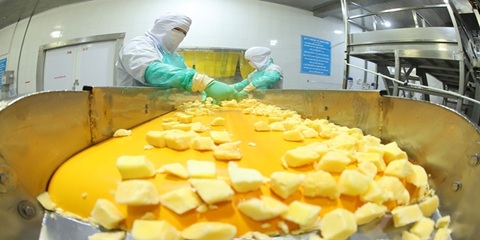
FRUIT AND VEGETABLE EXPORTS POISED TO HIT $10 BILLION IN 2026
Fruit and vegetable exports are on track to reach nearly US$10 billion in 2026, after rising 19.9 per cent year on year to nearly US$7.4 billion in the first nine months, driven by strong seasonal demand and abundant tropical fruit supplies. The Ministry of Agriculture and Environment said the growth reflected stronger international demand for fresh produce and processed agricultural products.
Events Sponsors






















