Want to be in the loop?
subscribe to
our notification
Business News
FDI INFLOWS ROSE BY 13.1 PER CENT IN H1
In the first half of the year, foreign direct investment (FDI) reported an increase of 13.1 per cent, while FDI disbursement also surged by 8.2 per cent on year.
According to the latest report of the Foreign Investment Agency (FIA) under the Ministry of Planning and Investment, the total registered FDI in the first half of the year was $15.2 billion, up 13.1 per cent.
A total of 1,538 new projects were granted investment registration certificates in the first half, with the total registered capital of over $9.54 billion, up 18.9 per cent in the number of projects and up 46.9 per cent on-year in terms of capital.
The adjusted capital of almost 592 ongoing projects stood at about $3.95 billion, down 6.3 per cent on-year in number but up 35 per cent in capital terms.
There were approximately 1,420 capital contributions and share purchases as of June 20, equivalent to $1.7 billion, showing a decrease of 57.7 per cent on-year.
The FIA said that the amount of adjusted investment in June increased significantly compared to the previous months, with nearly $1.9 billion, accounting for 47.3 per cent of the total adjusted investment capital in the first half.
This contributed to the surge by 35 per cent of total adjusted investment in the first half, instead of consecutively decreasing compared to the same period in previous months.
“Numerous large projects in semiconductors, energy (production of batteries, photovoltaic cells, silicon bars), components, electronic products, and high value-added products have been newly invested and expanded capital in the first half,” the FIA reported.
The FIA report also indicated that FDI was seen in 18 out of the 21 economic sectors in the first half. Of those, processing and manufacturing took the lead with $10.69 billion, capturing 70.4 per cent of the total, and saw a 26.3 per cent higher than compared to the same period in 2023.
Real estate ranked second with $2.47 billion, making up 16.3 per cent of the total. This was followed by wholesale and retails, and professional, science and technologies with $614 million and $452 million, respectively.
Singapore is the top among 84 countries and territories investing in Vietnam with close to $5.58 billion, accounting for 36.7 per cent of FDI into the country in the first half of 2023, and representing an increase of 86 per cent on-year.
Japan came second with $1.73 billion, followed by Hong Kong, South Korea, and China.
Foreign-invested projects still choose cities and provinces that have more advantageous infrastructure development, human resources, and clear administrative procedures, such as Bac Ninh ($2.58 billion in total registered investment), Ba Ria-Vung Tau ($1.54 billion), and Quang Ninh ($1.36 billion).
Export turnover of FDI sector (including crude oil) was estimated at $136.73 billion or $135.73 billion (excluding crude oil), up 12.3 per cent on year, making up 72.2 or 71.6 per cent of the total export turnover of the country.
Import turnover of FDI was estimated at $114.11 billion, up 15.5 per cent on year, and accounting for 63.3 per cent of the total import turnover of the country.
In the first half of the year, the trade surplus of the FDI sector was $22.62 billion, while local businesses reported a trade deficit of $13.3 billion.
Source: VIR
Related News
BANKING / FINANCE / INSURANCE / TAX
REMITTANCES TO HCM CITY RISE NEARLY 40% IN Q3
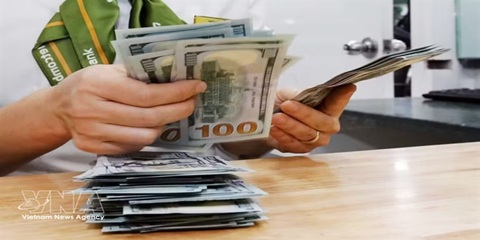
Remittances to HCM City reached more than US$2.83 billion in the third quarter of this year, up 39.5 per cent from the previous quarter and 3.6 per cent year-on-year. This was the first quarter showing positive annual growth this year, helping narrow the decline in remittance inflows over the first nine months. According to the State Bank of Vietnam (SBV)’s Regional Branch 2, remittances transferred to HCM City through credit institutions and economic organisations totalled $2.835 billion in Q3, an increase of more than $802 million from the previous quarter.
TECHNOLOGY
TECH SECTOR GROWTH OPENS UP OPPORTUNITIES FOR VIỆT NAM TO GO GLOBAL
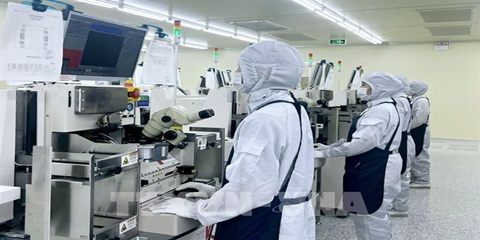
The growth of the electronics, semiconductor and high-tech sectors worldwide is opening up a variety of opportunities for Vietnamese enterprises to integrate more deeply into the global supply chain. However, to become suppliers for these corporations, domestic enterprises must meet rigorous standards regarding quality, technology, productivity and order fulfilment capabilities.
VIETNAM ECONOMY INVESTMENT
FOREIGN INVESTORS SEEKING A SYNCHRONISED MANUFACTURING ECOSYSTEM
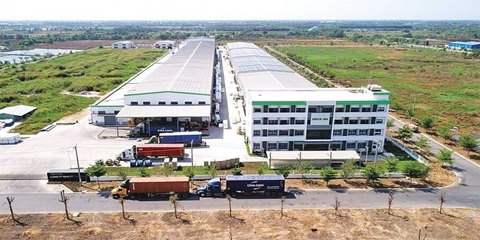
Instead of focusing only on land costs and incentives as usual, foreign investors are seeking a synchronised manufacturing ecosystem, from stable power supply and logistics to shared infrastructure and the convenience of completing residence procedures for experts to serve their long-term investment in the country.
MEMBER CORNER / PROMOTIONS
SENTRYSAFE FHW40200 – PROTECT YOUR VALUABLES, ENJOY PEACE OF MIND!
Looking for a reliable solution to protect your important documents, cash, and valuables from fire and water damage? Genuine SENTRYSAFE - Reliable protection for your valuables and peace of mind! Contact Sen Wai Vietnam for more information and personalized product recommendations.
PROPERTY / INDUSTRIAL ZONE
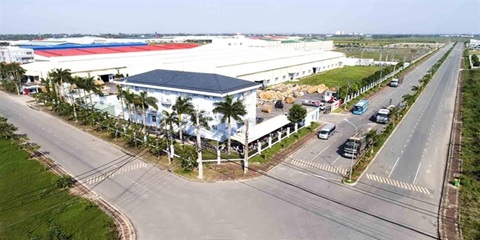
HCM CITY ATTRACTS US$5.7 BILLION INTO EXPORT PROCESSING AND INDUSTRIAL ZONES
HCM City attracted US$5.7 billion in domestic and foreign investment into its export processing and industrial zones during the first nine months of 2026. The figure exceeded the city's full-year target by 31 per cent, highlighting strong momentum in high-quality industrial investment under Resolution No.10-NQ/TW. Total investment reached 131 per cent of the 2026 target of $4.25 billion and represented a 29 per cent increase compared with the same period in 2025, according to the city's Export Processing and Industrial Zones Authority (HEPZA).
INFRASTRUCTURE / CONSTRUCTION / LOGISTIC / PORT
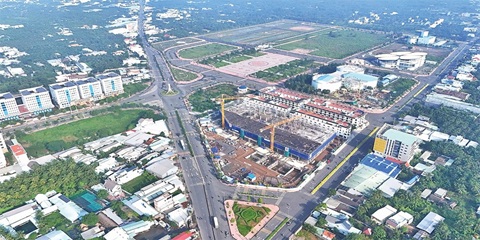
DONG THAP PROVINCE STEPS UP INDUSTRIAL EXPANSION AND INFRASTRUCTURE CONNECTIVITY
Accelerating public investment, strengthening inter-regional connectivity, and expanding industrial land are helping Dong Thap efficiently bolster competitiveness and drive economic growth. Following the 2025 merger of the former Dong Thap and Tien Giang provinces, the expanded Dong Thap province in the Mekong Delta faces mounting pressure to accelerate infrastructure development and strengthen connectivity among local economic zones, urban areas, industrial parks (IPs), and production centres.
Events Sponsors






















