Want to be in the loop?
subscribe to
our notification
Business News
EXPORTERS STRUGGLE WITH ESCALATING SHIPPING COSTS
Undergoing turbulent an 2023 with fewer order, sinking revenues, and reduced profits, exporters are facing further obstacles from early 2024 amidst the soaring shipping costs.
Ho Chi Minh City-based fruit export major Vina T&T Group ships dozens of containers full of fresh fruits to the United States and EU markets every week.
The recent Red Sea tensions have driven up transportation costs by 30-50 per cent, while also extending transportation time by around 15 days, having negative impacts on the product quality.
A source from Trung An High-tech Farming JSC, based in Can Tho city, revealed that though the company’s rice export volume to the EU and US is not as big as to Asian markets, the volatility of shipping costs have affected the company’s operations.
“Formerly, rice exports to Europe cost less than $1,000 per container, but have now soared to $3,000-$4,000, putting a real burden on firms’ shoulders,” said the source.
Cao Huu Hieu, CEO of state group Vinatex, revealed that member units belonging to the group have incurred increasing input costs due to the Red Sea tensions. It is difficult to raise the unit rate for export items as order intake is still on a downward trend due to the impacts of the global economic turmoil and tightened spending in major markets.
Currently, container transportation costs from Asia to Europe and the Americas have soared by about 88 per cent compared to pre-pandemic levels.
According to the Vietnam Maritime Administration (VMA), container transportation costs from Asia to Europe and the Americas in the first week of January spiked by about 60 per cent compared to late 2023.
Currently, those same costs have soared by about 88 per cent compared to pre-pandemic levels.
As such, a container from Vietnam to western America reportedly fetches $2,650/40-foot unit, with eastern America reaching $3,900 and Europe hitting $4,900.
It is worrying that besides a jump in transportation costs, there are also shipment cancellations from major global shipping lines.
For instance, from the second week of January to mid-February, the rate of cancelled shipments reached 12 per cent (78 out of 850).
Normally, the shortest way with optimal costs for container transportation from Asia to Europe is by going through the Red Sea and Suez Canal.
Since the conflicts in Red Sea areas, shipping companies have had to alter their itineraries, not passing the Suez Canal and instead travelling around the Cape of Good Hope, extending the voyage by 10-14 days and significantly driving up the cost.
To avoid delays, many firms resort to air transport, leading to a sharp hike in their expenses.
The commodities transported on flights from Vietnam to Europe are mainly apparel items, which is hard for firms as they need to spend more on transportation, but the unit rate cannot go up correspondingly.
In this context, the Ministry of Transport (MoT) is requesting support for container transportation to Europe and the Americas.
The MoT has asked state management bodies in the maritime sector to join forces with relevant units to ensure a smooth seaport system throughout the country. The hope is that measures to bolster the efficiency of maritime infrastructure can be expedited.
“The VMA needs to quicken its procedures for ships to enter and leave the ports, as well as those for the loading and unloading of goods, particularly for container vessels to Europe and the Americas. It is also necessary to work with shipping firms, calling on them to maintain their routes and supplement container shells for Vietnam to meet the burgeoning freight transportation demands,” said the MoT.
Source: VIR
Related News

MEMBER CORNER / PROMOTIONS
AN ELECTRIFYING NIGHT WITH THE "QUEEN OF DANCE" THU MINH AT THE GRAND HO TRAM!
The stage at The Grand Ballroom is set to catch fire as Vietnam’s undisputed "Queen of Dance," Thu Minh, takes the spotlight. Renowned for her powerhouse vocals, magnetic stage presence, and sultry, high-energy performances, Thu Minh promises an evening of pure musical euphoria. The energy escalates with an exclusive appearance by special guest and The Voice champion, Vu Thao My.

HR / LABOUR/ EMPLOYMENT
HIGH-QUALITY HUMAN RESOURCES NEEDED TO ATTRACT NEW TECH INVESTMENT CAPITAL
Besides infrastructure, Việt Nam must also rapidly develop a highly skilled workforce to attract investment in AI, semiconductors and advanced manufacturing, experts have said. Don Lam, CEO and co-founder of investment management company VinaCapital, said that global technology investors were increasingly looking at the readiness of the entire ecosystem, with high-quality human resources a decisive factor.

HR / LABOUR/ EMPLOYMENT
HIRING OUTLOOK STRENGTHENS IN Q4 AS SKILLS SHORTAGES PERSIST
Hiring intentions among employers in Việt Nam strengthened in the fourth quarter, with 52 per cent of surveyed companies planning to increase headcount between October and December, according to a ManpowerGroup survey released this week. Việt Nam's hiring outlook was stronger than the Asia Pacific and Middle East (APME) regional average of 33 per cent and the global average of 29 per cent, ranking third in the region and 11th globally among 42 markets surveyed.

BANKING / FINANCE / INSURANCE / TAX
LARGE BANKS FORECAST TO GAIN HIGHER PROFITABILITY IN H2 2026
The return on average assets (ROAA) of the banking sector will likely remain stable at around 1.5 per cent in the second half of 2026, but profitability divergence among banks will increase, with large banks outperforming peers on stronger margins and diversified earnings, analysts forecast. In a recent report on the banking sector, analysts from the Vietnam Investors Service Rating said the sector’s ROAA rose by 10 basis points quarter-on-quarter to 1.51 per cent in the first half of this year, driven by net interest margin (NIM) improvements at some State-owned banks and large private banks.
GARMENT / TEXTILE
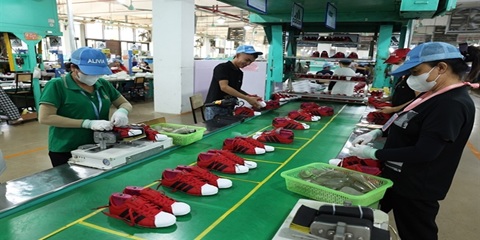
VIỆT NAM'S FOOTWEAR, BAG EXPORTS TO US TOP $8 BILLION IN EIGHT MONTHS
Việt Nam's exports of footwear and handbags to the US exceeded US$8 billion in the first eight months of 2026, as the US and EU remained the country's biggest markets despite sluggish growth in footwear shipments. Exports from Việt Nam's leather and footwear sector reached more than $2.45 billion in August, down 9 per cent from July but up 3 per cent from a year earlier, according to preliminary statistics.
VIETNAM ECONOMY INVESTMENT
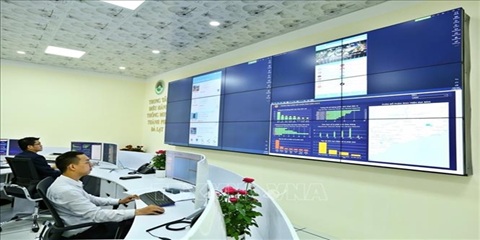
LÂM ĐỒNG TARGETS DIGITAL ECONOMY TO ACCOUNT FOR 30 PER CENT OF GRDP BY 2030
Lâm Đồng Province aims to raise the digital economy’s contribution to around 30 per cent of its gross regional domestic product (GRDP) by 2030, as part of a five-year plan to develop digital economy and society issued recently. Under Plan No. 15358/KH-UBND, the province targets more than 60 per cent of small- and medium-sized enterprises (SMEs) to adopt digital technologies by 2030 while increasing the value of cashless payments to 30 times its GRDP.
Events Sponsors






















