Want to be in the loop?
subscribe to
our notification
Business News
EXPORT OF SHRIMP GOES SUSTAINABLE
Despite fluctuations in raw material prices, rising costs, and increasingly fierce competition from other countries, shrimp exports can still contribute over a third of seafood export turnover for Vietnam in 2025, as well as improve its sustainability credentials.
Concluding last year with a sale growth of up to 25 per cent, higher than the industry average, Sao Ta Foods JSC expects to maintain this performance this year and in years to come.
Ho Quoc Thinh, chairman of the board at Sao Ta Foods, stated that although the opportunities for the shrimp industry to break through in 2025 are not clear due to the long-term decline in shrimp prices, diseases causing slow growth in shrimp, and the tight supply of raw material shrimp in the second half of last year, the tariff benefits from the signed free trade agreements (FTAs) have brought brighter opportunities for shrimp exporters.
“Vietnamese shrimp currently holds a top position in markets like Japan, South Korea, and Australia, and is in the top two in Europe, partly due to the impact of the Comprehensive and Progressive Agreement for Trans-Pacific Partnership,” he said. “In the coming years, the advantages from FTAs will help the shrimp industry maintain its development speed, thus strengthening the position of the Vietnamese shrimp brand.”
Sao Ta Foods, with more than 25 years of experience in shrimp exports, is among the top three Vietnamese shrimp exporters to the US, while also holding a strong market share in South Korea, Australia, the EU, and Japan. In 2024, the company recorded sales of nearly $260 million, a 25 per cent increase compared to 2023, exceeding the set plan by 19 per cent.
According to the Vietnam Association of Seafood Exporters and Producers (VASEP), shrimp exports in 2024 grew by 15 per cent, reaching $4 billion. Shrimp and basa fish are the two main export items, contributing up to 60 per cent of Vietnam’s total seafood export turnover.
China, the US, Japan, the EU, and South Korea are the five main export markets, accounting for 76 per cent of Vietnam’s shrimp exports. Meanwhile, smaller export markets such as Russia, Canada, Australia, the UK, and Taiwan also show significant potential in the long term. Shrimp exports to Japan in 2024 reached $517 million, a 1 per cent increase compared to the previous year, but still maintained growth due to the recovery of the yen.
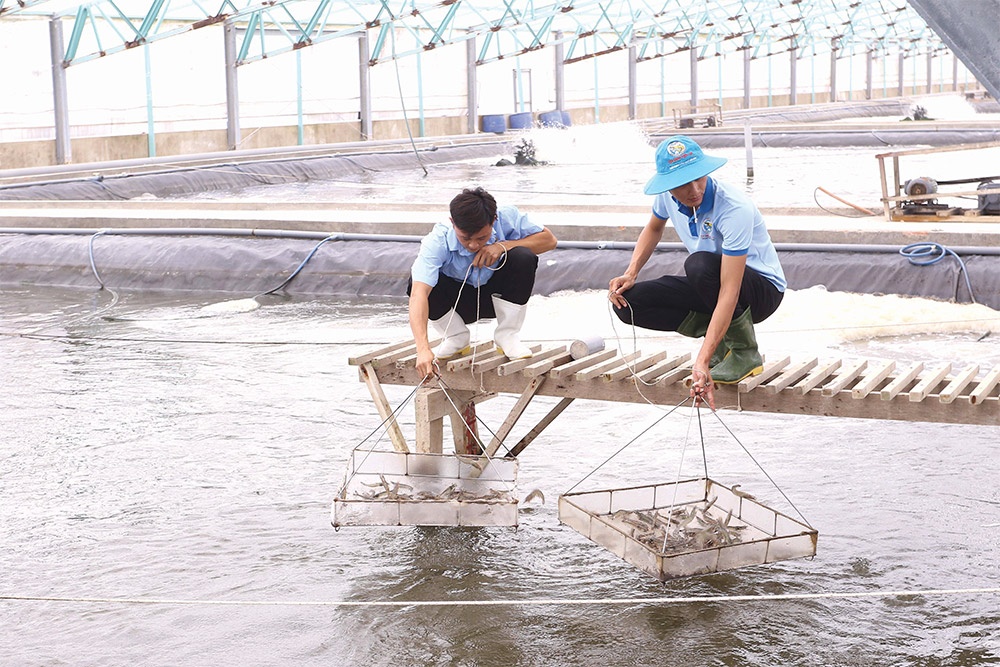
There is now added focus to apply a circular economy model and optimise resources, photo Le Toan
Bearing costs
Phung Thi Kim Thu, shrimp market expert at the VASEP, commented that the Vietnamese shrimp industry will have many growth opportunities this year thanks to positive signals from international markets.
“Last year, the US Department of Commerce announced the results of its investigation into anti-dumping and countervailing duties on frozen warm-water shrimp imports. The tariffs that Vietnam will have to bear are significantly lower than those of direct competitors like India and Ecuador,” Thu said.
A comprehensive economic agreement signed between Vietnam and the United Arab Emirates has also eliminated tariffs on many of Vietnam’s key products, opening a promising new chapter for the seafood industry, particularly Vietnamese shrimp, in the Middle Eastern market.
Despite these advantages, Thu noted that the shrimp processing and export industry still faces numerous challenges regarding sustainability due to the shortage of raw material shrimp.
“Raw material shrimp is expected to be in short supply until the end of the first quarter of this year. Processing companies will have to buy raw shrimp at high prices, but the price of finished shrimp must compete fiercely with cheaper shrimp from other countries, leading to a decline in business efficiency,” Thu said.
“With the current raw material purchase price, each shrimp processing company could lose up to $2 per kg of finished shrimp,” she added.
Strategic commitments
According to Tran Dinh Luan, general director of the Department of Fisheries under the Ministry of Agriculture and Rural Development, the shrimp industry needs to accelerate the application of high technology and develop a sustainable value chain, from breeding, farming, to processing and export.
“The shrimp industry development strategy towards 2030 sets an export target of $14-16 billion, with an annual growth rate of 10-15 per cent. To achieve sustainable growth, comprehensive solutions, including supportive policies, trade promotion, and technology improvements, are crucial,” Luan emphasised.
Viet Uc Seafood JSC, a company with over 20 years of experience in shrimp farming, has stated that despite the constantly fluctuating market and increasingly stringent international standards, the group remains committed to its strategy of a closed-loop value chain for the shrimp industry and the application of advanced technology in farming and processing shrimp.
“The focus of this strategy is to apply a circular economy model, optimise resources, and minimise environmental impact in all activities, from hatchery production, farming, processing to distribution. This helps us achieve a balance between expanding production scale and protecting the environment,” said a representative from Viet Uc.
Thanks to this model, Viet Uc not only reduces waste and protects water sources, which are crucial factors in the aquaculture industry, but also reduces dependency on natural resources. The model helps increase production efficiency, enhance brand value, and meet the expectations of demanding international markets.
“With a long-term vision, Viet Uc believes that controlling and managing the quality of the entire shrimp value chain will gradually enhance the quality and brand of Vietnamese shrimp on the global seafood map. On this journey, we believe sustainability is not only a responsibility but also the key to exceptional growth,” the representative from Viet Uc Seafood said.
According to data from the VASEP, the area of brackish water shrimp farming in 2024 reached 737,000 hectares, including 622,000ha for black tiger shrimp and 115,000ha for white-legged shrimp, with a production volume of 1.2 million tonnes, a 5.3 per cent increase compared to 2023.
It is estimated that by the end of 2025, the area of brackish water shrimp farming will reach 750,000ha, a 1.8 per cent increase from 2024, and production will reach 1.2 million tonnes, a 2 per cent increase compared to the previous year.
The VASEP forecasts that shrimp exports in 2025 could reach $4.3-4.5 billion. Vietnam’s seafood exports in 2024 hit over $10 billion, up 12.1 per cent from 2023. The shrimp industry contributed 40-45 per cent to the total value of Vietnam’s seafood exports, equivalent to about $4 billion annually.
Source: VIR
Related News

BANKING / FINANCE / INSURANCE / TAX
REMITTANCES TO HCM CITY RISE NEARLY 40% IN Q3
Remittances to HCM City reached more than US$2.83 billion in the third quarter of this year, up 39.5 per cent from the previous quarter and 3.6 per cent year-on-year. This was the first quarter showing positive annual growth this year, helping narrow the decline in remittance inflows over the first nine months. According to the State Bank of Vietnam (SBV)’s Regional Branch 2, remittances transferred to HCM City through credit institutions and economic organisations totalled $2.835 billion in Q3, an increase of more than $802 million from the previous quarter.

TECHNOLOGY
TECH SECTOR GROWTH OPENS UP OPPORTUNITIES FOR VIỆT NAM TO GO GLOBAL
The growth of the electronics, semiconductor and high-tech sectors worldwide is opening up a variety of opportunities for Vietnamese enterprises to integrate more deeply into the global supply chain. However, to become suppliers for these corporations, domestic enterprises must meet rigorous standards regarding quality, technology, productivity and order fulfilment capabilities.
VIETNAM ECONOMY INVESTMENT
FOREIGN INVESTORS SEEKING A SYNCHRONISED MANUFACTURING ECOSYSTEM
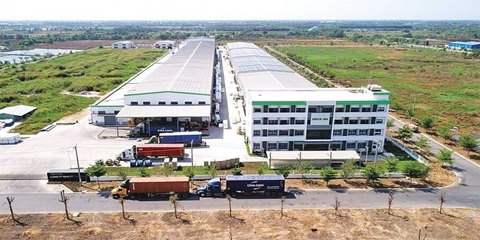
Instead of focusing only on land costs and incentives as usual, foreign investors are seeking a synchronised manufacturing ecosystem, from stable power supply and logistics to shared infrastructure and the convenience of completing residence procedures for experts to serve their long-term investment in the country.
MEMBER CORNER / PROMOTIONS
SENTRYSAFE FHW40200 – PROTECT YOUR VALUABLES, ENJOY PEACE OF MIND!
Looking for a reliable solution to protect your important documents, cash, and valuables from fire and water damage? Genuine SENTRYSAFE - Reliable protection for your valuables and peace of mind! Contact Sen Wai Vietnam for more information and personalized product recommendations.
PROPERTY / INDUSTRIAL ZONE
HCM CITY ATTRACTS US$5.7 BILLION INTO EXPORT PROCESSING AND INDUSTRIAL ZONES
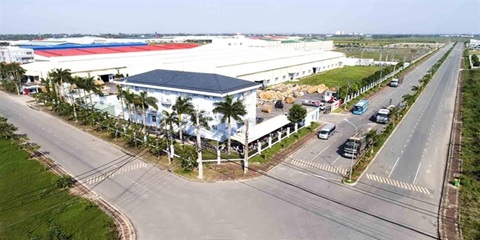
HCM City attracted US$5.7 billion in domestic and foreign investment into its export processing and industrial zones during the first nine months of 2026. The figure exceeded the city's full-year target by 31 per cent, highlighting strong momentum in high-quality industrial investment under Resolution No.10-NQ/TW. Total investment reached 131 per cent of the 2026 target of $4.25 billion and represented a 29 per cent increase compared with the same period in 2025, according to the city's Export Processing and Industrial Zones Authority (HEPZA).
INFRASTRUCTURE / CONSTRUCTION / LOGISTIC / PORT
DONG THAP PROVINCE STEPS UP INDUSTRIAL EXPANSION AND INFRASTRUCTURE CONNECTIVITY
Accelerating public investment, strengthening inter-regional connectivity, and expanding industrial land are helping Dong Thap efficiently bolster competitiveness and drive economic growth. Following the 2025 merger of the former Dong Thap and Tien Giang provinces, the expanded Dong Thap province in the Mekong Delta faces mounting pressure to accelerate infrastructure development and strengthen connectivity among local economic zones, urban areas, industrial parks (IPs), and production centres.
Events Sponsors






















