Want to be in the loop?
subscribe to
our notification
Business News
EXPANSIVE OPPORTUNITIES FOR INDUSTRIAL REAL ESTATE DEVELOPMENT
Vietnam’s industrial real estate sector is experiencing strong expansion, driven by favorable elements such as macroeconomic stability, industrial advancement and enhancements in transportation infrastructure.improvement.
High occupancy rate
The growing demand for industrial real estate results in a high occupancy ratio in industrial parks (IPs), over 75%, especially in major northern provinces (82%) and southern provinces (92%).
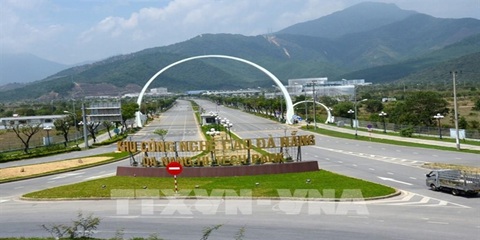
According to research data from the Vietnam Association of Realtors (VARS), by the end of the first quarter of 2024, the country had 418 industrial parks, including four export processing zones (EPZs), established in 61 out of 63 provinces and cities with a total land area of 129,900 ha, of which rentable industrial land was 89,200 ha. Up to 371 IPs lie outside economic zones (EZs), 39 are inside coastal EZs and eight are located in border gate EZs.
Particularly, IPs and EZs have attracted over 10,400 domestic direct investment (DDI) projects and over 11,200 valid foreign direct investment (FDI) projects, with total registered investment capital of over VND2,540 trillion (US$111 billion) and US$231 billion, respectively. FDI capital in IPs and EZs accounted for about 35-40% of the total added FDI fund in the country in recent years.
By 2023, IPs and EZs have created full-time jobs for about 4.15 million workers, of which the Southeast region and the northern Red River Delta regions accounted for 41.3% and 30.3%, respectively.
Especially, high demand, and escalating, is pushing up land rents in IPs by 8-12% annually. The Northern region has witnessed the strongest increase to an average rental price of US$135 per square meter in the rental period. In the south, the average rental is US$188.
In addition to the demand for factories and warehouses, the industrial real estate market has seen strong demand growth of ready-built warehouses and factories for rent, especially in manufacturing, e-commerce, machinery, electronic component industries. Rental prices of ready-built warehouses and factories range from US$4-5 per square meter per month, with the highest prices in Bac Ninh province (US$4.5-5.6) and Hai Phong City.
Many opportunities
Vietnam's industrial real estate market is forecast to extend robust growth in the coming years and attract many domestic and foreign investors. Industrial real estate giants are actively developing modern industrial parks and applying environmentally friendly advanced technologies to meet more demanding requirements of tenants.
According to VARS, Vietnam's industrial real estate market still has much room for future growth, promises to extend strong development momentum and plays a key role in Vietnam's economy. In particular, the expected logistics development will lead to a strongly growing demand for warehouses and logistics centers, especially when e-commerce explodes. Domestic and foreign logistics businesses have also been actively expanding the scale and scope of operations in Vietnam.
In particular, industrial real estate giants have also quickly captured opportunities by researching and developing modern IPs, applying high technology and automation to production to improve productivity and product quality while reducing costs and sharpening competitiveness in the international market.
On the other hand, eco-industrial parks are also being encouraged. These IPs not only minimize adverse impacts on the environment but also attract the attention of investors seeking sustainability in business operations.
Regarding long-term development solutions for industrial real estate, according to VARS, the government needs to further promote investment and upgrade transportation infrastructure, logistics infrastructure and industrial utilities to support industrial real estate development. At the same time, it needs to reform administrative procedures and provide a more favorable investment environment for businesses.
To make the most of the remaining 15 years of the golden population period, VARS proposes investment solutions to education and vocational training, especially in high-tech and automation, to improve the quality of human resources.
Logistics development will further boost the demand for warehouses and logistics centers, especially when e-commerce booms. Domestic and foreign logistics firms are also actively expanding their scale of operations in Vietnam. To take advantage of this opportunity, VARS suggested adopting attractive and stable incentive policies to attract foreign investment while strengthening international cooperation to learn and apply successful development models.
Source: VCCI
Related News

MEMBER CORNER / PROMOTIONS
AN ELECTRIFYING NIGHT WITH THE "QUEEN OF DANCE" THU MINH AT THE GRAND HO TRAM!
The stage at The Grand Ballroom is set to catch fire as Vietnam’s undisputed "Queen of Dance," Thu Minh, takes the spotlight. Renowned for her powerhouse vocals, magnetic stage presence, and sultry, high-energy performances, Thu Minh promises an evening of pure musical euphoria. The energy escalates with an exclusive appearance by special guest and The Voice champion, Vu Thao My.
HR / LABOUR/ EMPLOYMENT
HIGH-QUALITY HUMAN RESOURCES NEEDED TO ATTRACT NEW TECH INVESTMENT CAPITAL
Besides infrastructure, Việt Nam must also rapidly develop a highly skilled workforce to attract investment in AI, semiconductors and advanced manufacturing, experts have said. Don Lam, CEO and co-founder of investment management company VinaCapital, said that global technology investors were increasingly looking at the readiness of the entire ecosystem, with high-quality human resources a decisive factor.

HR / LABOUR/ EMPLOYMENT
HIRING OUTLOOK STRENGTHENS IN Q4 AS SKILLS SHORTAGES PERSIST
Hiring intentions among employers in Việt Nam strengthened in the fourth quarter, with 52 per cent of surveyed companies planning to increase headcount between October and December, according to a ManpowerGroup survey released this week. Việt Nam's hiring outlook was stronger than the Asia Pacific and Middle East (APME) regional average of 33 per cent and the global average of 29 per cent, ranking third in the region and 11th globally among 42 markets surveyed.

BANKING / FINANCE / INSURANCE / TAX
LARGE BANKS FORECAST TO GAIN HIGHER PROFITABILITY IN H2 2026
The return on average assets (ROAA) of the banking sector will likely remain stable at around 1.5 per cent in the second half of 2026, but profitability divergence among banks will increase, with large banks outperforming peers on stronger margins and diversified earnings, analysts forecast. In a recent report on the banking sector, analysts from the Vietnam Investors Service Rating said the sector’s ROAA rose by 10 basis points quarter-on-quarter to 1.51 per cent in the first half of this year, driven by net interest margin (NIM) improvements at some State-owned banks and large private banks.
GARMENT / TEXTILE
VIỆT NAM'S FOOTWEAR, BAG EXPORTS TO US TOP $8 BILLION IN EIGHT MONTHS
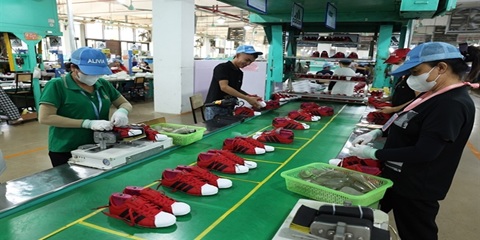
Việt Nam's exports of footwear and handbags to the US exceeded US$8 billion in the first eight months of 2026, as the US and EU remained the country's biggest markets despite sluggish growth in footwear shipments. Exports from Việt Nam's leather and footwear sector reached more than $2.45 billion in August, down 9 per cent from July but up 3 per cent from a year earlier, according to preliminary statistics.
VIETNAM ECONOMY INVESTMENT
LÂM ĐỒNG TARGETS DIGITAL ECONOMY TO ACCOUNT FOR 30 PER CENT OF GRDP BY 2030
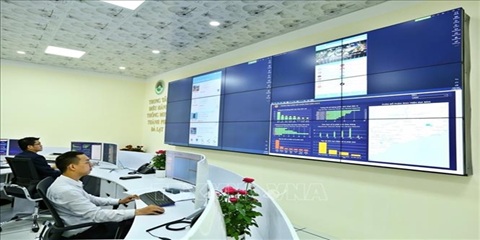
Lâm Đồng Province aims to raise the digital economy’s contribution to around 30 per cent of its gross regional domestic product (GRDP) by 2030, as part of a five-year plan to develop digital economy and society issued recently. Under Plan No. 15358/KH-UBND, the province targets more than 60 per cent of small- and medium-sized enterprises (SMEs) to adopt digital technologies by 2030 while increasing the value of cashless payments to 30 times its GRDP.
Events Sponsors






















