Want to be in the loop?
subscribe to
our notification
Business News
EXCHANGE RATE FORECAST TO BE STABLE IN 2019
According to analysts from the Fitch Group’s Fitch Solutions Macro Research, the dong will weaken slightly against the dollar to VND23,700 by the end of the year, and average VND23,440 per dollar over 2019, which represents a 1.8 per cent depreciation from the average of 2018.
Analysts attributed the modest weakness expectation to three reasons.
First, they said, Vietnam’s FDI will likely remain robust over 2019, adding Fitch continued to project the Vietnamese economy to be a regional outperformer with a growth of 6.5 per cent in 2019 compared to an aggregate of 6.1 per cent for Asia.
“We believe that FDI inflows into the manufacturing sector will be further supported by improved diplomatic relationships combined with the Government’s open-door trade policy, alongside favourable demographics such as Vietnam’s educated and low-cost labour force,” the report noted.
The Vietnamese processing and manufacturing sector remained the largest sector for FDI last year, with total registered capital of US$16.6 billion, up 4.4 per cent from $15.9 billion from the previous year.
Vietnam’s strong economic growth outlook will also continue to attract FDI in the real estate sector as foreign developers look to capitalise on the rising affluence of the population and the desire for physical expansion among businesses. Real estate businesses attracted total FDI of $6.6 billion in 2018, more than doubling the $3.1 billion in 2017.
Second, Fitch forecast Vietnam’s current account surplus to print around 2.1 per cent of GDP in 2019, which represents an expectation for the surplus to narrow slightly from 2.2 per cent in 2018.
Vietnam is one of the two countries running a current account surplus among the Mekong region countries, with the other being Thailand which ran a 7.5 per cent surplus in 2018. The other countries, namely Laos, Cambodia, and Myanmar are running current account deficits in excess of 2 per cent.
“We continue to expect the current account surplus to be supported by the export-oriented manufacturing sector, helped by a possible rebound in global trade in the second half of 2019,” the report said.
Vietnam’s goods trade surplus came in at $6.8 billion in 2018, on the back of a 13.8 per cent expansion in exports and a 12.1 per cent increase in imports.
Third, at $56.3 billion, representing 2.8 months of import cover, the State Bank of Vietnam (SBV) has ample foreign exchange reserves to continue its course of active intervention to ensure currency stability, which suggests that the dong is likely to see minimal volatility over the coming months.
Over the long term, Fitch forecast the dong to weaken gradually against the dollar to due to higher inflation, but a relatively strong growth outlook is likely to put a floor under the depreciation of the currency.
“We forecast inflation in Vietnam to average around 4.1 per cent over the next 24 months, as compared with 2.3 per cent in the US.”
According to Fitch, the SBV, utilising credit growth targets as its main monetary policy tool, is targeting credit growth of 14 per cent in 2019, the same rate achieved in 2018. At 14 per cent, credit growth still outpaces nominal GDP growth of about 10 per cent and this is likely to fuel inflationary pressures over the coming quarters.
“Given the Vietnamese economy’s reliance on export-led growth, upside price pressures is likely to warrant some dong depreciation against the US dollar to preserve Vietnam’s export competitiveness, and we believe that this is likely to see the dong average VND23,850 per dollar in 2020,” Fitch forecast, adding the Vietnamese dong’s overvaluation, as suggested by its real effective exchange rate trading by 9.3 per cent above its 10 -year average, open room for further currency weakness over the longer term.
However, Fitch also noted: “Risks to the dong forecast are weighted to the downside. A dovish shift among major global central banks could see the SBV intervene to weaken the dong by more than we expect so as to maintain Vietnam’s export competitiveness. Slowing global growth, trade uncertainty, and disruptions to global value chains could also adversely impact Vietnam’s export sector, pressuring the SBV to weaken the dong further.”
Source: VIR
Related News

MEMBER CORNER / PROMOTIONS
AN ELECTRIFYING NIGHT WITH THE "QUEEN OF DANCE" THU MINH AT THE GRAND HO TRAM!
The stage at The Grand Ballroom is set to catch fire as Vietnam’s undisputed "Queen of Dance," Thu Minh, takes the spotlight. Renowned for her powerhouse vocals, magnetic stage presence, and sultry, high-energy performances, Thu Minh promises an evening of pure musical euphoria. The energy escalates with an exclusive appearance by special guest and The Voice champion, Vu Thao My.

HR / LABOUR/ EMPLOYMENT
HIGH-QUALITY HUMAN RESOURCES NEEDED TO ATTRACT NEW TECH INVESTMENT CAPITAL
Besides infrastructure, Việt Nam must also rapidly develop a highly skilled workforce to attract investment in AI, semiconductors and advanced manufacturing, experts have said. Don Lam, CEO and co-founder of investment management company VinaCapital, said that global technology investors were increasingly looking at the readiness of the entire ecosystem, with high-quality human resources a decisive factor.

HR / LABOUR/ EMPLOYMENT
HIRING OUTLOOK STRENGTHENS IN Q4 AS SKILLS SHORTAGES PERSIST
Hiring intentions among employers in Việt Nam strengthened in the fourth quarter, with 52 per cent of surveyed companies planning to increase headcount between October and December, according to a ManpowerGroup survey released this week. Việt Nam's hiring outlook was stronger than the Asia Pacific and Middle East (APME) regional average of 33 per cent and the global average of 29 per cent, ranking third in the region and 11th globally among 42 markets surveyed.

BANKING / FINANCE / INSURANCE / TAX
LARGE BANKS FORECAST TO GAIN HIGHER PROFITABILITY IN H2 2026
The return on average assets (ROAA) of the banking sector will likely remain stable at around 1.5 per cent in the second half of 2026, but profitability divergence among banks will increase, with large banks outperforming peers on stronger margins and diversified earnings, analysts forecast. In a recent report on the banking sector, analysts from the Vietnam Investors Service Rating said the sector’s ROAA rose by 10 basis points quarter-on-quarter to 1.51 per cent in the first half of this year, driven by net interest margin (NIM) improvements at some State-owned banks and large private banks.
GARMENT / TEXTILE
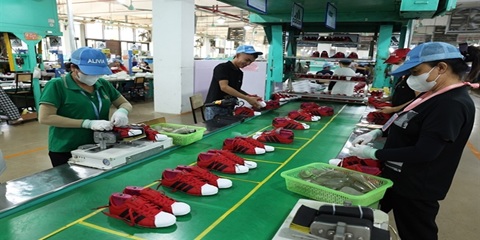
VIỆT NAM'S FOOTWEAR, BAG EXPORTS TO US TOP $8 BILLION IN EIGHT MONTHS
Việt Nam's exports of footwear and handbags to the US exceeded US$8 billion in the first eight months of 2026, as the US and EU remained the country's biggest markets despite sluggish growth in footwear shipments. Exports from Việt Nam's leather and footwear sector reached more than $2.45 billion in August, down 9 per cent from July but up 3 per cent from a year earlier, according to preliminary statistics.
VIETNAM ECONOMY INVESTMENT
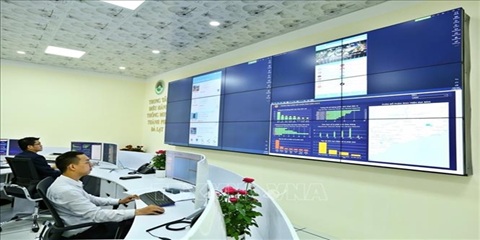
LÂM ĐỒNG TARGETS DIGITAL ECONOMY TO ACCOUNT FOR 30 PER CENT OF GRDP BY 2030
Lâm Đồng Province aims to raise the digital economy’s contribution to around 30 per cent of its gross regional domestic product (GRDP) by 2030, as part of a five-year plan to develop digital economy and society issued recently. Under Plan No. 15358/KH-UBND, the province targets more than 60 per cent of small- and medium-sized enterprises (SMEs) to adopt digital technologies by 2030 while increasing the value of cashless payments to 30 times its GRDP.
Events Sponsors






















