Want to be in the loop?
subscribe to
our notification
Business News
ENHANCING PRESENCE OF VIETNAMESE GOODS IN ASEAN MARKET IS ESSENTIAL
Việt Nam’s Trade Office in Singapore recently encouraged Vietnamese businesses to participate in Retail’s Big Show APAC 2025, which will take place in Singapore early next month.
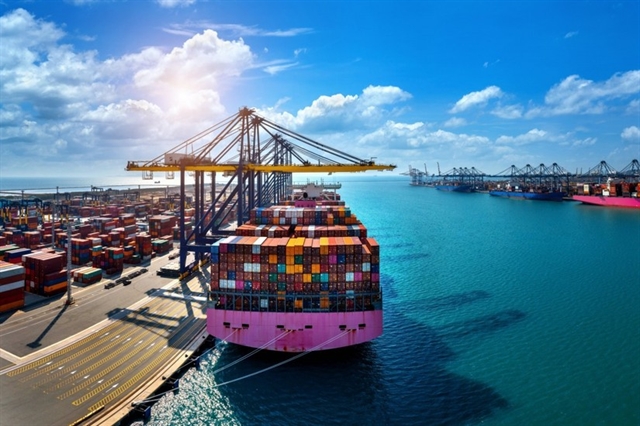
ASEAN ranks as Việt Nam’s fourth-largest export market after the US, China and the EU.— Photo mekongasean.vn
HÀ NỘI — As Việt Nam’s export turnover has yet to fully reflect its potential within the ASEAN region, enhancing the presence of Vietnamese goods and seizing opportunities in this market is essential, particularly amid tariff fluctuations.
This issue demands greater attention from businesses, along with a proactive and flexible approach to market access, deep market understanding and the ability to overcome trade barriers.
Việt Nam’s Trade Office in Singapore recently encouraged Vietnamese businesses to participate in Retail’s Big Show APAC 2025, which will take place in Singapore early next month.
The event provides opportunities for Vietnamese enterprises to connect with potential customers and top retailers, while also exploring new trends in retail, ranging from enhancing customer experience to digital transformation strategies.
In light of Việt Nam becoming the fourth-largest seafood supplier to Singapore, the trade office also announced ongoing efforts to promote trade connections between Vietnamese and Singaporean seafood businesses.
These efforts include participating in seafood exhibitions and trade fairs to increase the visibility of Vietnamese products in Singapore and help companies expand their market share.
The trade office also advised Vietnamese seafood exporters to maintain high quality standards, stay updated on local regulations, improve packaging designs and boost productivity to remain competitive with products from other countries in the region.
Guidance and support are crucial for Vietnamese enterprises looking to deepen their presence in Singapore specifically, and the ASEAN region more broadly — especially amid global trade instability caused by shifting US tariffs.
As of the first four months of this year, Việt Nam’s exports to Thailand reached US$2.67 billion, a modest increase of 1.4 per cent year-over-year.
Meanwhile, imports from Thailand surged to over $4.2 billion, an 18.5 per cent rise. Thailand is currently Việt Nam’s largest export market within ASEAN, accounting for more than 20 per cent of Việt Nam’s total ASEAN export turnover, followed by Indonesia and the Philippines.
Key exports to Thailand include machinery and equipment, electronics and components, phones and parts, crude oil and vehicles.
At a seminar in HCM City on Thursday, a representative of Central Retail Việt Nam Group said that the company was promoting lychee exports to Thailand as the harvest season approached.
In mid-May, Việt Nam’s Trade Office in the Philippines provided an update on the trade relationship between the two countries, noting that Việt Nam still has plenty of room to expand its exports to the Philippines.
Agricultural products represent a significant opportunity. Despite similarities in the agricultural profiles of both countries, they are not direct competitors. Việt Nam has a comparative advantage in various subtropical fruits and seafood strains that have not yet been exported to the Philippines.
Aside from rice, the Philippines has strong demand for many types of Vietnamese agricultural products, particularly fresh produce. However, some sectors remain untapped due to trade and logistics barriers.
Moreover, light industrial products, fertilisers, chemicals, tools, machinery, electrical and household appliances, heavy industry products and construction materials also have growth potential in the Philippine market.
Vietnamese exporters should also be aware of the market’s challenges and risks, and adopt appropriate marketing and market entry strategies to ensure success.
Despite these individual market opportunities, Việt Nam’s overall export performance in the ASEAN region still falls short of its potential.
According to the latest data from Việt Nam’s General Department of Customs, from the beginning of this year to May 15, exports to ASEAN reached $12.42 billion — an increase of just 3.2 per cent year-over-year, or $389 million.
ASEAN ranks as Việt Nam’s fourth-largest export market after the US, China and the EU.
To boost export turnover and the presence of Vietnamese products in ASEAN, it is vital for Vietnamese businesses to show greater interest and capitalise on opportunities in this regional market.
Building consumer trust and brand credibility is also crucial. Vietnamese exporters must work hard to change ASEAN consumers’ perception of Vietnamese goods and distinguish them from competitors. — VNS
Source: VNS
Related News

BANKING / FINANCE / INSURANCE / TAX
REMITTANCES TO HCM CITY RISE NEARLY 40% IN Q3
Remittances to HCM City reached more than US$2.83 billion in the third quarter of this year, up 39.5 per cent from the previous quarter and 3.6 per cent year-on-year. This was the first quarter showing positive annual growth this year, helping narrow the decline in remittance inflows over the first nine months. According to the State Bank of Vietnam (SBV)’s Regional Branch 2, remittances transferred to HCM City through credit institutions and economic organisations totalled $2.835 billion in Q3, an increase of more than $802 million from the previous quarter.

TECHNOLOGY
TECH SECTOR GROWTH OPENS UP OPPORTUNITIES FOR VIỆT NAM TO GO GLOBAL
The growth of the electronics, semiconductor and high-tech sectors worldwide is opening up a variety of opportunities for Vietnamese enterprises to integrate more deeply into the global supply chain. However, to become suppliers for these corporations, domestic enterprises must meet rigorous standards regarding quality, technology, productivity and order fulfilment capabilities.
VIETNAM ECONOMY INVESTMENT
FOREIGN INVESTORS SEEKING A SYNCHRONISED MANUFACTURING ECOSYSTEM
Instead of focusing only on land costs and incentives as usual, foreign investors are seeking a synchronised manufacturing ecosystem, from stable power supply and logistics to shared infrastructure and the convenience of completing residence procedures for experts to serve their long-term investment in the country.
MEMBER CORNER / PROMOTIONS
SENTRYSAFE FHW40200 – PROTECT YOUR VALUABLES, ENJOY PEACE OF MIND!
Looking for a reliable solution to protect your important documents, cash, and valuables from fire and water damage? Genuine SENTRYSAFE - Reliable protection for your valuables and peace of mind! Contact Sen Wai Vietnam for more information and personalized product recommendations.
PROPERTY / INDUSTRIAL ZONE
HCM CITY ATTRACTS US$5.7 BILLION INTO EXPORT PROCESSING AND INDUSTRIAL ZONES
HCM City attracted US$5.7 billion in domestic and foreign investment into its export processing and industrial zones during the first nine months of 2026. The figure exceeded the city's full-year target by 31 per cent, highlighting strong momentum in high-quality industrial investment under Resolution No.10-NQ/TW. Total investment reached 131 per cent of the 2026 target of $4.25 billion and represented a 29 per cent increase compared with the same period in 2025, according to the city's Export Processing and Industrial Zones Authority (HEPZA).
INFRASTRUCTURE / CONSTRUCTION / LOGISTIC / PORT
DONG THAP PROVINCE STEPS UP INDUSTRIAL EXPANSION AND INFRASTRUCTURE CONNECTIVITY
Accelerating public investment, strengthening inter-regional connectivity, and expanding industrial land are helping Dong Thap efficiently bolster competitiveness and drive economic growth. Following the 2025 merger of the former Dong Thap and Tien Giang provinces, the expanded Dong Thap province in the Mekong Delta faces mounting pressure to accelerate infrastructure development and strengthen connectivity among local economic zones, urban areas, industrial parks (IPs), and production centres.
Events Sponsors






















