Want to be in the loop?
subscribe to
our notification
Business News
ECONOMIC INDICATORS PICK UP SLIGHTLY BUT STILL AT RISK
Amidst the complicated developments of the Covid-19 outbreak, Vietnam is still maintaining its growth momentum. In order to maintain its economic stability and development, Vietnam needs to continue implementing suitable monetary and fiscal policies and provide solutions to support those facing difficulties caused by the pandemic.
At the regular Government meeting in early December, Prime Minister Nguyen Xuan Phuc assessed that amid the complicated developments of the Covid-19 pandemic in the world, Vietnam has managed to maintain positive growth. The country has still been able to achieve many socio-economic targets with the macro economy being stable and inflation curbed at the lowest level. The Consumer Price Index (CPI) in November 2020 decreased by 0.01% from the previous month. On average, in 11 months of 2020, CPI only increased by 3.51% over the same period last year.
Trade surplus recorded at US$20.1 billion. Export turnover reached US$254 billion in 11 months with 31 items fetching over US$1 billion each, accounting for 92% of the total export turnover. In 11 months of 2020, public investment disbursement has been accelerated, reaching 79.3% of the plan, up 34% over the same period (the highest increase in the period 2011-2020). Manufacturing industry has enjoyed strong growth; especially processing and manufacturing in November 2020 increased by 11.9% over the same period.
Trade and service in November continued to recover; Overall retail sales of goods and service revenue in November 2020 increased by 8.5%. Newly established enterprises increased by 6.7% over the same period.
However, according to the Minister of Planning and Investment Nguyen Chi Dung, there will be many risks in the coming time both in Vietnam and the world. Covid-19 is still complicated in many major countries which are important partners of Vietnam, and will continue to greatly affect trade, tourism and investment. Domestically, industrial production has increased, but at a lower rate than the previous month. Accommodation and catering services suffered slow recovery; the number of businesses withdrawing from the market was still high. Besides, natural disasters have been affecting production and people's life and the country might face the third wave of the pandemic as there appeared community infections in Ho Chi Minh City.
To maintain stability and achieve the highest results of the socio-economic development goals in 2020, Minister of Planning and Investment Nguyen Chi Dung proposed a number of major socio-economic tasks and solutions. Accordingly, the Government should continue to implement suitable fiscal and monetary policies to maintain recovery momentum and trigger economic growth; issue an additional solution for those facing difficulties from the Covid-19 pandemic, promoting recovery and socio-economic development.
In particular, the country should closely monitor pandemic developments in other countries, take measures to prevent it, closely monitor quarantine under the direction of the National Steering Committee for Covid-19 Prevention and Control. The country should also prepare approaches to reopen commercial and investment activities with the countries which have a Covid-19 vaccine; promote international cooperation, develop roadmaps and distribution methods of vaccines with priority given to high-risk areas and concentrated populations.
Besides, the country should proactively fight all kinds of diseases for cattle and poultry. Specialized agencies should work together with local authorities to control and prevent the spread of outbreak, quickly deliver and distribute breeds, livestock and various production materials to disaster-hit areas, to carry out reproduction, ensuring the livelihood of the people and the supply of the market during the coming Lunar New Year.
At the same time, the country should promote diversified exports based on researching and capturing timely information on markets and products that have leftover space to exploit in the pandemic context, as well as the ability to respond to free trade agreements such as CPTPP and EVFTA. Vietnam should also assess the impact of the RCEP on Vietnam's production and export industries and sectors when India is not a party of the agreement; and widely disseminate information about the agreement to enterprises, especially small and medium enterprises and enterprises in the sectors and fields affected by the agreement. We also draft out scenarios on trade policy against a change in politics in our big partners
Minister Dung also requested ministries, central agencies and localities to directly implement the decisions and directives of the Government and the Prime Minister on accelerating the disbursement of public investment capital according to Resolution 84/NQ- CP; regularly inspect and supervise each project to promptly handle difficulties in the implementation process; review and urge investors to coordinate with the Ministry of Finance in quickly settling payment and disbursement dossiers, not leaving backlog and payment at the end of the year.
Source: VCCI
Related News
BANKING / FINANCE / INSURANCE / TAX
REMITTANCES TO HCM CITY RISE NEARLY 40% IN Q3
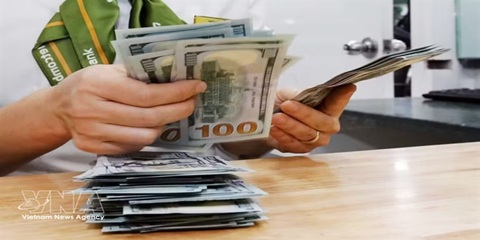
Remittances to HCM City reached more than US$2.83 billion in the third quarter of this year, up 39.5 per cent from the previous quarter and 3.6 per cent year-on-year. This was the first quarter showing positive annual growth this year, helping narrow the decline in remittance inflows over the first nine months. According to the State Bank of Vietnam (SBV)’s Regional Branch 2, remittances transferred to HCM City through credit institutions and economic organisations totalled $2.835 billion in Q3, an increase of more than $802 million from the previous quarter.
TECHNOLOGY
TECH SECTOR GROWTH OPENS UP OPPORTUNITIES FOR VIỆT NAM TO GO GLOBAL
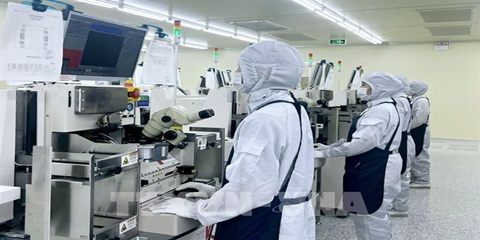
The growth of the electronics, semiconductor and high-tech sectors worldwide is opening up a variety of opportunities for Vietnamese enterprises to integrate more deeply into the global supply chain. However, to become suppliers for these corporations, domestic enterprises must meet rigorous standards regarding quality, technology, productivity and order fulfilment capabilities.
VIETNAM ECONOMY INVESTMENT
FOREIGN INVESTORS SEEKING A SYNCHRONISED MANUFACTURING ECOSYSTEM
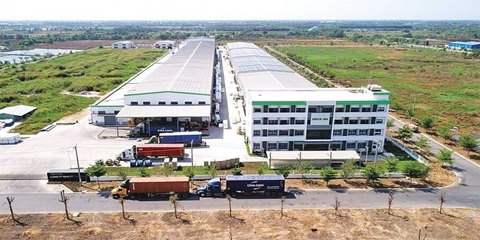
Instead of focusing only on land costs and incentives as usual, foreign investors are seeking a synchronised manufacturing ecosystem, from stable power supply and logistics to shared infrastructure and the convenience of completing residence procedures for experts to serve their long-term investment in the country.
MEMBER CORNER / PROMOTIONS
SENTRYSAFE FHW40200 – PROTECT YOUR VALUABLES, ENJOY PEACE OF MIND!
Looking for a reliable solution to protect your important documents, cash, and valuables from fire and water damage? Genuine SENTRYSAFE - Reliable protection for your valuables and peace of mind! Contact Sen Wai Vietnam for more information and personalized product recommendations.
PROPERTY / INDUSTRIAL ZONE
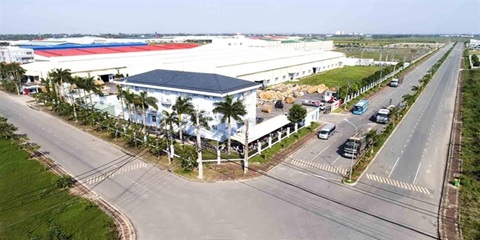
HCM CITY ATTRACTS US$5.7 BILLION INTO EXPORT PROCESSING AND INDUSTRIAL ZONES
HCM City attracted US$5.7 billion in domestic and foreign investment into its export processing and industrial zones during the first nine months of 2026. The figure exceeded the city's full-year target by 31 per cent, highlighting strong momentum in high-quality industrial investment under Resolution No.10-NQ/TW. Total investment reached 131 per cent of the 2026 target of $4.25 billion and represented a 29 per cent increase compared with the same period in 2025, according to the city's Export Processing and Industrial Zones Authority (HEPZA).
INFRASTRUCTURE / CONSTRUCTION / LOGISTIC / PORT
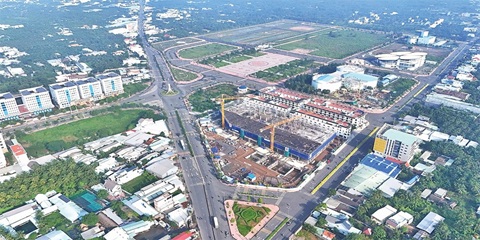
DONG THAP PROVINCE STEPS UP INDUSTRIAL EXPANSION AND INFRASTRUCTURE CONNECTIVITY
Accelerating public investment, strengthening inter-regional connectivity, and expanding industrial land are helping Dong Thap efficiently bolster competitiveness and drive economic growth. Following the 2025 merger of the former Dong Thap and Tien Giang provinces, the expanded Dong Thap province in the Mekong Delta faces mounting pressure to accelerate infrastructure development and strengthen connectivity among local economic zones, urban areas, industrial parks (IPs), and production centres.
Events Sponsors






















