Want to be in the loop?
subscribe to
our notification
Business News
ECO-INDUSTRIAL PARKS WITH INTEGRATED INFRASTRUCTURE DRAW RISING FDI INTEREST
Since early this year, a growing number of investors from Europe, the US and Japan have been touring southern Việt Nam to seek potential investment locations. While land costs and location were once the main concerns, sustainability has now become a decisive factor, including renewable energy use, integrated services, and environmentally friendly living spaces.
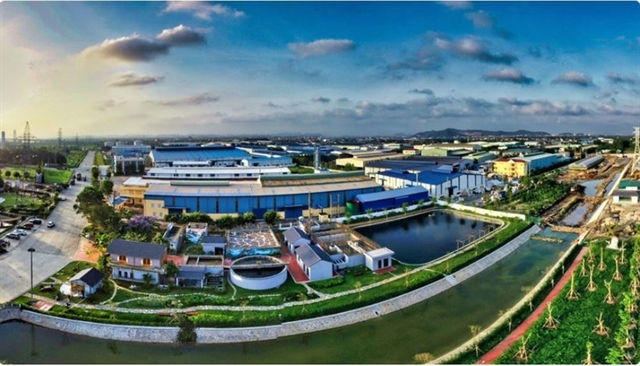
The Nam Cầu Kiên Eco-Industrial Park in Hải Phòng city. — VNA/VNS Photo
HÀ NỘI — As foreign direct investment (FDI) continues to flow strongly into Việt Nam, industrial parks featuring synchronised infrastructure, green utilities, and comprehensive service ecosystems are emerging as top choices for international investors.
Sustainability-driven industrial parks appeal to global investors
Since early this year, a growing number of investors from Europe, the US and Japan have been touring southern Việt Nam to seek potential investment locations. While land costs and location were once the main concerns, sustainability has now become a decisive factor, including renewable energy use, integrated services, and environmentally friendly living spaces.
In HCM City, the Việt Nam–Singapore Industrial Park (VSIP) 3 has become a model for the next generation of green and sustainable industrial parks. The complex integrates smart technologies across operations, from energy and water management to waste treatment, transportation, and security systems.
This innovative model has attracted major global corporations such as Lego, Pandora, and Giant, all of which prioritise clean energy and carbon neutrality. Their investments not only inject significant capital into Việt Nam’s economy but also set new development standards for industrial parks nationwide.
Neighbouring provinces such as Đồng Nai and Lâm Đồng (after administrative merger) are also drawing FDI enterprises through similar green and smart development strategies. A representative of the Sonadezi Corporation reported that at Tân Đức Industrial Park, eight domestic and foreign investors signed land-lease agreements totalling about 40 ha in the first half of 2025.
From production zones to sustainable ecosystems
Investment attraction today is no longer defined merely by land size or location but by the capacity to create sustainable ecosystems that harmonise industry, urban development, and services. A successful industrial park is one where investors operate efficiently, workers enjoy stable living conditions, and local communities benefit from shared development.
This evolution has prompted industrial park developers to move beyond the traditional “land rental” approach toward offering comprehensive service packages. Major southern localities such as HCM City, Đồng Nai, and Tây Ninh are accelerating the development of a network of eco-industrial parks.
According to Trương Khắc Nguyên Minh, Deputy General Director of Prodezi Long An, modern investors seek more than just land, they look for sustainable environments that enable long-term operations and meet ESG (Environmental, Social, and Governance) criteria. Prodezi’s eco-industrial park model incorporates green infrastructure, renewable energy systems, and circular economy principles right from the design phase to align with global corporations’ high environmental and social standards.
The shift towards green and smart industrial parks is redefining Việt Nam’s industrial landscape. These next-generation developments not only attract high-quality FDI but also act as drivers of regional economic growth, linking industry with urbanisation, technology, and environmental stewardship.
Nguyễn Phú Thịnh, General Director of VSIP J. V. Co., said international investors are becoming more demanding in terms of environmental standards, energy efficiency, and quality of life. A well-planned industrial park offering modern amenities and a liveable environment not only attracts major projects but also retains a skilled workforce, that is the true measure of success, he said. — VNS
Source: VNS
Related News

CHARITY / EXHIBITION / OTHER EVENTS
INVESTMENT OPPORTUNITIES IN CA MAU PROVINCE: 96 PROJECTS AND 20 STRATEGIC PROJECTS
We are pleased to share with you information on investment projects currently seeking investors in Ca Mau Province. Should your esteemed company or association be interested, we kindly invite you to review the project information and complete the registration form via the links provided. The Ho Chi Minh City Investment and Trade Promotion Centre (ITPC) will consolidate the expressions of interest and facilitate connections with the leadership of Ca Mau Province at a meeting tentatively scheduled for 13 November 2026 in Ho Chi Minh City.
MEMBER CORNER / PROMOTIONS
BẰNG KIỀU LIVESHOW - A SYMPHONY OF LOVE UNDER THE GOLDEN GLOW
A masterclass in live music that takes the audience on a soulful journey through immortal love songs, guided by the peerless artistry and emotive storytelling of renowned singer Bằng Kiều. The highlight of the night is his seamless musical chemistry with special guest Triệu Hồng Ngọc, promising passionate and deeply resonant duets inside the magnificent Grand Ballroom.
INFRASTRUCTURE / CONSTRUCTION / LOGISTIC / PORT
ĐÀ NẴNG GREEN-LIGHTS US$105 MILLION THAI DEVELOPMENT DEAL
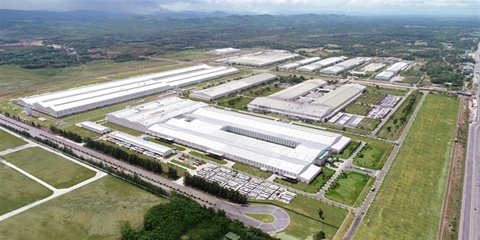
The central city has approved an investment proposal by Thailand’s WHA Group to develop infrastructure for the 400ha WHA Đà Nẵng Industrial Park project on two communes of Thăng Bình and Đồng Dương, with an investment of more than VNĐ2.7 trillion (US$105 million). The city said it approved WHA Industrial Development International's status as an investor in the project, which is expected to take place between 2027 and 2034.
VIETNAM ECONOMY INVESTMENT
MOBILE PHONE EXPORTS RISE 20% TO $51.8 BILLION IN FIRST NINE MONTHS
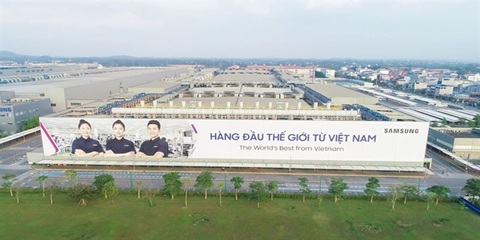
Exports of mobile phones and components rose 20 per cent year-on-year to nearly US$51.8 billion in the first nine months of 2026, with China, the US and Republic of Korea accounting for more than half of the total. Shipments to the three markets reached a combined $26.18 billion, or 50.6 per cent of total exports of the product group during the period, according to data from the Vietnam Department of Customs under the Ministry of Finance.
INFRASTRUCTURE / CONSTRUCTION / LOGISTIC / PORT
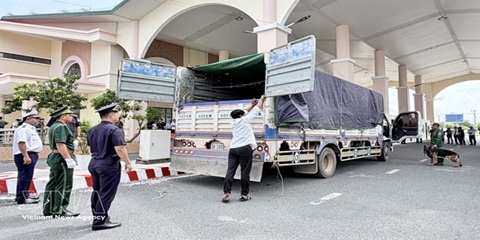
VIỆT NAM-CAMBODIA TRADE GATHERS PACE TOWARDS $20 BILLION TARGET
Trade between Việt Nam and Cambodia continues to grow, remaining a bright spot and a key pillar of bilateral cooperation as the two countries aim to raise two-way trade to US$20 billion in the coming years. After setting a record of more than $11.3 billion last year, bilateral trade reached about $8.7 billion in the first eight months of this year, up 8.3 per cent year on year.
VIETNAM ECONOMY INVESTMENT
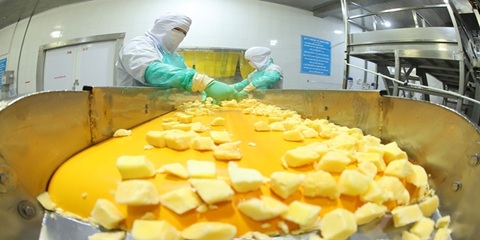
FRUIT AND VEGETABLE EXPORTS POISED TO HIT $10 BILLION IN 2026
Fruit and vegetable exports are on track to reach nearly US$10 billion in 2026, after rising 19.9 per cent year on year to nearly US$7.4 billion in the first nine months, driven by strong seasonal demand and abundant tropical fruit supplies. The Ministry of Agriculture and Environment said the growth reflected stronger international demand for fresh produce and processed agricultural products.
Events Sponsors






















