Want to be in the loop?
subscribe to
our notification
Business News
E-STAMP LABELING ON TOBACCO AND ALCOHOL PRODUCTS TO BE MANDATORY FROM NEXT YEAR
The Ministry of Finance has recently issued Circular 23/2021/TT-BTC on printing, issuance, management, and usage of e-stamps labeling on tobacco and alcohol products.
Accordingly, e-stamp means having signs recognizable to the naked eye and containing e-information and e-data activatable and searchable on e-portals of the General Department of Taxation and General Department of Customs.
Especially, tobacco and alcohol products must be labeled with e-stamps from July 1, 2022.
Each home-made or imported cigarette pack or liquor bottle must be affixed with an e-stamp.
For cigarette packs and liquor bottles covered with cellophane films, e-stamps would be affixed to products before the outer cellophane layers are sealed. E-stamps would be affixed in such a way that once the cigarette packs or liquor bottles are opened, they would be torn and could not be reused.
Cigarette and liquor producers and importers would be allowed to conduct the e-stamping of their products by themselves but be held responsible therefor.
According to Decree 67/2013/ND-CP, dated June 27, 2013 detailing some articles and implementation measures of the Law on Prevention of Tobacco Harm on tobacco business, all cigarette packs must have one stamp so that when it is opened, the stamp is torn. Similar rules are issued for alcohol products in the Decree 105 issued in 2017. Customers can easily search for product information such as the tax code, name of manufacturer, importer, date of import, type of product on the websites of the General Department of Customs.
For imported tobacco products, firms must stamp the products at their factories before releasing the products to the market. Importers of alcohol products must take responsibility for the stamping process and released products.
Viet Nam’s beverage industry is strengthened rapidly, accompanied by a boost in economic growth, advantageous demographics, rising tourism and higher income middle-class. With the growth rate of 6% annually, the sector is one the driving industry of Vietnam’s economy, has the highest production value and the 2nd highest total revenue.
Viet Nam is also one of the highest beverage consuming market. Compared to 2010, Viet Nam's alcohol consumption increased by nearly 95%, ranks first in the world, and doubles the second-ranking country- India, and 16 times more than the United States.
Viet Nam is one of the most significant tobacco markets in the region, and has shown consistent growth in sales in recent history. Domestic production has been growing, but more stringent restrictions and anti-tobacco sentiment will inhibit the market in the future.
Statistics showed that 22.5% of Vietnamese adults (age 15+) currently smoke tobacco products (men 45.3%; women 1.1%). Overall consumption estimated to be 107 billion pieces in 2019.
Source: VGP
Related News
BANKING / FINANCE / INSURANCE / TAX
REMITTANCES TO HCM CITY RISE NEARLY 40% IN Q3
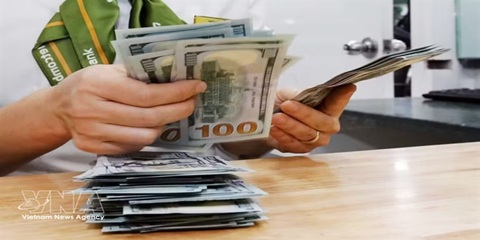
Remittances to HCM City reached more than US$2.83 billion in the third quarter of this year, up 39.5 per cent from the previous quarter and 3.6 per cent year-on-year. This was the first quarter showing positive annual growth this year, helping narrow the decline in remittance inflows over the first nine months. According to the State Bank of Vietnam (SBV)’s Regional Branch 2, remittances transferred to HCM City through credit institutions and economic organisations totalled $2.835 billion in Q3, an increase of more than $802 million from the previous quarter.
TECHNOLOGY
TECH SECTOR GROWTH OPENS UP OPPORTUNITIES FOR VIỆT NAM TO GO GLOBAL
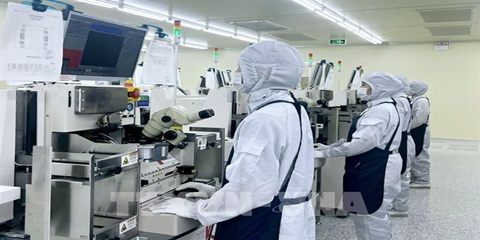
The growth of the electronics, semiconductor and high-tech sectors worldwide is opening up a variety of opportunities for Vietnamese enterprises to integrate more deeply into the global supply chain. However, to become suppliers for these corporations, domestic enterprises must meet rigorous standards regarding quality, technology, productivity and order fulfilment capabilities.
VIETNAM ECONOMY INVESTMENT
FOREIGN INVESTORS SEEKING A SYNCHRONISED MANUFACTURING ECOSYSTEM
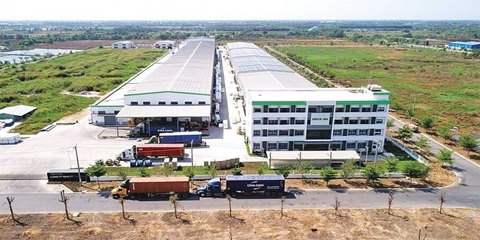
Instead of focusing only on land costs and incentives as usual, foreign investors are seeking a synchronised manufacturing ecosystem, from stable power supply and logistics to shared infrastructure and the convenience of completing residence procedures for experts to serve their long-term investment in the country.
MEMBER CORNER / PROMOTIONS
SENTRYSAFE FHW40200 – PROTECT YOUR VALUABLES, ENJOY PEACE OF MIND!
Looking for a reliable solution to protect your important documents, cash, and valuables from fire and water damage? Genuine SENTRYSAFE - Reliable protection for your valuables and peace of mind! Contact Sen Wai Vietnam for more information and personalized product recommendations.
PROPERTY / INDUSTRIAL ZONE
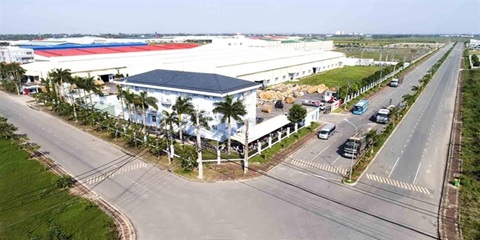
HCM CITY ATTRACTS US$5.7 BILLION INTO EXPORT PROCESSING AND INDUSTRIAL ZONES
HCM City attracted US$5.7 billion in domestic and foreign investment into its export processing and industrial zones during the first nine months of 2026. The figure exceeded the city's full-year target by 31 per cent, highlighting strong momentum in high-quality industrial investment under Resolution No.10-NQ/TW. Total investment reached 131 per cent of the 2026 target of $4.25 billion and represented a 29 per cent increase compared with the same period in 2025, according to the city's Export Processing and Industrial Zones Authority (HEPZA).
INFRASTRUCTURE / CONSTRUCTION / LOGISTIC / PORT
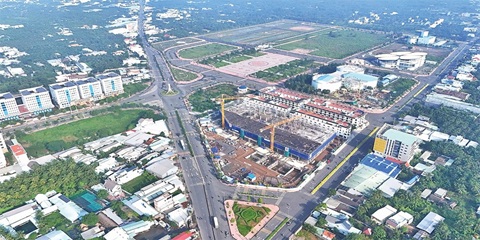
DONG THAP PROVINCE STEPS UP INDUSTRIAL EXPANSION AND INFRASTRUCTURE CONNECTIVITY
Accelerating public investment, strengthening inter-regional connectivity, and expanding industrial land are helping Dong Thap efficiently bolster competitiveness and drive economic growth. Following the 2025 merger of the former Dong Thap and Tien Giang provinces, the expanded Dong Thap province in the Mekong Delta faces mounting pressure to accelerate infrastructure development and strengthen connectivity among local economic zones, urban areas, industrial parks (IPs), and production centres.
Events Sponsors






















