Want to be in the loop?
subscribe to
our notification
Business News
E-COMMERCE IN VIETNAM RAPID GROWTH AMID FIERCE COMPETITION
Vietnam’s digital economy is undergoing a major transformation, with e-commerce emerging as a leading growth sector. According to the Ministry of Industry and Trade, the B2C e-commerce market grew 25-27% in the first eight months of 2025, exceeding initial forecasts by 3-7 percentage points. In response, the annual growth target has been revised to 25.5%, with total transactions expected to reach about US$28 billion in 2025 and US$50 billion by 2030.
However, rapid growth has triggered a stringent market shakeout. Data from Metric.vn shows that approximately 80,000 sellers left e-commerce platforms in the first half of 2025. The main factors include rising logistics costs, intensified competition from influencer-driven consumer behavior (Key Opinion Consumers or KOCs), and tighter platform policies combined with higher taxes and fees.

This consolidation marks an important moment in Vietnam’s e-commerce evolution. Only businesses with long-term strategies, legal compliance, and real value offerings are likely to survive. Competition now goes beyond price, encompassing transparency, credibility, and adaptability. The traditional home advantage is no longer enough; Vietnamese enterprises must harness digital capabilities, from traceability technology to seamless customer experiences across every touchpoint.
Vietnam’s e-commerce landscape mirrors the rapid entry of Western supermarket chains into Asia in the 1990s, but at an even faster pace. The digital environment has erased geographic barriers, creating a global competitive arena. Vietnamese businesses now face not only imported goods and international brands but also online fraud, counterfeits, and imitation products that undermine consumer trust.
In response, the draft revised E-Commerce Law mandates seller identification via VNeID and imposes greater accountability on platforms for managing violations. Notably, the Ministry of Finance has proposed eliminating the tax exemption for imported goods valued under VND1 million (US$40), aiming to level the playing field between domestic and foreign products and to establish a more equitable regulatory framework.
To navigate this competitive landscape, Vietnamese businesses are focusing on three strategic pillars: technology adoption, personalized customer experiences, and the integration of local cultural values. Technology and data analytics enable deeper customer insights, while cultural elements differentiate brands in ways that are challenging for international competitors to replicate. For example, during Vietnam’s National Day celebrations, several brands introduced patriotic-themed products such as flags and apparel. The resulting sales increase was driven not only by consumer demand but also by the emotional connection with the community, a link that international brands often find difficult to replicate.
Simultaneously, Vietnamese e-commerce platforms are increasing their focus on "shoppertainment," which combines shopping, entertainment, and live-streaming. Today’s consumers seek not only products but also inspiration, entertainment, and meaningful engagement throughout their shopping experience.
These developments signify that Vietnam's e-commerce market has entered a maturation phase characterized by rapid growth and stringent market selection. Only businesses that effectively utilize data, integrate cultural elements, and adapt swiftly to the digital arena will thrive in this globally competitive environment.
Currently, the market is witnessing direct competition among major players. TikTok Shop has rapidly captured nearly 39% of the market share, narrowing the gap with Shopee, primarily through leveraging live-streaming and video-based shopping. Shopee continues to diversify its sales channels, collaborating with Napas and experimenting with voucher distribution on YouTube. In response, YouTube has partnered with Shopee to launch YouTube Shopping in Southeast Asia, intensifying the competitive dynamics with TikTok Shop. This convergence and cross-platform collaboration underscore the necessity for businesses to develop a seamless omnichannel experience.
In this context, the role of regulatory authorities is evolving to support businesses through technological solutions. The Ministry of Industry and Trade has issued Decision 1568/QD-BCT, approving the National E-Commerce Development Master Plan for the 2026-2030 period, which includes promoting cross-border e-commerce as a national strategy. The goal is to develop logistics infrastructure, such as bonded warehouses and order processing centers, positioning Vietnam to play a role similar to India's in digital services exports.
To achieve this objective, the Center for E-commerce and Digital Technology Development (eComDX)) has developed and implemented the "4 Go" solution suite: GoRight (legal compliance), GoOnline (digital transformation), GoExport (cross-border e-commerce), and GoAI (artificial intelligence applications). These solutions provide the institutional and technological foundation Vietnamese businesses need to expand globally, targeting not only traditional markets like the United States and China but also regions such as ASEAN, the Middle East, Africa, and Latin America. Notably, the implementation of secure electronic contracts (GoRight and GoOnline) is becoming mandatory to enhance transaction trust, eliminate paperwork barriers, and accelerate international deal processing, officially integrating Vietnam into the global digital trade ecosystem.
The surge in Vietnam's e-commerce sector has ushered in a new era where rapid development and legal compliance are inseparable. Only businesses that transform their "home advantage" into core digital competencies, invest in data analytics, and continuously innovate their omnichannel experiences will endure. With the support of the new legal framework and the government's "4 Go" strategy, the gateway to global markets is now open for Vietnamese brands.
Source: VCCI
Related News

BANKING / FINANCE / INSURANCE / TAX
REMITTANCES TO HCM CITY RISE NEARLY 40% IN Q3
Remittances to HCM City reached more than US$2.83 billion in the third quarter of this year, up 39.5 per cent from the previous quarter and 3.6 per cent year-on-year. This was the first quarter showing positive annual growth this year, helping narrow the decline in remittance inflows over the first nine months. According to the State Bank of Vietnam (SBV)’s Regional Branch 2, remittances transferred to HCM City through credit institutions and economic organisations totalled $2.835 billion in Q3, an increase of more than $802 million from the previous quarter.

TECHNOLOGY
TECH SECTOR GROWTH OPENS UP OPPORTUNITIES FOR VIỆT NAM TO GO GLOBAL
The growth of the electronics, semiconductor and high-tech sectors worldwide is opening up a variety of opportunities for Vietnamese enterprises to integrate more deeply into the global supply chain. However, to become suppliers for these corporations, domestic enterprises must meet rigorous standards regarding quality, technology, productivity and order fulfilment capabilities.
VIETNAM ECONOMY INVESTMENT
FOREIGN INVESTORS SEEKING A SYNCHRONISED MANUFACTURING ECOSYSTEM
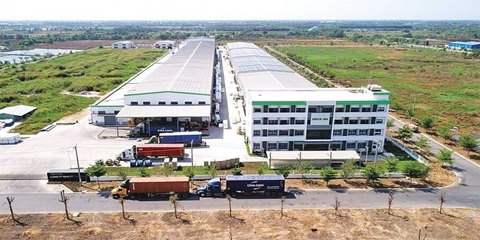
Instead of focusing only on land costs and incentives as usual, foreign investors are seeking a synchronised manufacturing ecosystem, from stable power supply and logistics to shared infrastructure and the convenience of completing residence procedures for experts to serve their long-term investment in the country.

MEMBER CORNER / PROMOTIONS
SENTRYSAFE FHW40200 – PROTECT YOUR VALUABLES, ENJOY PEACE OF MIND!
Looking for a reliable solution to protect your important documents, cash, and valuables from fire and water damage? Genuine SENTRYSAFE - Reliable protection for your valuables and peace of mind! Contact Sen Wai Vietnam for more information and personalized product recommendations.
PROPERTY / INDUSTRIAL ZONE
HCM CITY ATTRACTS US$5.7 BILLION INTO EXPORT PROCESSING AND INDUSTRIAL ZONES
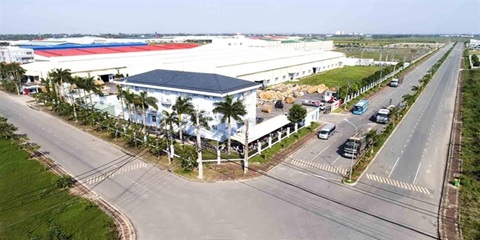
HCM City attracted US$5.7 billion in domestic and foreign investment into its export processing and industrial zones during the first nine months of 2026. The figure exceeded the city's full-year target by 31 per cent, highlighting strong momentum in high-quality industrial investment under Resolution No.10-NQ/TW. Total investment reached 131 per cent of the 2026 target of $4.25 billion and represented a 29 per cent increase compared with the same period in 2025, according to the city's Export Processing and Industrial Zones Authority (HEPZA).
INFRASTRUCTURE / CONSTRUCTION / LOGISTIC / PORT
DONG THAP PROVINCE STEPS UP INDUSTRIAL EXPANSION AND INFRASTRUCTURE CONNECTIVITY
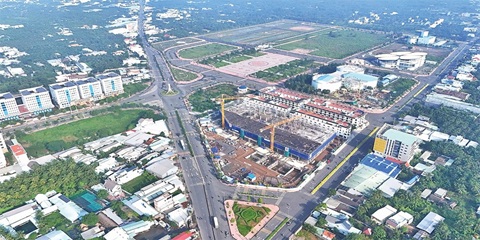
Accelerating public investment, strengthening inter-regional connectivity, and expanding industrial land are helping Dong Thap efficiently bolster competitiveness and drive economic growth. Following the 2025 merger of the former Dong Thap and Tien Giang provinces, the expanded Dong Thap province in the Mekong Delta faces mounting pressure to accelerate infrastructure development and strengthen connectivity among local economic zones, urban areas, industrial parks (IPs), and production centres.
Events Sponsors






















