Want to be in the loop?
subscribe to
our notification
Business News
E-CARS SET FOR NEW FEE EXEMPTIONS
With the current exemptions coming to an end this month, the Ministry of Finance supports continuing a reduction in registration fees for all electric cars from March 1.
The move came as the ministry (MoF) last week asked key ministries, sectors, and agencies for their feedback on a draft dispatch with two options for exempting and reducing registration fees for electric cars to encourage green transformation.
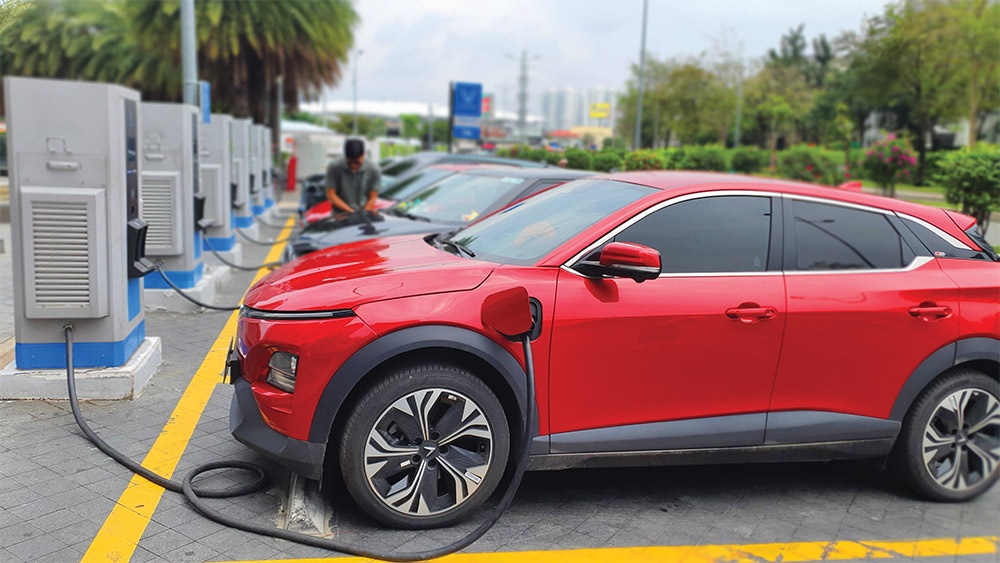
E-cars set for new fee exemptions, Photo Le Toan
Option 1 is to continue to reduce the registration fee by 50 per cent for battery-powered electric vehicles (EVs). Option 2 is to look at a 100 per cent exemption of registration fees from March 1 to the end of February 2027.
Under Decree No.10/2022/ND-CP on registration fee that took effect from March 2022, for three years the first-time registration fee is zero and in the next two years, the first-time registration fee is 50 per cent as the fee rate for petrol cars with the same quantity of seats. By the end of February, battery-powered EVs will no longer be 100 per cent exempt from registration fees.
According to the MoF, option 1 ensures policy stability and does not affect state budget revenue, especially local budgets. According to the MoF’s calculations, the budget revenue reduction will be about $2.5 billion per year if the proposal to extend the incentive period continues.
The Ministry of Industry and Trade (MoIT) has requested the MoF to evaluate the effectiveness of exempting registration fees for battery EVs. In addition to those, the MoIT also requested the MoF to study the policy of exempting and reducing this fee for other types of motor vehicles using clean, green, and environmentally friendly energy such as self-charging hybrid vehicles, externally charged hybrid vehicles and pure fuel cell EVs to encourage green transport.
The MoIT noted that the issue of introducing preferential policies for battery EVs could allow foreign car companies to take advantage of the opportunity to increase exports and penetrate the Vietnamese market.
The Vietnam Automobile Manufacturers Association forecasts that Vietnam will reach the milestone of one million EVs by around 2028, and about 3.5 million by 2040.
According to market research organisation 6Wresearch, the size of the Vietnamese EV market is expected to reach a compound annual growth rate (CAGR) of 22.9 per cent from 2020 to the end of this year. Another study by Mordor Intelligence noted that the size of Vietnam’s EV market is estimated to have reached $2.48 billion in 2024 and could hit $5.67 billion in 2029, growing at a CAGR of 18 per cent.
Currently, there are at least five new energy vehicle brands from China operating in Vietnam. Most Chinese EV brands set up joint ventures with companies in Vietnam to implement distribution plans. The General Motors, SAIC Motor, and Wuling joint venture cooperates with TMT Motors, while Haima is working with Carvivu, and Chery has a joint venture with Geleximco Group, with several dozen dealers involved.
BYD also said that it will boast 12 dealers this year. Most Chinese car models entering Vietnam recently are in the mid-range or high-end segment. Tasco last year continued to heat up this segment when it cooperated with Zeekr, a high-end EV brand from Geely, in Vietnam.
Source: VIR
Related News

BANKING / FINANCE / INSURANCE / TAX
REMITTANCES TO HCM CITY RISE NEARLY 40% IN Q3
Remittances to HCM City reached more than US$2.83 billion in the third quarter of this year, up 39.5 per cent from the previous quarter and 3.6 per cent year-on-year. This was the first quarter showing positive annual growth this year, helping narrow the decline in remittance inflows over the first nine months. According to the State Bank of Vietnam (SBV)’s Regional Branch 2, remittances transferred to HCM City through credit institutions and economic organisations totalled $2.835 billion in Q3, an increase of more than $802 million from the previous quarter.

TECHNOLOGY
TECH SECTOR GROWTH OPENS UP OPPORTUNITIES FOR VIỆT NAM TO GO GLOBAL
The growth of the electronics, semiconductor and high-tech sectors worldwide is opening up a variety of opportunities for Vietnamese enterprises to integrate more deeply into the global supply chain. However, to become suppliers for these corporations, domestic enterprises must meet rigorous standards regarding quality, technology, productivity and order fulfilment capabilities.
VIETNAM ECONOMY INVESTMENT
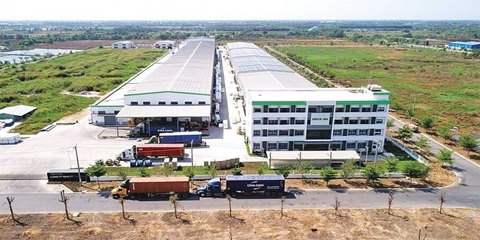
FOREIGN INVESTORS SEEKING A SYNCHRONISED MANUFACTURING ECOSYSTEM
Instead of focusing only on land costs and incentives as usual, foreign investors are seeking a synchronised manufacturing ecosystem, from stable power supply and logistics to shared infrastructure and the convenience of completing residence procedures for experts to serve their long-term investment in the country.
MEMBER CORNER / PROMOTIONS
SENTRYSAFE FHW40200 – PROTECT YOUR VALUABLES, ENJOY PEACE OF MIND!
Looking for a reliable solution to protect your important documents, cash, and valuables from fire and water damage? Genuine SENTRYSAFE - Reliable protection for your valuables and peace of mind! Contact Sen Wai Vietnam for more information and personalized product recommendations.
PROPERTY / INDUSTRIAL ZONE
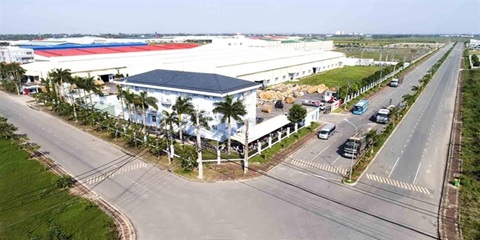
HCM CITY ATTRACTS US$5.7 BILLION INTO EXPORT PROCESSING AND INDUSTRIAL ZONES
HCM City attracted US$5.7 billion in domestic and foreign investment into its export processing and industrial zones during the first nine months of 2026. The figure exceeded the city's full-year target by 31 per cent, highlighting strong momentum in high-quality industrial investment under Resolution No.10-NQ/TW. Total investment reached 131 per cent of the 2026 target of $4.25 billion and represented a 29 per cent increase compared with the same period in 2025, according to the city's Export Processing and Industrial Zones Authority (HEPZA).
INFRASTRUCTURE / CONSTRUCTION / LOGISTIC / PORT
DONG THAP PROVINCE STEPS UP INDUSTRIAL EXPANSION AND INFRASTRUCTURE CONNECTIVITY
Accelerating public investment, strengthening inter-regional connectivity, and expanding industrial land are helping Dong Thap efficiently bolster competitiveness and drive economic growth. Following the 2025 merger of the former Dong Thap and Tien Giang provinces, the expanded Dong Thap province in the Mekong Delta faces mounting pressure to accelerate infrastructure development and strengthen connectivity among local economic zones, urban areas, industrial parks (IPs), and production centres.
Events Sponsors






















