Want to be in the loop?
subscribe to
our notification
Business News
DONG NAI ENTERPRISES SEEK NEW MARKETS AMID UNCERTAIN GLOBAL ECONOMY
Although the world economy has not fully recovered from the negative impact of the COVID-19 pandemic and the ongoing conflict between Russia and Ukraine, export turnover of southern Đồng Nai Province hit US$19.3 billion during the first nine months of this year, surging 20.17 per cent over the same period last year, according to data of the General Statistics Office.
Meanwhile, the provincial index of industrial production (IIP) increased by more than 7.8 per cent over the same period last year.
Although the index declined in the third quarter of 2022 compared to the first two quarters of the year, businesses still believe that in the fourth quarter of this year, production will recover.
Sectors recording high export growth compared to the same period last year included footwear, iron and steel products, textile and garments, and machinery, equipment, tools and spare parts.
The main export markets of Đồng Nai are the United States, Japan, China, the Republic of Korea and some European countries.
A representative of the provincial Department of Industry and Trade said that from the middle of 2020 and through 2021, enterprises in Đồng Nai were severely affected by the COVID-19 pandemic, forcing some companies to suspend production which hurt export turnover.
Since the beginning of this year, as the pandemic was brought under control, businesses had quickly restored production and increased their exports. This was an optimistic sign, reflecting that businesses were producing a larger amount of goods and had reconnected with customers in the world market, the official said.
Despite achieving impressive growth, experts believe that export businesses will face many difficulties such as global inflation, tightening monetary policy and a growing cost-of-living crisis in many of the country’s export markets.
Nguyễn Duy Hưng, Vice President of the Đồng Nai Import-Export Association, said Việt Nam was heavily dependent on imported raw materials and fuels.
The selling price of a US dollar at banks had increased by nearly 5 per cent against the VNĐ this year to beyond VNĐ24,000.
Manufacturing activity grew at a slower pace as rising raw material costs and a worsening global outlook weighed on corporate sentiment.
While supply disruptions might have run their course, local exporters were also suffering from a slump in global demand as consumers tightened their spending due to high inflation.
The decline in demand from developed countries' markets, coupled with other difficulties in shipping and raw material supply, would continue to have adverse effects on exports.
Currently, Đồng Nai's businesses were making efforts to find new markets and make up for the shortage of orders from traditional markets.
Recently, Đồng Nai organised a trade fair with Australian enterprises in the sectors of handicrafts, apparel - footwear, agricultural products and food.
So far, two enterprises from the province had signed contracts with Australian enterprises.
Besides the foreign market, businesses also needed to focus on the domestic market, experts said.
In recent years, foreign-invested enterprises accounted for more than 75 per cent of the province’s export turnover, with the remainder belonging to non-state and State-owned enterprises at 23 per cent and 2 per cent, respectively.
Key export items of non-state enterprises included textiles, footwear, wooden products, coffee and pepper.
Nguyễn Thị Hoàng, Deputy Chairman of the provincial People’s Committee, said since the beginning of the year, the province had strengthened trade promotion to connect foreign enterprises in Đồng Nai with domestic enterprises in the same field to cooperate and provide products for each other.
Many enterprises had found a source of domestic raw materials, which had reduced imports allowing Đồng Nai's trade surplus to increase and its trade deficit to decrease.
It was expected that in 2022, Đồng Nai would have a trade surplus of more than US$5 billion, which would be a new record of the province.
Source: VNS
Related News
BANKING / FINANCE / INSURANCE / TAX
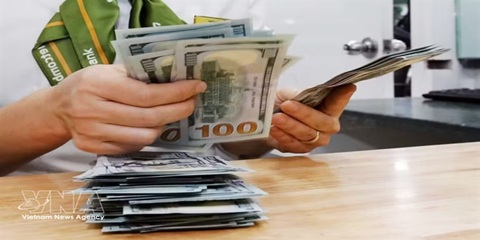
REMITTANCES TO HCM CITY RISE NEARLY 40% IN Q3
Remittances to HCM City reached more than US$2.83 billion in the third quarter of this year, up 39.5 per cent from the previous quarter and 3.6 per cent year-on-year. This was the first quarter showing positive annual growth this year, helping narrow the decline in remittance inflows over the first nine months. According to the State Bank of Vietnam (SBV)’s Regional Branch 2, remittances transferred to HCM City through credit institutions and economic organisations totalled $2.835 billion in Q3, an increase of more than $802 million from the previous quarter.
TECHNOLOGY
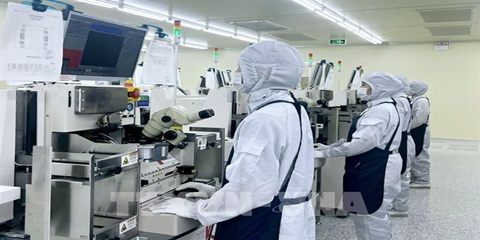
TECH SECTOR GROWTH OPENS UP OPPORTUNITIES FOR VIỆT NAM TO GO GLOBAL
The growth of the electronics, semiconductor and high-tech sectors worldwide is opening up a variety of opportunities for Vietnamese enterprises to integrate more deeply into the global supply chain. However, to become suppliers for these corporations, domestic enterprises must meet rigorous standards regarding quality, technology, productivity and order fulfilment capabilities.
VIETNAM ECONOMY INVESTMENT
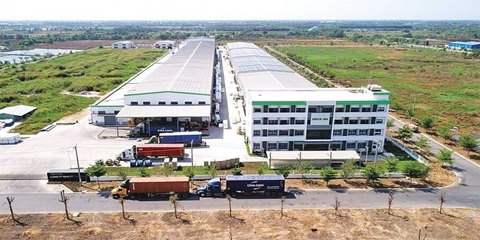
FOREIGN INVESTORS SEEKING A SYNCHRONISED MANUFACTURING ECOSYSTEM
Instead of focusing only on land costs and incentives as usual, foreign investors are seeking a synchronised manufacturing ecosystem, from stable power supply and logistics to shared infrastructure and the convenience of completing residence procedures for experts to serve their long-term investment in the country.
MEMBER CORNER / PROMOTIONS
SENTRYSAFE FHW40200 – PROTECT YOUR VALUABLES, ENJOY PEACE OF MIND!
Looking for a reliable solution to protect your important documents, cash, and valuables from fire and water damage? Genuine SENTRYSAFE - Reliable protection for your valuables and peace of mind! Contact Sen Wai Vietnam for more information and personalized product recommendations.
PROPERTY / INDUSTRIAL ZONE
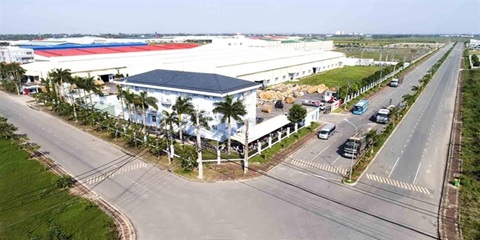
HCM CITY ATTRACTS US$5.7 BILLION INTO EXPORT PROCESSING AND INDUSTRIAL ZONES
HCM City attracted US$5.7 billion in domestic and foreign investment into its export processing and industrial zones during the first nine months of 2026. The figure exceeded the city's full-year target by 31 per cent, highlighting strong momentum in high-quality industrial investment under Resolution No.10-NQ/TW. Total investment reached 131 per cent of the 2026 target of $4.25 billion and represented a 29 per cent increase compared with the same period in 2025, according to the city's Export Processing and Industrial Zones Authority (HEPZA).
INFRASTRUCTURE / CONSTRUCTION / LOGISTIC / PORT
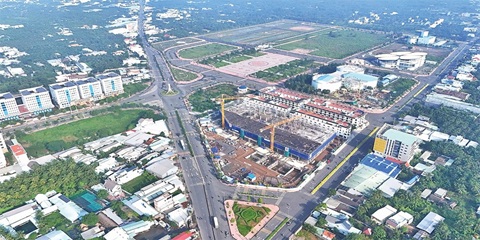
DONG THAP PROVINCE STEPS UP INDUSTRIAL EXPANSION AND INFRASTRUCTURE CONNECTIVITY
Accelerating public investment, strengthening inter-regional connectivity, and expanding industrial land are helping Dong Thap efficiently bolster competitiveness and drive economic growth. Following the 2025 merger of the former Dong Thap and Tien Giang provinces, the expanded Dong Thap province in the Mekong Delta faces mounting pressure to accelerate infrastructure development and strengthen connectivity among local economic zones, urban areas, industrial parks (IPs), and production centres.
Events Sponsors






















