Want to be in the loop?
subscribe to
our notification
Business News
DOMESTIC DEMAND DRIVES STEEL GROWTH AS CONSTRUCTION GATHERS PACE
Construction is expected to remain one of the key drivers of economic growth as major national infrastructure projects move ahead.

A steel rebar production line at a Hoa Phat Group plant. — Photo hoaphat.com.vn
HÀ NỘI — The steel industry recorded double-digit growth in both production and sales in the first seven months of 2026, while export remained more subdued, highlighting the increasing importance of domestic demand as public investment and construction activity expand.
According to the World Steel Association, Việt Nam produced around 15.2 million tonnes of crude steel in the first half of 2026, up 26.9 per cent year-on-year, keeping the country among the world's 10 largest steel producers.
The Vietnam Steel Association reported crude steel output of 17.9 million tonnes in the first seven months, up 28 per cent, significantly outpacing growth of about 12 per cent in manufacturing and processing and 11.4 per cent across the industrial sector.
Finished steel production reached approximately 21.4 million tonnes, rising 15.4 per cent, while sales increased 15.6 per cent to 21.2 million tonnes.
Construction steel and hot-rolled coil (HRC) were among the strongest segments. HRC sales surged 44.3 per cent, while construction steel remained the industry's largest segment at nearly nine million tonnes, up 19.6 per cent.
Total steel export volume declined slightly by 1.4 per cent during the period even as overall sales rose rapidly, indicating an increasing contribution from domestic consumption.
For the final months of the year, demand is expected to receive support from accelerating public investment and recovering construction activity.
Vietcombank Securities said construction was expected to remain one of the key drivers of economic growth as major national infrastructure projects move ahead.
As steel is a critical input for infrastructure construction, demand is expected to maintain positive medium-term growth.
The National Assembly has approved a medium-term public investment plan of over VNĐ8.2 quadrillion (US$315 billion) for 2026–2030, with around 43 per cent expected to be allocated to infrastructure, including ongoing and new projects.
Housing construction could provide another source of demand. The Government has adjusted its social housing development target through 2030 to nearly 1.1 million units, with implementation expected to accelerate from now through next year.
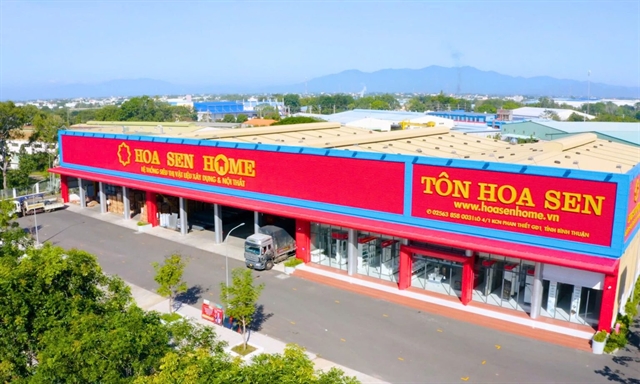
A warehouse of Hoa Sen Group. — Photo hoasengroup.vn
Steelmakers show divergent earnings
The industry's improving demand environment has been accompanied by significant differences in earnings among major listed steelmakers.
Hoa Phat Group recorded revenue of VNĐ108.9 trillion in the first half, up 47 per cent year-on-year, while net profit more than doubled to VNĐ15.5 trillion.
Crude steel production reached nearly seven million tonnes, up 36 per cent, while steel product sales increased 32 per cent to around 6.5 million tonnes. HRC sales climbed 57 per cent to nearly 3.4 million tonnes, supported by stronger domestic consumption and an increasing contribution from the Dung Quất 2 project.
Nam Kim Steel, meanwhile, recorded a strong profit recovery despite lower revenue.
First-half revenue declined 6.2 per cent to approximately VNĐ7.41 trillion, while net profit jumped 98 per cent to around VNĐ124 billion. Its profit before tax reached VNĐ188 billion, equivalent to 47 per cent of its annual target.
Hoa Sen Group also showed an improvement later in its financial year. During the first six months of its 2025–2026 fiscal year (from September 30, 2025, to March 31), revenue declined 7.1 per cent to VNĐ17.35 trillion and net profit fell 51.5 per cent to VNĐ181 billion, partly due to higher financial and interest expenses.
By the end of the first nine months, however, revenue had reached VNĐ27.35 trillion and net profit VNĐ568 billion, with profit already exceeding its full-year target.
VNSteel reported first-half net profit of approximately VNĐ433 billion, up 69 per cent.
Although second-quarter revenue declined 6 per cent, its gross margin improved to nearly 7 per cent from 4.6 per cent a year earlier. Its profit growth, however, received a significant contribution from joint ventures and associates.
Analysts recommended investors focus on steelmakers with large production capacity, strong domestic market positions, competitive production costs and direct exposure to growing domestic demand.
Raw material cost management, margins and cash flow also remain important considerations, as higher production volumes do not necessarily translate into corresponding profit growth when selling prices and input costs fluctuate adversely. — BIZHUB/VNS
Source: VNS
Related News

CHARITY / EXHIBITION / OTHER EVENTS
INVESTMENT OPPORTUNITIES IN CA MAU PROVINCE: 96 PROJECTS AND 20 STRATEGIC PROJECTS
We are pleased to share with you information on investment projects currently seeking investors in Ca Mau Province. Should your esteemed company or association be interested, we kindly invite you to review the project information and complete the registration form via the links provided. The Ho Chi Minh City Investment and Trade Promotion Centre (ITPC) will consolidate the expressions of interest and facilitate connections with the leadership of Ca Mau Province at a meeting tentatively scheduled for 13 November 2026 in Ho Chi Minh City.
MEMBER CORNER / PROMOTIONS
BẰNG KIỀU LIVESHOW - A SYMPHONY OF LOVE UNDER THE GOLDEN GLOW
A masterclass in live music that takes the audience on a soulful journey through immortal love songs, guided by the peerless artistry and emotive storytelling of renowned singer Bằng Kiều. The highlight of the night is his seamless musical chemistry with special guest Triệu Hồng Ngọc, promising passionate and deeply resonant duets inside the magnificent Grand Ballroom.
INFRASTRUCTURE / CONSTRUCTION / LOGISTIC / PORT
ĐÀ NẴNG GREEN-LIGHTS US$105 MILLION THAI DEVELOPMENT DEAL
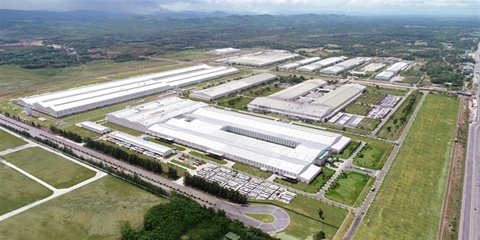
The central city has approved an investment proposal by Thailand’s WHA Group to develop infrastructure for the 400ha WHA Đà Nẵng Industrial Park project on two communes of Thăng Bình and Đồng Dương, with an investment of more than VNĐ2.7 trillion (US$105 million). The city said it approved WHA Industrial Development International's status as an investor in the project, which is expected to take place between 2027 and 2034.
VIETNAM ECONOMY INVESTMENT
MOBILE PHONE EXPORTS RISE 20% TO $51.8 BILLION IN FIRST NINE MONTHS
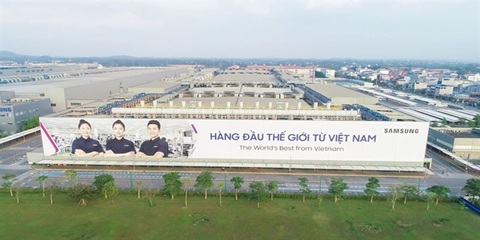
Exports of mobile phones and components rose 20 per cent year-on-year to nearly US$51.8 billion in the first nine months of 2026, with China, the US and Republic of Korea accounting for more than half of the total. Shipments to the three markets reached a combined $26.18 billion, or 50.6 per cent of total exports of the product group during the period, according to data from the Vietnam Department of Customs under the Ministry of Finance.
INFRASTRUCTURE / CONSTRUCTION / LOGISTIC / PORT
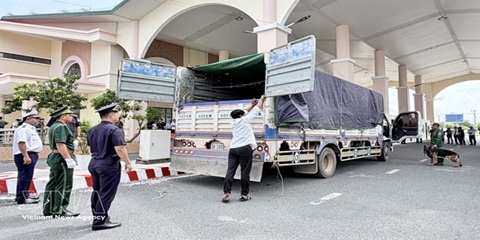
VIỆT NAM-CAMBODIA TRADE GATHERS PACE TOWARDS $20 BILLION TARGET
Trade between Việt Nam and Cambodia continues to grow, remaining a bright spot and a key pillar of bilateral cooperation as the two countries aim to raise two-way trade to US$20 billion in the coming years. After setting a record of more than $11.3 billion last year, bilateral trade reached about $8.7 billion in the first eight months of this year, up 8.3 per cent year on year.
VIETNAM ECONOMY INVESTMENT
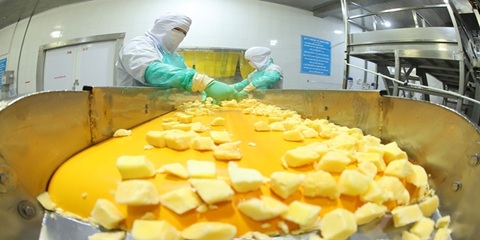
FRUIT AND VEGETABLE EXPORTS POISED TO HIT $10 BILLION IN 2026
Fruit and vegetable exports are on track to reach nearly US$10 billion in 2026, after rising 19.9 per cent year on year to nearly US$7.4 billion in the first nine months, driven by strong seasonal demand and abundant tropical fruit supplies. The Ministry of Agriculture and Environment said the growth reflected stronger international demand for fresh produce and processed agricultural products.
Events Sponsors






















