Want to be in the loop?
subscribe to
our notification
Business News
DN LEGAL: LEGAL UPDATE ON GUIDELINES TO THE LICENSING AUTHORITIES
This guideline is most relevant for those investors seeking to amend their licences and are caught between the old and new laws.
Official Correspondence 5122/BKDHT-PC was issued on 24 July 2015 and provides the following guidelines:
1. With respect to investment applications submitted before the new law came into effect
a. If these applications meet all the requirements of the old law, the licensing authority may issue the Investment Registration Certificate (IRC)(as the new investment licence to approve a project is now called) to the investor based on the 2014 Investment Law, provided that the investor agrees in writing that the licence is issued based on the new law. In this circumstance, the licensing authority does not need to require the investor to amend the application papers based on the 2014 Investment Law.
b. If the applications do not meet the requirements of the old law, the investors must amend the applications based on the new law.
2. With respect to investment applications for projects in sectors that do not require the Government to provide additional guidelines on investment policies
a. The investor must submit application papers as set out in Article 37.2(a) of the 2014 Investment Law.
b. The licensing authority must issue the IRC within 15 days from the date of receipt of the application if the following conditions are met:
- the application file is complete
- the scope of the project is not within sectors where investment is prohibited per Article 6 of the 2014 Investment Law
- if the investor is foreign, all the conditions in respect of market entry regarding foreign investment must be satisfied as set out in treaties to which VN has acceded (including bilateral investment treaties and WTO).
3. With respect to procedures to deal with requests to amend the Investment Licence (IL)/Investment Certificate (IC) (as approvals were called under the old law)
a. If the request is the amend the 'content of the business registration' of the company, the investor must apply to have a new Business Registration Certificate (BRC) issued in accordance with the new 2014 Enterprise Law.
The content of the IL/IC on business registration will no longer be valid from the day the BRC becomes valid. However, the content of the IL/IC in respect of the investment project remains valid.
It is unclear and confusing as to what is the difference between the content of business registration and scope of the investment project and what will remain valid and what will not.
What does the above mean?
NOTE:
Under the old Investment Law, a foreign investor needs only to obtain an IL/IC which is both the incorporation certificate approving the establishment of the project company as well as the approval of the project to be carried out by the project company.
Under the new 2014 Investment Law and new 2104 Enterprise/Company Law, a foreign investor (like a local investor) must now get two licences:
(i) a separate BRC (which is the incorporation certificate of the project company; and
(ii) an investment approval for the project to be carried out by the project company (IRC).
Thus, for existing companies that do not yet have BRCs, the idea is if they ask to amend the scope of business registration activities of the company, they will now be issued a BRC.
b. If the request is to amend the scope of the investment project, a new IRC will be issued to the investor to replace the project scope in the IC/IL. However, the content in the IC/IL on business registration remains valid. Again, it is unclear as to what this means as it seems the content on business registration is the same as the project scope.
c. It the request is to amend both business registration activities and project scope, the investor must apply first for a BRC and then apply for the IRC as set out in (a) and (b).
d. The investor can also apply to replace the IL/IC with the BRC and IRC, an application can also be made to apply for the BRC first and then the IRC after. These licences have to be issued within 3 business days.
It seems this is the best approach when any amendment is to be applied for to avoid confusion between the alidity of licences issued before the new law.
4. With respect to the establishment of branches, representative offices of companies
a. Foreign invested companies licensed in Vietnam may set up branches and representative offices.
b. There is no need to have a separate investment project.
5. With respect to amending to add new business activities for foreign invested companies
a. Foreign invested companies may do so without the need to have a new investment project.
b. They must meet all the conditions for market entry as discussed above.
6. Other matters
Assets contributed as capital (that are not VND, gold or foreign currency) must be valued in accordance with Article 37 of the new 2014 Investment Law, This is new. However, the licensing authorities are not allowed to require the investor to submit any other valuation papers that are not required by Article 37.
DN Legal, 6 August 2015 (www.daonguyenlegal.com)
Related News
MEMBER CORNER / PROMOTIONS
KNIC EXCLUSIVE GATHERING & NETWORKING 2026: A NEW MEETING POINT FOR INDUSTRIAL INVESTMENT IN HANOI
On October 2, 2026, KN Industrial City (KNIC) will host KNIC Exclusive Gathering & Networking 2026 at the National Innovation Center (NIC) in Hanoi. Building on a series of business networking and investment promotion activities in Ho Chi Minh City and Dong Nai, the event marks a new opportunity for KNIC to connect with businesses, investors, and partners in Northern Vietnam.
MEMBER CORNER / PROMOTIONS
KNIC ENGAGES WITH GOVERNMENT AND HIGH-TECH BUSINESS COMMUNITIES IN CHINA
From Beijing to Shandong, KN Holdings and KN Industrial City are continuing to expand their engagement with government authorities, trade promotion organizations, and high-tech business communities in China. In Beijing, the delegation met with the Center for International Economic and Technological Cooperation under the Ministry of Industry and Information Technology (MIIT), exchanging perspectives on industrial and technology cooperation between the two markets.

VIETNAM ECONOMY INVESTMENT
VIETNAM’S TRADE TOPS $825 BILLION BY MID-SEPTEMBER
Figures released on September 21 showed goods trade reached nearly $55 billion in the first 15 days of September alone, bringing cumulative turnover since the beginning of the year to more than $825 billion. The strong growth reflects robust trade flows, with demand for consumer goods and production inputs remaining high.

TECHNOLOGY
VIỆT NAM'S BUSINESSES MOVE TOWARDS AI AGENTS
Việt Nam’s AI landscape is entering a new phase as businesses move beyond generative AI (GenAI) tools designed to assist human users towards autonomous AI, agentic AI and AI agents that can take action with limited supervision, experts have said. The shift comes as Việt Nam seeks to accelerate science and technology, innovation and digital transformation under Politburo Resolution 57-NQ/TW, issued on December 22, 2024.
GARMENT / TEXTILE
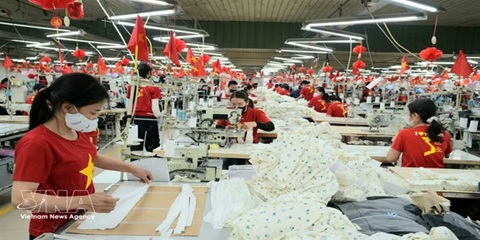
VIỆT NAM TARGETS $48 BILLION IN TEXTILE-GARMENT EXPORTS
Việt Nam’s textile and garment industry is facing both opportunities and challenges amid complex and unpredictable developments in the global market, prompting businesses to improve growth quality, optimise production costs and enhance adaptability in pursuit of an export turnover of about $48 billion this year. The target is considered an important milestone that requires concerted efforts from management agencies and the business community.
INFRASTRUCTURE / CONSTRUCTION / LOGISTIC / PORT
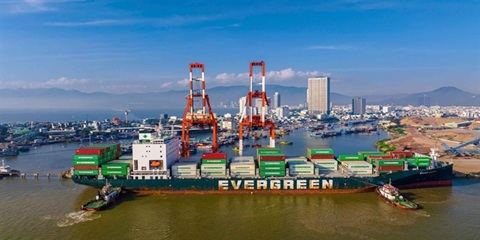
CUTTING LOGISTICS COSTS KEY TO BOOSTING EXPORTS
Reducing costs has become an increasingly urgent priority for import-export activities, particularly logistics costs, a conference in Hà Nội was told on Tuesday. According to Deputy General Director of the Ministry of Industry and Trade's Agency for Foreign Trade, Trần Thanh Hải, import-export activities has remained a bright spot for the economy in recent years, playing an important role and helping drive macroeconomic growth.
Events Sponsors






















