Want to be in the loop?
subscribe to
our notification
Business News
DIVERGENCE IN PROFIT FORECASTS LIKELY HEADING INTO 2024
Multiple securities reports have forecasted that the pre-tax profit of the entire banking industry will experience a deceleration and subsequently exhibit a significant divergence over the next year, but bank stocks are still highly sought after.
In its report released last week on the banking industry, Vietcombank Securities (VCBS) projected that the pre-tax profit of the industry will witness a growth of approximately 10 per cent in 2023. However, this growth rate is notably lower than the average growth rate of nearly 35 per cent observed in the previous year.
VCBS specifically highlights the likelihood of a divergence in profit prospects among different banking groups, which is expected to become more pronounced in 2024.
“Some smaller banks may experience decelerated growth or even negative growth in 2024 if there is a deterioration in the real estate market and the global macroeconomic situation. This would result in a slowdown in credit growth and make it difficult for customers to repay their debts, especially when circulars and policies that provide support expire,” the report said.
Similarly, Ho Chi Minh City Securities Corporation (HSC) estimates that the average profit of the research group will only see an increase of 12-15 per cent in 2023. Particularly in the latter half of the year, HSC expects profits to rise by over 20 per cent compared to the same period.
VCBS pointed out that one of the main reasons for this deceleration in profit stems from the ongoing efforts of banks to resolve bad debts and recover capital, given the challenges faced due to the stagnant real estate market which serves as the primary collateral for most loans, hence significantly impacts the industry’s credit quality.
Nevertheless, the on-balance-sheet bad debt ratio and provisioning level are not anticipated to experience a significant increase in 2023, thanks to the government’s decree on supporting the extension of corporate bonds, and a circular allowing loan restructuring.
Addressing credit quality, Pham Nhu Anh, general director of Military Bank, predicts ongoing challenges and uncertainties for the real estate market over the next year or so. Factors such as incomplete construction, delayed product handovers, and legal procedure complications contribute to these difficulties. Additionally, dwindling confidence among homebuyers directly affects loan demand and the ability to comply with payment commitments.
“These challenges will directly impact the stability of the real estate market and negatively affect related industries such as iron and steel, building materials, and construction, consequently reducing banks’ credit quality,” Anh noted.
The first bank to announce a profit decline after six months was LienVietPostBank. By June 30, it completed 41 per cent of the yearly plan but marked a decline of 31.8 per cent compared to the same period the previous year. Despite a slight increase compared to the end of 2022, the bad debt ratio remained within a safe range.
Although Vietcombank has yet to release its financial statements, general director Nguyen Thanh Tung disclosed that capital mobilisation and credit growth in the first six months of the year increased by 6.6 and 2.6 per cent, respectively, compared to the same period last year.
Up to now, investors have approached banking stocks with caution, particularly concerning the bond market, real estate, and bad debt pressures. However, as these issues are gradually resolved, bank stocks are becoming more attractive at their current valuations.
HSC in its report demonstrated that the valuation of bank stocks is currently at its lowest level in the past five years. Moreover, the internal health of banks has significantly improved, and the banking industry has benefited the most from the long-term economic growth narrative.
As a result, the expectation of excellent business performance is anticipated to dispel some of the investors’ pessimism surrounding banking stocks, particularly for banks with strong resilience.
HSC also added several bank codes to the recommended list for the year’s second half, including HDB, MBB, and TCB. According to HSC experts, these stocks still offer attractive valuations, provided that the overall risk factors are mitigated.
VCBS believed that banks maintaining a healthy credit balance amid the prevailing economic challenges present low-risk investment opportunities, which are expected to yield acceptable profits in the second half of 2023.
“We assess the investment outlook for banking stocks to be in line with the market, as industry-wide price-to-book valuations currently stand approximately 20 per cent below the five-year average. Banks with good asset quality and exceptional growth rates among others in the industry are considered suitable options for long-term investment,” VCBS recommended.
Source: VIR
Related News

BANKING / FINANCE / INSURANCE / TAX
REMITTANCES TO HCM CITY RISE NEARLY 40% IN Q3
Remittances to HCM City reached more than US$2.83 billion in the third quarter of this year, up 39.5 per cent from the previous quarter and 3.6 per cent year-on-year. This was the first quarter showing positive annual growth this year, helping narrow the decline in remittance inflows over the first nine months. According to the State Bank of Vietnam (SBV)’s Regional Branch 2, remittances transferred to HCM City through credit institutions and economic organisations totalled $2.835 billion in Q3, an increase of more than $802 million from the previous quarter.

TECHNOLOGY
TECH SECTOR GROWTH OPENS UP OPPORTUNITIES FOR VIỆT NAM TO GO GLOBAL
The growth of the electronics, semiconductor and high-tech sectors worldwide is opening up a variety of opportunities for Vietnamese enterprises to integrate more deeply into the global supply chain. However, to become suppliers for these corporations, domestic enterprises must meet rigorous standards regarding quality, technology, productivity and order fulfilment capabilities.

VIETNAM ECONOMY INVESTMENT
FOREIGN INVESTORS SEEKING A SYNCHRONISED MANUFACTURING ECOSYSTEM
Instead of focusing only on land costs and incentives as usual, foreign investors are seeking a synchronised manufacturing ecosystem, from stable power supply and logistics to shared infrastructure and the convenience of completing residence procedures for experts to serve their long-term investment in the country.

MEMBER CORNER / PROMOTIONS
SENTRYSAFE FHW40200 – PROTECT YOUR VALUABLES, ENJOY PEACE OF MIND!
Looking for a reliable solution to protect your important documents, cash, and valuables from fire and water damage? Genuine SENTRYSAFE - Reliable protection for your valuables and peace of mind! Contact Sen Wai Vietnam for more information and personalized product recommendations.
PROPERTY / INDUSTRIAL ZONE
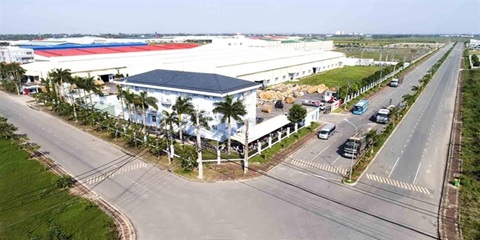
HCM CITY ATTRACTS US$5.7 BILLION INTO EXPORT PROCESSING AND INDUSTRIAL ZONES
HCM City attracted US$5.7 billion in domestic and foreign investment into its export processing and industrial zones during the first nine months of 2026. The figure exceeded the city's full-year target by 31 per cent, highlighting strong momentum in high-quality industrial investment under Resolution No.10-NQ/TW. Total investment reached 131 per cent of the 2026 target of $4.25 billion and represented a 29 per cent increase compared with the same period in 2025, according to the city's Export Processing and Industrial Zones Authority (HEPZA).
INFRASTRUCTURE / CONSTRUCTION / LOGISTIC / PORT
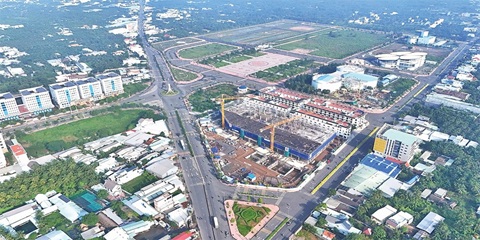
DONG THAP PROVINCE STEPS UP INDUSTRIAL EXPANSION AND INFRASTRUCTURE CONNECTIVITY
Accelerating public investment, strengthening inter-regional connectivity, and expanding industrial land are helping Dong Thap efficiently bolster competitiveness and drive economic growth. Following the 2025 merger of the former Dong Thap and Tien Giang provinces, the expanded Dong Thap province in the Mekong Delta faces mounting pressure to accelerate infrastructure development and strengthen connectivity among local economic zones, urban areas, industrial parks (IPs), and production centres.
Events Sponsors






















