Want to be in the loop?
subscribe to
our notification
Business News
DIGITAL TRANSFORMATION IN LOGISTICS – A KEY TO UNLOCKING SUSTAINABLE E-COMMERCE AND ECONOMIC DEVELOPMENT
Accelerating digital transformation in logistics is critical in order to promote the sustainable development of e-commerce, a conference on applying technology held by the Ministry of Industry and Trade heard on Thursday, as well as accelerating overall economic growth.
Trần Thanh Hải, Deputy Director of the Import and Export Department under the Ministry of Industry and Trade, said the pace of international integration of the Vietnamese economy into the regional and global economies, powered by the participation in free trade agreements (FTAs), meant companies needed to keep pace to make the most of significant opportunities across global logistics chains.
He stressed that logistics played a crucial role in accelerating economic development through the entire process from production, through to distribution and consumption to generate added value.
Đinh Thanh Sơn, deputy director general of Viettel Post, quoting the Logistics Performance Index (LPI) of Việt Nam, said the sector had shown improvement, up to 3.3 points in 2023 from 3.27 points in 2018, ranking the country 43 out of 154 countries and fifth among ASEAN countries. Logistics revenue was estimated at around $42 billion, increasing 14-16 per cent per year on average.
Logistics also plays a key role in fuelling the boom in e-commerce in Việt Nam, Sơn stressed.
Việt Nam currently has the highest rate of online shoppers in Southeast Asia, estimated at around 43.9 million, which meant logistical systems had to increase digital transformation to meet the demand.
According to Việt Nam Logistics Business Association, Việt Nam’s e-commerce industry is forecast to expand at 20-25 per cent per year.
The logistics industry in Việt Nam currently accounts for 20-25 per cent of the country’s GDP and is forecast to register an annual growth rate of 12 per cent over the next few years.
The association said that applying technology in logistics will help reduce delivery costs by 14 per cent and increase the parcel volume in each vehicle by 13 per cent.
Technology would also allow logistic providers to optimise efficiency through smart delivery routes and ensure a higher delivery success rate, again reducing costs.
However, attention should be paid to ensuring information and payment security, as well as operating reserve logistics in e-commerce, which is the process of managing returned goods.
The association said that to promote the development of logistics industry, the cooperation between the State management agencies and enterprises needed to be enhanced and there needed to be modernisation of the logistics infrastructure system and network planning.
Under the national digital transformation programme to 2025 with a vision to 2030, logistics is one among eight industries which be prioritised in terms of digital improvements.
Not only will this mean better logistics services quality, but digital transformation will also help improve customers’ experience, reduce carbon emissions and limit waste.
Report on 2023 import-export announced
HÀ NỘI – Within the agenda of the conference, the Ministry of Industry announced the eighth Việt Nam Import-Export Report which provides a comprehensive picture of Việt Nam’s trade in 2023.
The report pointed out that 2023 was a difficult year for the Vietnamese economy which was significantly affected by external factors, including the global economic slowdown.
Việt Nam’s export revenue dropped 4.6 per cent in 2023 to US$354.7 billion and imports by 9.2 per cent to $326.4 billion, following from raw material supply difficulties and falling demand.
Trade with major markets decreased, with Asia by 6.9 per cent to $436.2 billion, Europe by 5.1 per cent to $72.3 billion, America by 10.8 per cent to $137.2 billion and Oceania by 11.5 per cent to $15.1 billion.
Only trade with Africa saw a rise of 5.9 per cent to $5.8 billion.
Ten provinces and cities with the highest export value included HCM City with $42.46 billion, Bắc Ninh $39.3 billion, Bình Dương $30.6 billion, Hải Phòng $26.7 billion, Thái Nguyên $25.68 billion, Bắc Giang $24.5 billion, Đồng Nai $21.6 billion, Hà Nội $16.65 billion, Phú Thọ $10.57 billion and Vĩnh Phúc $9.97 billion.
Five localities saw the highest increase rates in export value including Lạng Sơn up 107 per cent, Hà Giang 65.8 per cent, Hà Tĩnh 49.7 per cent, Cao Bằng 42.7 per cent and Hà Nam 35.8 per cent.
The annual report, is a comprehensive import and export update for 2023, a forecast for 2024 together with helpful information about import – export markets, updates about legal documents and green trade trends.
Nguyễn Cẩm Trang, Deputy Director of the Import-Export Department said that the ministry will continue to focus on removing difficulties for production and business as well as creating favourable conditions for enterprises to take opportunities arising from free trade agreements to expand exports.
Source: VNS
Related News

MEMBER CORNER / PROMOTIONS
AN ELECTRIFYING NIGHT WITH THE "QUEEN OF DANCE" THU MINH AT THE GRAND HO TRAM!
The stage at The Grand Ballroom is set to catch fire as Vietnam’s undisputed "Queen of Dance," Thu Minh, takes the spotlight. Renowned for her powerhouse vocals, magnetic stage presence, and sultry, high-energy performances, Thu Minh promises an evening of pure musical euphoria. The energy escalates with an exclusive appearance by special guest and The Voice champion, Vu Thao My.

HR / LABOUR/ EMPLOYMENT
HIGH-QUALITY HUMAN RESOURCES NEEDED TO ATTRACT NEW TECH INVESTMENT CAPITAL
Besides infrastructure, Việt Nam must also rapidly develop a highly skilled workforce to attract investment in AI, semiconductors and advanced manufacturing, experts have said. Don Lam, CEO and co-founder of investment management company VinaCapital, said that global technology investors were increasingly looking at the readiness of the entire ecosystem, with high-quality human resources a decisive factor.

HR / LABOUR/ EMPLOYMENT
HIRING OUTLOOK STRENGTHENS IN Q4 AS SKILLS SHORTAGES PERSIST
Hiring intentions among employers in Việt Nam strengthened in the fourth quarter, with 52 per cent of surveyed companies planning to increase headcount between October and December, according to a ManpowerGroup survey released this week. Việt Nam's hiring outlook was stronger than the Asia Pacific and Middle East (APME) regional average of 33 per cent and the global average of 29 per cent, ranking third in the region and 11th globally among 42 markets surveyed.

BANKING / FINANCE / INSURANCE / TAX
LARGE BANKS FORECAST TO GAIN HIGHER PROFITABILITY IN H2 2026
The return on average assets (ROAA) of the banking sector will likely remain stable at around 1.5 per cent in the second half of 2026, but profitability divergence among banks will increase, with large banks outperforming peers on stronger margins and diversified earnings, analysts forecast. In a recent report on the banking sector, analysts from the Vietnam Investors Service Rating said the sector’s ROAA rose by 10 basis points quarter-on-quarter to 1.51 per cent in the first half of this year, driven by net interest margin (NIM) improvements at some State-owned banks and large private banks.
GARMENT / TEXTILE
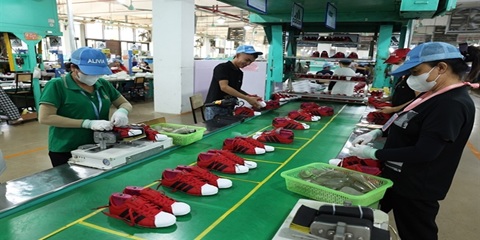
VIỆT NAM'S FOOTWEAR, BAG EXPORTS TO US TOP $8 BILLION IN EIGHT MONTHS
Việt Nam's exports of footwear and handbags to the US exceeded US$8 billion in the first eight months of 2026, as the US and EU remained the country's biggest markets despite sluggish growth in footwear shipments. Exports from Việt Nam's leather and footwear sector reached more than $2.45 billion in August, down 9 per cent from July but up 3 per cent from a year earlier, according to preliminary statistics.
VIETNAM ECONOMY INVESTMENT
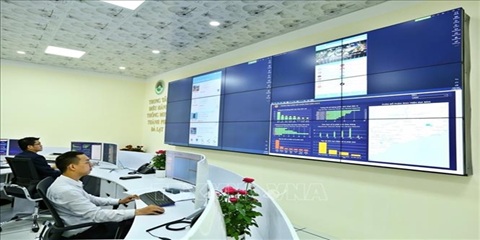
LÂM ĐỒNG TARGETS DIGITAL ECONOMY TO ACCOUNT FOR 30 PER CENT OF GRDP BY 2030
Lâm Đồng Province aims to raise the digital economy’s contribution to around 30 per cent of its gross regional domestic product (GRDP) by 2030, as part of a five-year plan to develop digital economy and society issued recently. Under Plan No. 15358/KH-UBND, the province targets more than 60 per cent of small- and medium-sized enterprises (SMEs) to adopt digital technologies by 2030 while increasing the value of cashless payments to 30 times its GRDP.
Events Sponsors






















