Want to be in the loop?
subscribe to
our notification
Business News
DIGITAL FINANCIAL SERVICES ON UPWARD TREND IN VIETNAM
Vietnam continues to see an upward trend in digital financial service adoption as digital payments gain traction.
Vietnam's digital economy is estimated to reach $30 billion in 2023 in gross merchandise value, up 19 per cent from $20 billion in 2022.
The digital economy is also on track to reach approximately $45 billion by 2025, fuelled by strong expectations of economic growth, according to the e-Conomy SEA report released at the start of November by Google, Temasek and Bain & Company.
One of the main drivers of digital economy growth is the rapid adoption of digital financial services among consumers. It is clear that the irreversible offline-to-online behaviour shift continues to fuel growth in digital financial services adoption.
The report highlights a steep growth in Vietnam's digital financial services on top of a low base. Digital payments are estimated to reach of $126 billion in 2023 in gross transaction value (GTV), up 19 per cent from $105 billion in 2022. By 2030, digital payments in Vietnam is predicted to reach $190 billion in GTV.
Cashless payments continue to flourish in Vietnam for reasons. In particular, digital payment continues to grow in the country, driven by strong support from the government, investment from commercial banks, and the widespread popularity of QR codes. This trend is expected to accelerate as the state bank promotes cashless payment services in rural and remote areas
Digital lending is another driver for digital economy growth due to high lending rates and consumer demand, as underbanked consumers and small businesses participate in the digital economy. The Vietnamese government also pushes for digital innovation in the lending space, such as Vietnam’s fintech sandboxes.
According to the report, Vietnam saw a significant rise of 31 per cent in digital lending, from $3 billion in 2022 to $4 billion in 2023. The figure is expected to double to $10 billion by 2025. Meanwhile, the digital wealth market will grow from $100 million in 2023 to about $300 million in 2025.
The usage of digital financial service apps maintains its growth trajectory. For instance, Cake by VPBank is the first digital bank to reach 4 million customers and handle VND81 trillion ($3.29 billion) in transactions. Among its 4 million existing consumers, the 25-40 age bracket accounts for the majority of Cake's market share and sales.
As of October 2023, the digital bank has mobilised VND5 trillion ($203.5 million) in online savings deposits, significantly higher than the figure of VND2 trillion ($81.4 million) at the beginning of the year. Cake is the first bank among Vietnamese digital banks to achieve this level of deposit mobilisation.
Thanks to figures like these, Cake by VPBank was named Best Digital Bank Vietnam 2023 at the Global Banking and Finance Review Awards earlier in the year.
Cake CEO Nguyen Huu Quang said, "Cake hopes to bring a financial freedom experience, help free customers from traditional models of personal finance, and take control of their lives independently. Cake's ambition is to eliminate all barriers, so everyone can enjoy comprehensive digital financial services in the most comfortable and secure way."
According to the report, the Southeast Asian region’s digital economy is set to hit $100 billion in revenue – an eight-time revenue increase for digital businesses in the last eight years. In fact, revenue is growing 1.7 times as fast as gross merchandise value, which is set to reach $218 billion this year.
Consumers are adopting digital financial services at a rapid pace in the region. Cash is no longer king, as digital payments now make up more than half of the region’s transactions. Meanwhile, digital lending is the biggest driver of the $30 billion digital financial service revenue in Southeast Asia.
Source: VIR
Related News

BANKING / FINANCE / INSURANCE / TAX
REMITTANCES TO HCM CITY RISE NEARLY 40% IN Q3
Remittances to HCM City reached more than US$2.83 billion in the third quarter of this year, up 39.5 per cent from the previous quarter and 3.6 per cent year-on-year. This was the first quarter showing positive annual growth this year, helping narrow the decline in remittance inflows over the first nine months. According to the State Bank of Vietnam (SBV)’s Regional Branch 2, remittances transferred to HCM City through credit institutions and economic organisations totalled $2.835 billion in Q3, an increase of more than $802 million from the previous quarter.

TECHNOLOGY
TECH SECTOR GROWTH OPENS UP OPPORTUNITIES FOR VIỆT NAM TO GO GLOBAL
The growth of the electronics, semiconductor and high-tech sectors worldwide is opening up a variety of opportunities for Vietnamese enterprises to integrate more deeply into the global supply chain. However, to become suppliers for these corporations, domestic enterprises must meet rigorous standards regarding quality, technology, productivity and order fulfilment capabilities.
VIETNAM ECONOMY INVESTMENT
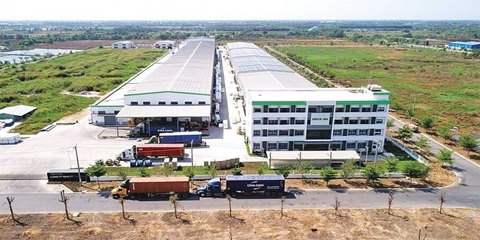
FOREIGN INVESTORS SEEKING A SYNCHRONISED MANUFACTURING ECOSYSTEM
Instead of focusing only on land costs and incentives as usual, foreign investors are seeking a synchronised manufacturing ecosystem, from stable power supply and logistics to shared infrastructure and the convenience of completing residence procedures for experts to serve their long-term investment in the country.

MEMBER CORNER / PROMOTIONS
SENTRYSAFE FHW40200 – PROTECT YOUR VALUABLES, ENJOY PEACE OF MIND!
Looking for a reliable solution to protect your important documents, cash, and valuables from fire and water damage? Genuine SENTRYSAFE - Reliable protection for your valuables and peace of mind! Contact Sen Wai Vietnam for more information and personalized product recommendations.
PROPERTY / INDUSTRIAL ZONE
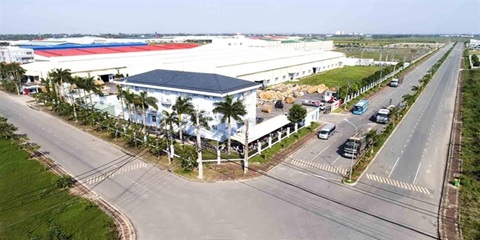
HCM CITY ATTRACTS US$5.7 BILLION INTO EXPORT PROCESSING AND INDUSTRIAL ZONES
HCM City attracted US$5.7 billion in domestic and foreign investment into its export processing and industrial zones during the first nine months of 2026. The figure exceeded the city's full-year target by 31 per cent, highlighting strong momentum in high-quality industrial investment under Resolution No.10-NQ/TW. Total investment reached 131 per cent of the 2026 target of $4.25 billion and represented a 29 per cent increase compared with the same period in 2025, according to the city's Export Processing and Industrial Zones Authority (HEPZA).
INFRASTRUCTURE / CONSTRUCTION / LOGISTIC / PORT
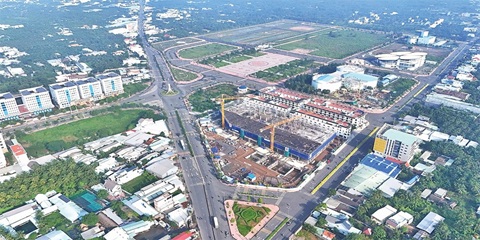
DONG THAP PROVINCE STEPS UP INDUSTRIAL EXPANSION AND INFRASTRUCTURE CONNECTIVITY
Accelerating public investment, strengthening inter-regional connectivity, and expanding industrial land are helping Dong Thap efficiently bolster competitiveness and drive economic growth. Following the 2025 merger of the former Dong Thap and Tien Giang provinces, the expanded Dong Thap province in the Mekong Delta faces mounting pressure to accelerate infrastructure development and strengthen connectivity among local economic zones, urban areas, industrial parks (IPs), and production centres.
Events Sponsors






















