Want to be in the loop?
subscribe to
our notification
Business News
DIGITAL ERA UNLOCKS VIETNAMESE LOGISTICS
The adoption of digital transformation presents an opportunity for Vietnam’s logistics sector to make significant gains in productivity and efficiency, but also highlights the urgent need for cybersecurity throughout the process.
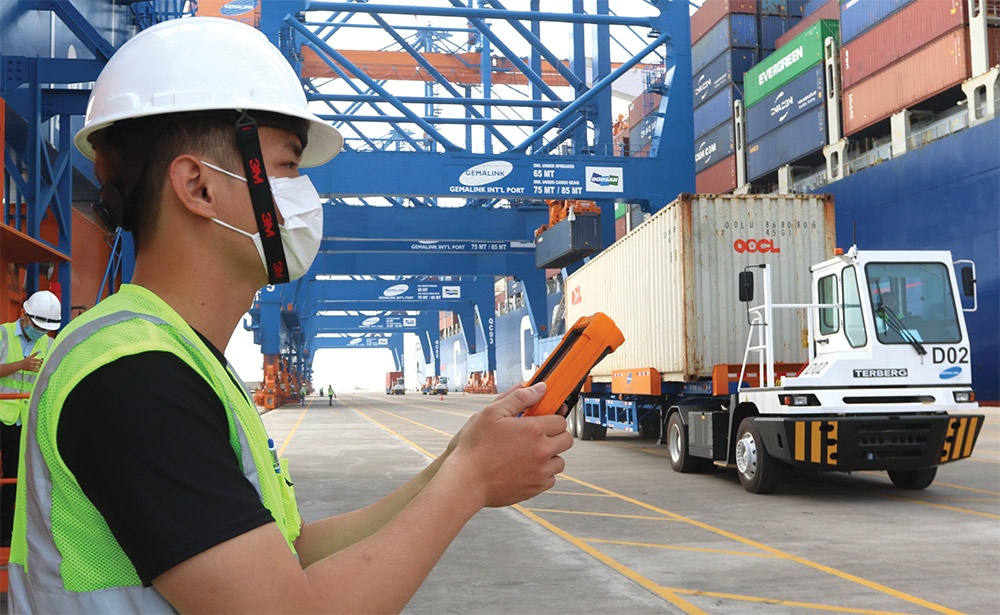
Logistics companies are becoming cyberattack targets and must be careful when using new platforms, photo Le Toan
Vietnam’s logistics industry is estimated to be valued at $40-52 billion and is experiencing strong growth. However, the sector faces a series of challenges, including fragmented data, lack of transparency, and disjointed management systems, all leading to low operational efficiency and difficulties in ensuring service quality.
According to Nguyen Tuan Huy, head of Digital Transformation at MobiFone Telecommunications Corporation, the company struggles to track down the exact location of goods during domestic transport, while international logistics firms have long offered real-time tracking capabilities, Huy shared at a seminar on digital transformation and cybersecurity in logistics in Ho Chi Minh City on June 13.
According to Huy, the solution lies in a comprehensive push towards digital transformation. By applying technologies such as AI, robotics, and especially 5G networks, businesses can monitor the entire supply chain 24/7, optimise warehousing, manage inventory, and significantly reduce the loss of goods.
“Attaching 5G-enabled sensors to goods enables real-time tracking, helping reduce lost items by up to 90 per cent and save over 15 per cent in transportation costs,” Huy said.
Cao Cam Linh, executive committee member of the Vietnam Logistics Business Association, said that beyond operational gains, digital transformation is also key for businesses to adapt to the rising trend of green logistics, a pressing requirement from major markets such as Europe, the US, and Japan.
“We haven’t even had an opportunity to grow up before being asked to go greener, from packaging, warehouse operations, and transportation to carbon standards and traceability. All of this requires digitalisation,” she said.
Nonetheless, Linh believes that pressure from policies, investors, and global consumers is pushing Vietnamese logistics businesses to rapidly evolve.
“Digital transformation helps reduce CO2 emissions in logistics and also lays the groundwork for a circular, eco-friendly operating ecosystem that earns the trust of international partners,” Linh cited.
Ho Trong Dat, deputy director of the Information Security Centre at the Vietnam Posts and Telecommunications Group (VNPT), warned that alongside the benefits of digital transformation, the logistics industry is facing increasing risks in cybersecurity.
“As connectivity infrastructure grows rapidly, logistics businesses are becoming frequent targets of cyberattacks, particularly as many now rely on virtual servers, outsourcing, and cloud-based platforms,” Dat said.
Citing real-world examples, Dat took examples of some cyberattacks take only two hours, from the moment hackers exploit passwords leaked years ago to the successful deployment of malware.
“With such attack speed, he argued that system protection cannot rely solely on human vigilance but requires automated monitoring, early warning, and incident response systems,” he added.
Dat emphasised that data security is not merely a technical issue, but also deeply tied to human factors. Raising awareness about information safety among all personnel across the logistics chain is essential to maintaining system stability.
Citing a simulation programme that VNPT implemented at a company over four years, Dat reported that the rate of employees falling for phishing emails dropped from 15 to 2 per cent, demonstrating the effectiveness of cybersecurity awareness training.
“Digital transformation must be accompanied by IT systems, and for IT systems to remain stable, they must be secured. Without information security, a system can be paralysed in just one minute,” he added.
According to the Vietnam Internet Association, logistics has long been a key sector and a critical soft infrastructure for trade and economic development. By the end of this year, Vietnam’s logistics sector expects to reach a market size of over $50 billion, with an annual growth rate of 6.7 per cent, contributing approximately 5.17 per cent to national GDP.
Source: VIR
Related News

BANKING / FINANCE / INSURANCE / TAX
REMITTANCES TO HCM CITY RISE NEARLY 40% IN Q3
Remittances to HCM City reached more than US$2.83 billion in the third quarter of this year, up 39.5 per cent from the previous quarter and 3.6 per cent year-on-year. This was the first quarter showing positive annual growth this year, helping narrow the decline in remittance inflows over the first nine months. According to the State Bank of Vietnam (SBV)’s Regional Branch 2, remittances transferred to HCM City through credit institutions and economic organisations totalled $2.835 billion in Q3, an increase of more than $802 million from the previous quarter.

TECHNOLOGY
TECH SECTOR GROWTH OPENS UP OPPORTUNITIES FOR VIỆT NAM TO GO GLOBAL
The growth of the electronics, semiconductor and high-tech sectors worldwide is opening up a variety of opportunities for Vietnamese enterprises to integrate more deeply into the global supply chain. However, to become suppliers for these corporations, domestic enterprises must meet rigorous standards regarding quality, technology, productivity and order fulfilment capabilities.

VIETNAM ECONOMY INVESTMENT
FOREIGN INVESTORS SEEKING A SYNCHRONISED MANUFACTURING ECOSYSTEM
Instead of focusing only on land costs and incentives as usual, foreign investors are seeking a synchronised manufacturing ecosystem, from stable power supply and logistics to shared infrastructure and the convenience of completing residence procedures for experts to serve their long-term investment in the country.

MEMBER CORNER / PROMOTIONS
SENTRYSAFE FHW40200 – PROTECT YOUR VALUABLES, ENJOY PEACE OF MIND!
Looking for a reliable solution to protect your important documents, cash, and valuables from fire and water damage? Genuine SENTRYSAFE - Reliable protection for your valuables and peace of mind! Contact Sen Wai Vietnam for more information and personalized product recommendations.

PROPERTY / INDUSTRIAL ZONE
HCM CITY ATTRACTS US$5.7 BILLION INTO EXPORT PROCESSING AND INDUSTRIAL ZONES
HCM City attracted US$5.7 billion in domestic and foreign investment into its export processing and industrial zones during the first nine months of 2026. The figure exceeded the city's full-year target by 31 per cent, highlighting strong momentum in high-quality industrial investment under Resolution No.10-NQ/TW. Total investment reached 131 per cent of the 2026 target of $4.25 billion and represented a 29 per cent increase compared with the same period in 2025, according to the city's Export Processing and Industrial Zones Authority (HEPZA).

INFRASTRUCTURE / CONSTRUCTION / LOGISTIC / PORT
DONG THAP PROVINCE STEPS UP INDUSTRIAL EXPANSION AND INFRASTRUCTURE CONNECTIVITY
Accelerating public investment, strengthening inter-regional connectivity, and expanding industrial land are helping Dong Thap efficiently bolster competitiveness and drive economic growth. Following the 2025 merger of the former Dong Thap and Tien Giang provinces, the expanded Dong Thap province in the Mekong Delta faces mounting pressure to accelerate infrastructure development and strengthen connectivity among local economic zones, urban areas, industrial parks (IPs), and production centres.
Events Sponsors






















