Want to be in the loop?
subscribe to
our notification
Business News
DEVELOPMENT OF LOGISTICS COMPETITIVE INDEX AIMS TO DEVELOP LOGISTICS INDUSTRY
The launch of the Vietnam Provincial Logistics Competitiveness Index (LCI) is expected to help reduce logistics costs, support production and export development, and attract foreign investment more effectively in the future, said Lê Duy Hiệp, the Việt Nam Logistics Business Association (VLA) chairman.
According to the VLA, the LCI Index is an index that evaluates the development speed, quality, infrastructure, and policies of municipal and provincial authorities for logistics service businesses in Việt Nam.
Trần Phương Trà, director of the Economic Policy Network at AVSE Global, said that provinces and cities lack systems in logistics infrastructure to link among localities effectively.
Meanwhile, logistics is a very important factor to help agricultural, industrial and service value chains in Việt Nam develop.
In addition, according to this expert, in the planning of provinces and cities, the role of the logistics industry has not been highlighted enough as a factor connecting and supporting economic sectors, and ensuring the transport of goods.
The reason for this is probably at the organisation stage. This is one sector that needs close coordination among production sectors, such as agriculture and industry, with infrastructure, transport and construction sectors, Trà said.
In addition, provinces and cities in Việt Nam are always up to date on the trends of international logistics, such as Closed Loop Supply Chain and circular economy.
At the kick-off ceremony of the Vietnam Provincial Logistics Competitiveness Index (LCI) Project 2022 on August 11, she emphasised that logistics is the "heart" connecting all stages in the value chain, from production, transportation and storage to the supplier and the end user. Without logistics, the value chain will operate ineffectively.
For example, organising logistics activities at the municipal or provincial level needs to pay attention to strategy and orientation. That means having specific activities and goals to connect related industries. This also requires local management agencies to organise effectively the logistics stages.
“Therefore, the implementation of the LCI project is very useful. This will encourage localities to set up logistics development strategies well,” Trà was quoted by the Vietnam Economic Times as saying.
The LCI Index will be used to evaluate policies with local authorities to improve and develop the logistics service industry.
This index is implemented by VLA in collaboration with Việt Nam Chamber of Commerce and Industry (VCCI)'s and research units, Dream Incubator (DI) and the Việt Nam Logistics Research and Development Institute (VLI).
The statistics and assessments in the index will be important for domestic and foreign businesses in choosing locations and expanding business.
For the provincial LCI Index, experts said that the important factors of this index include organisation, infrastructure, technology in logistics and supply chain management. They are also macroeconomic conditions, skills, product market, labour market, financial system, market scale, dynamism in the business environment, and innovation.
The competitiveness index of Việt Nam’s logistics ranks 77th in the world. If each locality has good logistics activities, it will certainly raise Việt Nam's logistics competitiveness rank in the future.
Regarding the logistics infrastructure in localities, experts said that they need to improve roads, the efficiency of ships, ports and air services, and even power supply systems for logistics.
One more important factor in the provincial LCI is the human factor. The localities have a lack of skilled human resources that can meet the requirements of connecting parts in a value chain.
Source: VNS
Related News

MEMBER CORNER / PROMOTIONS
AN ELECTRIFYING NIGHT WITH THE "QUEEN OF DANCE" THU MINH AT THE GRAND HO TRAM!
The stage at The Grand Ballroom is set to catch fire as Vietnam’s undisputed "Queen of Dance," Thu Minh, takes the spotlight. Renowned for her powerhouse vocals, magnetic stage presence, and sultry, high-energy performances, Thu Minh promises an evening of pure musical euphoria. The energy escalates with an exclusive appearance by special guest and The Voice champion, Vu Thao My.

HR / LABOUR/ EMPLOYMENT
HIGH-QUALITY HUMAN RESOURCES NEEDED TO ATTRACT NEW TECH INVESTMENT CAPITAL
Besides infrastructure, Việt Nam must also rapidly develop a highly skilled workforce to attract investment in AI, semiconductors and advanced manufacturing, experts have said. Don Lam, CEO and co-founder of investment management company VinaCapital, said that global technology investors were increasingly looking at the readiness of the entire ecosystem, with high-quality human resources a decisive factor.

HR / LABOUR/ EMPLOYMENT
HIRING OUTLOOK STRENGTHENS IN Q4 AS SKILLS SHORTAGES PERSIST
Hiring intentions among employers in Việt Nam strengthened in the fourth quarter, with 52 per cent of surveyed companies planning to increase headcount between October and December, according to a ManpowerGroup survey released this week. Việt Nam's hiring outlook was stronger than the Asia Pacific and Middle East (APME) regional average of 33 per cent and the global average of 29 per cent, ranking third in the region and 11th globally among 42 markets surveyed.

BANKING / FINANCE / INSURANCE / TAX
LARGE BANKS FORECAST TO GAIN HIGHER PROFITABILITY IN H2 2026
The return on average assets (ROAA) of the banking sector will likely remain stable at around 1.5 per cent in the second half of 2026, but profitability divergence among banks will increase, with large banks outperforming peers on stronger margins and diversified earnings, analysts forecast. In a recent report on the banking sector, analysts from the Vietnam Investors Service Rating said the sector’s ROAA rose by 10 basis points quarter-on-quarter to 1.51 per cent in the first half of this year, driven by net interest margin (NIM) improvements at some State-owned banks and large private banks.
GARMENT / TEXTILE
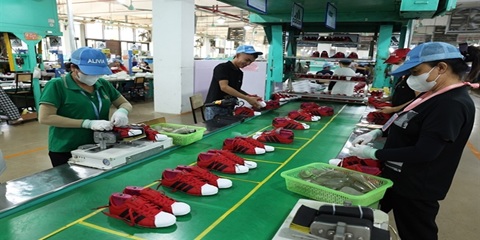
VIỆT NAM'S FOOTWEAR, BAG EXPORTS TO US TOP $8 BILLION IN EIGHT MONTHS
Việt Nam's exports of footwear and handbags to the US exceeded US$8 billion in the first eight months of 2026, as the US and EU remained the country's biggest markets despite sluggish growth in footwear shipments. Exports from Việt Nam's leather and footwear sector reached more than $2.45 billion in August, down 9 per cent from July but up 3 per cent from a year earlier, according to preliminary statistics.
VIETNAM ECONOMY INVESTMENT
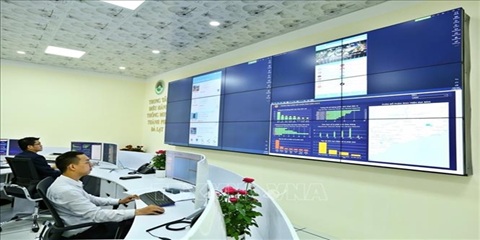
LÂM ĐỒNG TARGETS DIGITAL ECONOMY TO ACCOUNT FOR 30 PER CENT OF GRDP BY 2030
Lâm Đồng Province aims to raise the digital economy’s contribution to around 30 per cent of its gross regional domestic product (GRDP) by 2030, as part of a five-year plan to develop digital economy and society issued recently. Under Plan No. 15358/KH-UBND, the province targets more than 60 per cent of small- and medium-sized enterprises (SMEs) to adopt digital technologies by 2030 while increasing the value of cashless payments to 30 times its GRDP.
Events Sponsors






















