Want to be in the loop?
subscribe to
our notification
Business News
DEVELOPMENT OF LOGISTICS COMPETITIVE INDEX AIMS TO DEVELOP LOGISTICS INDUSTRY
The launch of the Vietnam Provincial Logistics Competitiveness Index (LCI) is expected to help reduce logistics costs, support production and export development, and attract foreign investment more effectively in the future, said Lê Duy Hiệp, the Việt Nam Logistics Business Association (VLA) chairman.
According to the VLA, the LCI Index is an index that evaluates the development speed, quality, infrastructure, and policies of municipal and provincial authorities for logistics service businesses in Việt Nam.
Trần Phương Trà, director of the Economic Policy Network at AVSE Global, said that provinces and cities lack systems in logistics infrastructure to link among localities effectively.
Meanwhile, logistics is a very important factor to help agricultural, industrial and service value chains in Việt Nam develop.
In addition, according to this expert, in the planning of provinces and cities, the role of the logistics industry has not been highlighted enough as a factor connecting and supporting economic sectors, and ensuring the transport of goods.
The reason for this is probably at the organisation stage. This is one sector that needs close coordination among production sectors, such as agriculture and industry, with infrastructure, transport and construction sectors, Trà said.
In addition, provinces and cities in Việt Nam are always up to date on the trends of international logistics, such as Closed Loop Supply Chain and circular economy.
At the kick-off ceremony of the Vietnam Provincial Logistics Competitiveness Index (LCI) Project 2022 on August 11, she emphasised that logistics is the "heart" connecting all stages in the value chain, from production, transportation and storage to the supplier and the end user. Without logistics, the value chain will operate ineffectively.
For example, organising logistics activities at the municipal or provincial level needs to pay attention to strategy and orientation. That means having specific activities and goals to connect related industries. This also requires local management agencies to organise effectively the logistics stages.
“Therefore, the implementation of the LCI project is very useful. This will encourage localities to set up logistics development strategies well,” Trà was quoted by the Vietnam Economic Times as saying.
The LCI Index will be used to evaluate policies with local authorities to improve and develop the logistics service industry.
This index is implemented by VLA in collaboration with Việt Nam Chamber of Commerce and Industry (VCCI)'s and research units, Dream Incubator (DI) and the Việt Nam Logistics Research and Development Institute (VLI).
The statistics and assessments in the index will be important for domestic and foreign businesses in choosing locations and expanding business.
For the provincial LCI Index, experts said that the important factors of this index include organisation, infrastructure, technology in logistics and supply chain management. They are also macroeconomic conditions, skills, product market, labour market, financial system, market scale, dynamism in the business environment, and innovation.
The competitiveness index of Việt Nam’s logistics ranks 77th in the world. If each locality has good logistics activities, it will certainly raise Việt Nam's logistics competitiveness rank in the future.
Regarding the logistics infrastructure in localities, experts said that they need to improve roads, the efficiency of ships, ports and air services, and even power supply systems for logistics.
One more important factor in the provincial LCI is the human factor. The localities have a lack of skilled human resources that can meet the requirements of connecting parts in a value chain.
Source: VNS
Related News

BANKING / FINANCE / INSURANCE / TAX
REMITTANCES TO HCM CITY RISE NEARLY 40% IN Q3
Remittances to HCM City reached more than US$2.83 billion in the third quarter of this year, up 39.5 per cent from the previous quarter and 3.6 per cent year-on-year. This was the first quarter showing positive annual growth this year, helping narrow the decline in remittance inflows over the first nine months. According to the State Bank of Vietnam (SBV)’s Regional Branch 2, remittances transferred to HCM City through credit institutions and economic organisations totalled $2.835 billion in Q3, an increase of more than $802 million from the previous quarter.

TECHNOLOGY
TECH SECTOR GROWTH OPENS UP OPPORTUNITIES FOR VIỆT NAM TO GO GLOBAL
The growth of the electronics, semiconductor and high-tech sectors worldwide is opening up a variety of opportunities for Vietnamese enterprises to integrate more deeply into the global supply chain. However, to become suppliers for these corporations, domestic enterprises must meet rigorous standards regarding quality, technology, productivity and order fulfilment capabilities.
VIETNAM ECONOMY INVESTMENT
FOREIGN INVESTORS SEEKING A SYNCHRONISED MANUFACTURING ECOSYSTEM
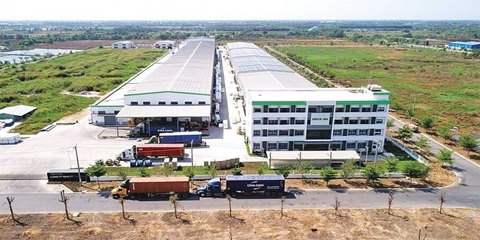
Instead of focusing only on land costs and incentives as usual, foreign investors are seeking a synchronised manufacturing ecosystem, from stable power supply and logistics to shared infrastructure and the convenience of completing residence procedures for experts to serve their long-term investment in the country.
MEMBER CORNER / PROMOTIONS
SENTRYSAFE FHW40200 – PROTECT YOUR VALUABLES, ENJOY PEACE OF MIND!
Looking for a reliable solution to protect your important documents, cash, and valuables from fire and water damage? Genuine SENTRYSAFE - Reliable protection for your valuables and peace of mind! Contact Sen Wai Vietnam for more information and personalized product recommendations.
PROPERTY / INDUSTRIAL ZONE
HCM CITY ATTRACTS US$5.7 BILLION INTO EXPORT PROCESSING AND INDUSTRIAL ZONES
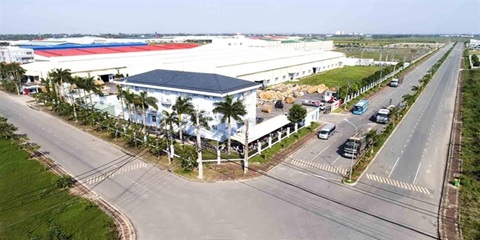
HCM City attracted US$5.7 billion in domestic and foreign investment into its export processing and industrial zones during the first nine months of 2026. The figure exceeded the city's full-year target by 31 per cent, highlighting strong momentum in high-quality industrial investment under Resolution No.10-NQ/TW. Total investment reached 131 per cent of the 2026 target of $4.25 billion and represented a 29 per cent increase compared with the same period in 2025, according to the city's Export Processing and Industrial Zones Authority (HEPZA).
INFRASTRUCTURE / CONSTRUCTION / LOGISTIC / PORT
DONG THAP PROVINCE STEPS UP INDUSTRIAL EXPANSION AND INFRASTRUCTURE CONNECTIVITY
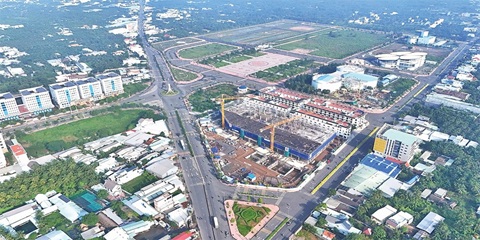
Accelerating public investment, strengthening inter-regional connectivity, and expanding industrial land are helping Dong Thap efficiently bolster competitiveness and drive economic growth. Following the 2025 merger of the former Dong Thap and Tien Giang provinces, the expanded Dong Thap province in the Mekong Delta faces mounting pressure to accelerate infrastructure development and strengthen connectivity among local economic zones, urban areas, industrial parks (IPs), and production centres.
Events Sponsors






















