Want to be in the loop?
subscribe to
our notification
Business News
DEVELOPMENT FRAMEWORK NEEDED FOR WIND POWER SALES
The opportunity for offshore wind power export could slip away if Việt Nam does not finalise the framework for the development of this renewable energy type within the next year, said industry insiders and exports.
Earlier, the Singapore government approved in principle the sale of 1.2GW from a 2.3GW offshore wind farm under the management of the PetroVietnam Technical Services Corporation (PTSC) - a member of the Vietnam Oil and Gas Group (PVN), to the Southeast Asian island nation through a high-voltage undersea cable.
The project, the first wind power sale from Việt Nam approved by Singapore, has received approval from the Vietnamese Ministry of Natural Resources and Environment (MoNRE) for monitoring, investigation, survey and assessment of marine resources (survey licence). Meanwhile, PTSC's Singaporean partner, Sembcorp Utilities Pte Ltd (SCU), a subsidiary of Sembcorp Industries Ltd, has received a letter of intent from the Singapore Ministry of Trade and Industry approving the project.
As the first Vietnamese company to receive the Singapore Government's approval for the implementation of the offshore wind farm project with a capacity of 2.3GW in Vietnam, exporting 1.2GW to the "Lion City" through a high-voltage undersea cable, the PetroVietnam Technical Services Corporation (PTSC), a member of the Vietnam Oil and Gas Group (PVN), is collaborating with Sembcorp Utilities Pte Ltd (SCU), a subsidiary of Sembcorp Industries Ltd, on the initial steps in the investment cooperation.
Director-general of PTSC Lê Mạnh Cường said the Singaporean Government had announced plans to import up to 4 GW of low-carbon electricity by 2035 and had outlined a progressive carbon tax schedule to achieve a net-zero carbon emission target by 2050. The island nation had approved power imports for several renewable projects, including 2GW from Indonesia, 1GW from Cambodia, and 1.2GW from Việt Nam.
Cường said so far it had been smooth sailing thanks to PTSC and PVN's extensive experience in the field. To date, PTSC had successfully won contracts for over 10 offshore wind projects with a total capacity of 5.2GW and a contract value exceeding US$1.2 billion, all of which would be for export.
He added the successful implementation of this deal would bring significant benefits, such as establishing Việt Nam as a hub for offshore wind power services for the region, contributing to Việt Nam's sovereignty over its islands, enhancing collaboration among ASEAN countries, and realising the goal of connected power grids in ASEAN. In addition, the underground power transmission cable could be used to set up a fibre optic cable connection to Singapore, which would bring substantial economic benefits in the future.
However, the Energy Market Authority (EMA) of Singapore could still look elsewhere if Việt Nam failed to come up with a framework to implement the deal within the next year.
There was competition to look out for. In August this year, the southernmost province Cà Mau submitted a proposal to the MoIT outlining a plan to export up to 5,000MW of renewable energy by 2040, Cường said.
Nguyễn Quốc Thập, Chairman of PVN, said offshore wind projects were complex, large investments and would require substantial incentives to encourage additional investors to jump in.
Based on international case studies, Thập said it would typically take 6-8 years for an offshore wind project to be fully implemented. Therefore, the establishment of policy mechanisms for the development of this renewable power source must be planned in a timely manner to prevent unnecessary delays.
Source: VNS
Related News

BANKING / FINANCE / INSURANCE / TAX
REMITTANCES TO HCM CITY RISE NEARLY 40% IN Q3
Remittances to HCM City reached more than US$2.83 billion in the third quarter of this year, up 39.5 per cent from the previous quarter and 3.6 per cent year-on-year. This was the first quarter showing positive annual growth this year, helping narrow the decline in remittance inflows over the first nine months. According to the State Bank of Vietnam (SBV)’s Regional Branch 2, remittances transferred to HCM City through credit institutions and economic organisations totalled $2.835 billion in Q3, an increase of more than $802 million from the previous quarter.

TECHNOLOGY
TECH SECTOR GROWTH OPENS UP OPPORTUNITIES FOR VIỆT NAM TO GO GLOBAL
The growth of the electronics, semiconductor and high-tech sectors worldwide is opening up a variety of opportunities for Vietnamese enterprises to integrate more deeply into the global supply chain. However, to become suppliers for these corporations, domestic enterprises must meet rigorous standards regarding quality, technology, productivity and order fulfilment capabilities.
VIETNAM ECONOMY INVESTMENT
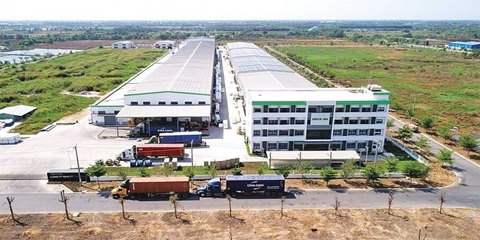
FOREIGN INVESTORS SEEKING A SYNCHRONISED MANUFACTURING ECOSYSTEM
Instead of focusing only on land costs and incentives as usual, foreign investors are seeking a synchronised manufacturing ecosystem, from stable power supply and logistics to shared infrastructure and the convenience of completing residence procedures for experts to serve their long-term investment in the country.
MEMBER CORNER / PROMOTIONS
SENTRYSAFE FHW40200 – PROTECT YOUR VALUABLES, ENJOY PEACE OF MIND!
Looking for a reliable solution to protect your important documents, cash, and valuables from fire and water damage? Genuine SENTRYSAFE - Reliable protection for your valuables and peace of mind! Contact Sen Wai Vietnam for more information and personalized product recommendations.
PROPERTY / INDUSTRIAL ZONE
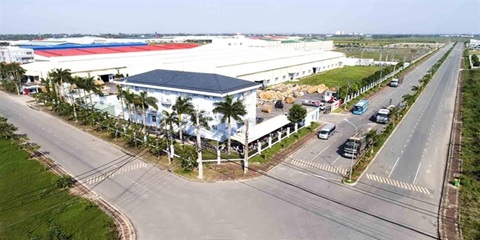
HCM CITY ATTRACTS US$5.7 BILLION INTO EXPORT PROCESSING AND INDUSTRIAL ZONES
HCM City attracted US$5.7 billion in domestic and foreign investment into its export processing and industrial zones during the first nine months of 2026. The figure exceeded the city's full-year target by 31 per cent, highlighting strong momentum in high-quality industrial investment under Resolution No.10-NQ/TW. Total investment reached 131 per cent of the 2026 target of $4.25 billion and represented a 29 per cent increase compared with the same period in 2025, according to the city's Export Processing and Industrial Zones Authority (HEPZA).
INFRASTRUCTURE / CONSTRUCTION / LOGISTIC / PORT
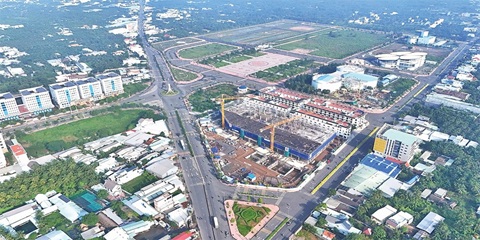
DONG THAP PROVINCE STEPS UP INDUSTRIAL EXPANSION AND INFRASTRUCTURE CONNECTIVITY
Accelerating public investment, strengthening inter-regional connectivity, and expanding industrial land are helping Dong Thap efficiently bolster competitiveness and drive economic growth. Following the 2025 merger of the former Dong Thap and Tien Giang provinces, the expanded Dong Thap province in the Mekong Delta faces mounting pressure to accelerate infrastructure development and strengthen connectivity among local economic zones, urban areas, industrial parks (IPs), and production centres.
Events Sponsors






















