Want to be in the loop?
subscribe to
our notification
Business News
DEVELOPING SUPPORTING INDUSTRIES TOWARDS BUILDING A SELF-RELIANT INDUSTRY
Việt Nam's supporting industry needs to advance self-reliance and reduce dependence on imports to improve the value and competitiveness of products in the global value chain.
Experts say that Việt Nam's industrialisation and modernisation strategy for the 2021-2030 period, with a vision to 2045, needs to adapt to rapidly changing domestic and international contexts.
A report by the Industry Department under the Ministry of Industry and Trade says that the underdeveloped supporting industry left Việt Nam unable to be self-sufficient in production inputs, leading to a significant dependence on imported spare parts and raw materials.
The trade deficit of inputs for production has been an issue for many years, reducing the added value of domestic industries.
The Industry Department report points out that in recent years, manufacturing and processing industries accounted for a high proportion of nearly 40 per cent of the total net production and business revenue of the economy, but only contributed about 14 per cent of the total GDP, a very low value added compared to other industries.
This weakness not only affects production development and economic growth in the short term, but will continue to affect industry and Việt Nam's economy overall in the long term in the context of deepening international integration.
"Therefore, developing supporting industries and gradually becoming self-reliant on domestic sources of raw materials and components is one of the core issues for sustainable development of Việt Nam's industry in the long term," said a representative of the Industry Department to Công Thương (Industry and Trade) online newspaper.
Highlighting the solution, the Industry Department said that first of all, it was necessary to improve the capacity of supporting industry enterprises; opening up market opportunities for supporting industry enterprises to become suppliers and participate in the supply chain of enterprises manufacturing and assembling final products.
The State also needed to actively expand foreign markets for supporting industry enterprises, along with receiving technical processes and production skills from abroad to improve production capacity, said the department.
In addition, it was necessary to speed up the construction of concentrated supporting industrial parks to create industry clusters; and develop material industries to enhance autonomy in input materials for production and reduce dependence on imported sources.
This would also raise the added value and competitiveness of Vietnamese products and businesses in the global value chain.
Trương Thị Chí Bình, general secretary of the Việt Nam Association for Supporting Industries (VASI), proposed that in the long term, the Government promulgate the Law on Supporting Industries and the Law on Key Industrial Development to affirm the importance of this type of industry, developing specialised policies to promote industrial development, welcome investment flows and shift production from other countries.
Source: VNS
Related News

BANKING / FINANCE / INSURANCE / TAX
REMITTANCES TO HCM CITY RISE NEARLY 40% IN Q3
Remittances to HCM City reached more than US$2.83 billion in the third quarter of this year, up 39.5 per cent from the previous quarter and 3.6 per cent year-on-year. This was the first quarter showing positive annual growth this year, helping narrow the decline in remittance inflows over the first nine months. According to the State Bank of Vietnam (SBV)’s Regional Branch 2, remittances transferred to HCM City through credit institutions and economic organisations totalled $2.835 billion in Q3, an increase of more than $802 million from the previous quarter.
TECHNOLOGY
TECH SECTOR GROWTH OPENS UP OPPORTUNITIES FOR VIỆT NAM TO GO GLOBAL
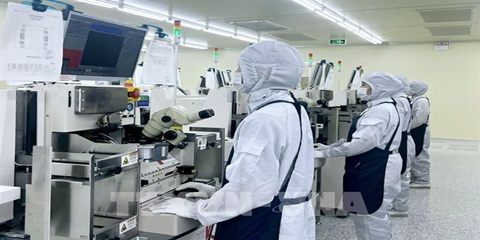
The growth of the electronics, semiconductor and high-tech sectors worldwide is opening up a variety of opportunities for Vietnamese enterprises to integrate more deeply into the global supply chain. However, to become suppliers for these corporations, domestic enterprises must meet rigorous standards regarding quality, technology, productivity and order fulfilment capabilities.
VIETNAM ECONOMY INVESTMENT
FOREIGN INVESTORS SEEKING A SYNCHRONISED MANUFACTURING ECOSYSTEM
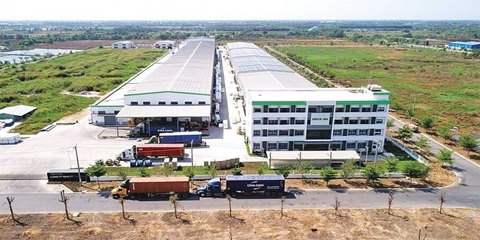
Instead of focusing only on land costs and incentives as usual, foreign investors are seeking a synchronised manufacturing ecosystem, from stable power supply and logistics to shared infrastructure and the convenience of completing residence procedures for experts to serve their long-term investment in the country.
MEMBER CORNER / PROMOTIONS
SENTRYSAFE FHW40200 – PROTECT YOUR VALUABLES, ENJOY PEACE OF MIND!
Looking for a reliable solution to protect your important documents, cash, and valuables from fire and water damage? Genuine SENTRYSAFE - Reliable protection for your valuables and peace of mind! Contact Sen Wai Vietnam for more information and personalized product recommendations.
PROPERTY / INDUSTRIAL ZONE
HCM CITY ATTRACTS US$5.7 BILLION INTO EXPORT PROCESSING AND INDUSTRIAL ZONES
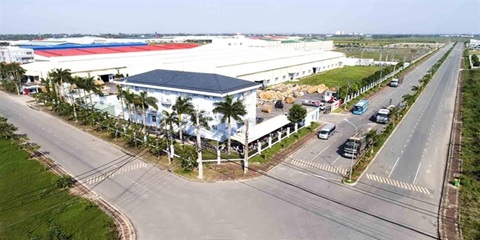
HCM City attracted US$5.7 billion in domestic and foreign investment into its export processing and industrial zones during the first nine months of 2026. The figure exceeded the city's full-year target by 31 per cent, highlighting strong momentum in high-quality industrial investment under Resolution No.10-NQ/TW. Total investment reached 131 per cent of the 2026 target of $4.25 billion and represented a 29 per cent increase compared with the same period in 2025, according to the city's Export Processing and Industrial Zones Authority (HEPZA).
INFRASTRUCTURE / CONSTRUCTION / LOGISTIC / PORT
DONG THAP PROVINCE STEPS UP INDUSTRIAL EXPANSION AND INFRASTRUCTURE CONNECTIVITY
Accelerating public investment, strengthening inter-regional connectivity, and expanding industrial land are helping Dong Thap efficiently bolster competitiveness and drive economic growth. Following the 2025 merger of the former Dong Thap and Tien Giang provinces, the expanded Dong Thap province in the Mekong Delta faces mounting pressure to accelerate infrastructure development and strengthen connectivity among local economic zones, urban areas, industrial parks (IPs), and production centres.
Events Sponsors






















